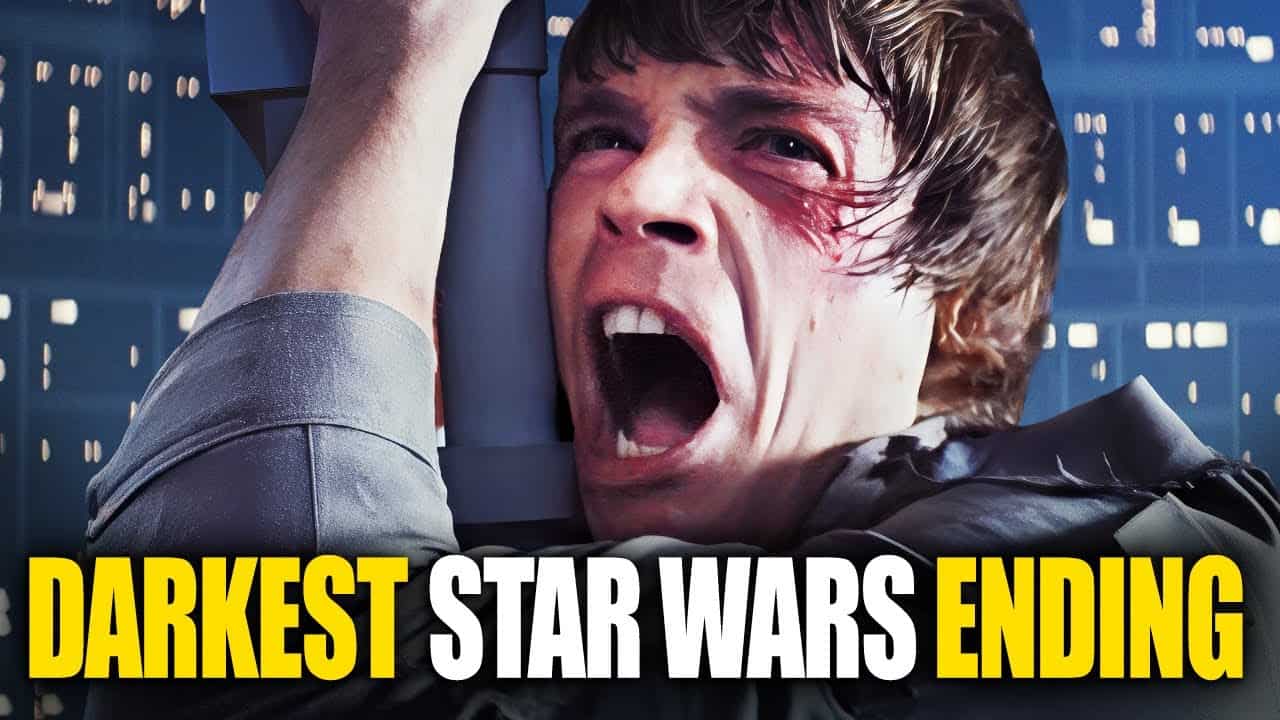
Endings Explained: The Empire Strikes Back
Many viewers anticipate a positive conclusion when attending movies. Films such as The Shawshank Redemption and The Princess Bride are just a few that often conclude with protagonists achieving key goals, leaving room for potential sequels or new chapters in a series. This sense of completion is frequently associated with successful storytelling in cinema. Call me a sucker for expecting the unexpected, but I love when a chapter in the trilogy leaves us with a jaw dropping cliffhanger. Stories like The Dark Knight, The Fellowship of the Ring, Kill Bill, and Harry Potter and the Deathly Hallows Part 1 end with uncertainty for their heroes. These films leave us questioning how the protagonist will overcome their final challenge while the villain has won or come out on top. Let’s revisit the film that pioneered this “what now?” cliffhanger—The Empire Strikes Back—and examine key aspects of Luke’s journey, that leads into the final chapter of the trilogy: Return of the Jedi. Empire to this day is still considered the best chapter of the franchise by far and we would like to lock down and decipher why the ending remains one of the most jaw-dropping story arcs. Most importantly, sometimes it’s just good when the villain comes out on top, destroying tropes that a hero doesn’t always win and vanquish evil. In fact, it makes us anticipate the next chapter as to how our hero overcomes his/her obstacle. On this episode of Endings Explained lets deep-dive on The Empire Strikes Back and that atomic bomb of a twist that no one saw coming.
I Am Your Father
To begin, The Empire Strikes Back is famous for its dramatic third-act twist: Darth Vader reveals he is Luke Skywalker’s father and urges Luke to join him rebel against the empire. I would say this exposition may have thrown off every viewer expecting a basic duel between Luke and Vader. But we only realize Darth is just way too powerful for an unseasoned Luke, outdueling, and sadly obliterating him with force powers. Let’s not forget he ends the infamous duel by taking Luke’s hand with a swipe of his saber, adding insult to injury. Why stop there? Why not end it with that famous line while Luke’s down and out, “I am your father.” For good measure, further tuning out the theme of hope for Luke? This destroys Luke’s spirit. He always wanted to know who his father was, only to realize it’s the galaxy’s most lethal assassin.
What’s even more heartbreaking is the realization that Ben Kenobi knew Darth Vader was Luke’s father all along, telling Luke his father was murdered at the hands of Vader. I guess this was potentially an exaggerated white lie to keep Luke’s hope alive. It’s probably also Ben Kenobi’s best interests to keep Luke on the light side. Any child’s goal is to become just like their father in life. We look at that person as a sign of strength and leadership. In truth, Vader did kill Anakin or what was left of him. At least that’s what we gathered from the Kenobi series on Disney Plus when he said “Anakin is gone, I am all that remains.”
It’s devastating to see our hero use the Force to destroy the Death Star in A New Hope, only to be so quickly defeated by Darth Vader in Empire. We as viewers think Luke is impervious to everything, but George Lucas flips his hero upside down, dropping him down a few notches when it comes to facing a real adversary, in the form of his father. Makes perfect sense, as a father challenges their son every day to beat them in daily activities only to learn about loss and failure in life. I dealt with it, we all have. But it establishes us as sons to do better, to get stronger, to have hope in that passing of the baton. The story creates suspense, offering hope with Yoda’s advice: “Do or do not, there is no try.” However, Luke still needs much more training, especially after losing a hand, A dueling hand at that. I bet director Christopher Nolan used this movie’s ending as an influence on his Batman arc against Joker in The Dark Knight. A hero who has trained and got too cocky and confident in a battle of wits against its main antagonist, only to be exposed, beaten, and hope lost by the film’s end.
A Third Act of Loss and Despair
And while Empire Strikes Back is focused on a hero’s journey of self-discovery, its third act focuses on familial obstruction or complete severance between our group of allies. This backs up Empire’s three arc structure about loss and defeat. Loss of its rebel alliance being scattered after the battle of Hoth, only for the rebels to return at no avail, as our heroes were either injured, or frozen and kidnapped. Loss of Han being betrayed by his friend Lando Calrissian in Cloud City, as Lando made a deal with Vader to keep his people safe in exchange for giving him Han’s whereabouts. This unfortunate backstabbing resulted Han to take a permanent nap in carbonite and potential being used as one of Jabba’s wall art decorations in Return of the Jedi. You can also say the loss of love involving Princess Leia is prevalent when she confesses her affection for Han Solo right before he becomes Mr. Snowmeiser. And most importantly, loss of Luke’s defeat at the hands of his father. All our heroes are handed severe defeat, stuck at a standstill, where hope hangs in the balance by the movie’s end.
Fathers of Light and Dark
When we are introduced to Yoda, our green cuddly friend who takes Luke in for training on Dagobah. You soon realize that Yoda has always kept Luke’s best interests at heart towards the end of the movie. And while Obi-Wan too was a father figure of Luke in New Hope, Yoda expressed restraint from telling Luke the truth about his father, Anakin. Yoda also guided Luke on the right path of the force solidifying the return of the Jedi (no pun intended). It’s Yoda who reinforced patience, morals, and hope as beacons of stability within Luke’s journey, even as they’re challenged throughout the film. Though Luke’s training with Yoda was brief, it gave him enough strength to reject Vader’s offer to join the dark side, helping him make the right choice. While Vader seems to win in Empire Strikes Back, losing his son is a significant personal loss.
Conclusion
The Empire Strikes Back is frequently recognized as a notable sequel in film history, particularly for its influential ending. The film features a plot twist that has significant impact on the main character, in Luke Skywalker, altering expectations regarding narrative outcomes. This conclusion is an example of a story where adversity takes precedence over resolution even if we all want Luke to triumph and become the jedi we all thought he would be. That’s later to be revealed in Return of the Jedi when he uses all his powers with ease but that’s for another time on Endings Explained. Empire Strikes Back laid the groundwork for what a trope-flipping film should be – that sometimes you need the antagonist to win and create that controversy within a franchise or trilogy. This will only make the hero’s journey much more triumphant when he learns to focus on his skills, and powers and gain the upper hand when the chips are down. Everyone loves a comeback story.
The post Endings Explained: The Empire Strikes Back appeared first on JoBlo.