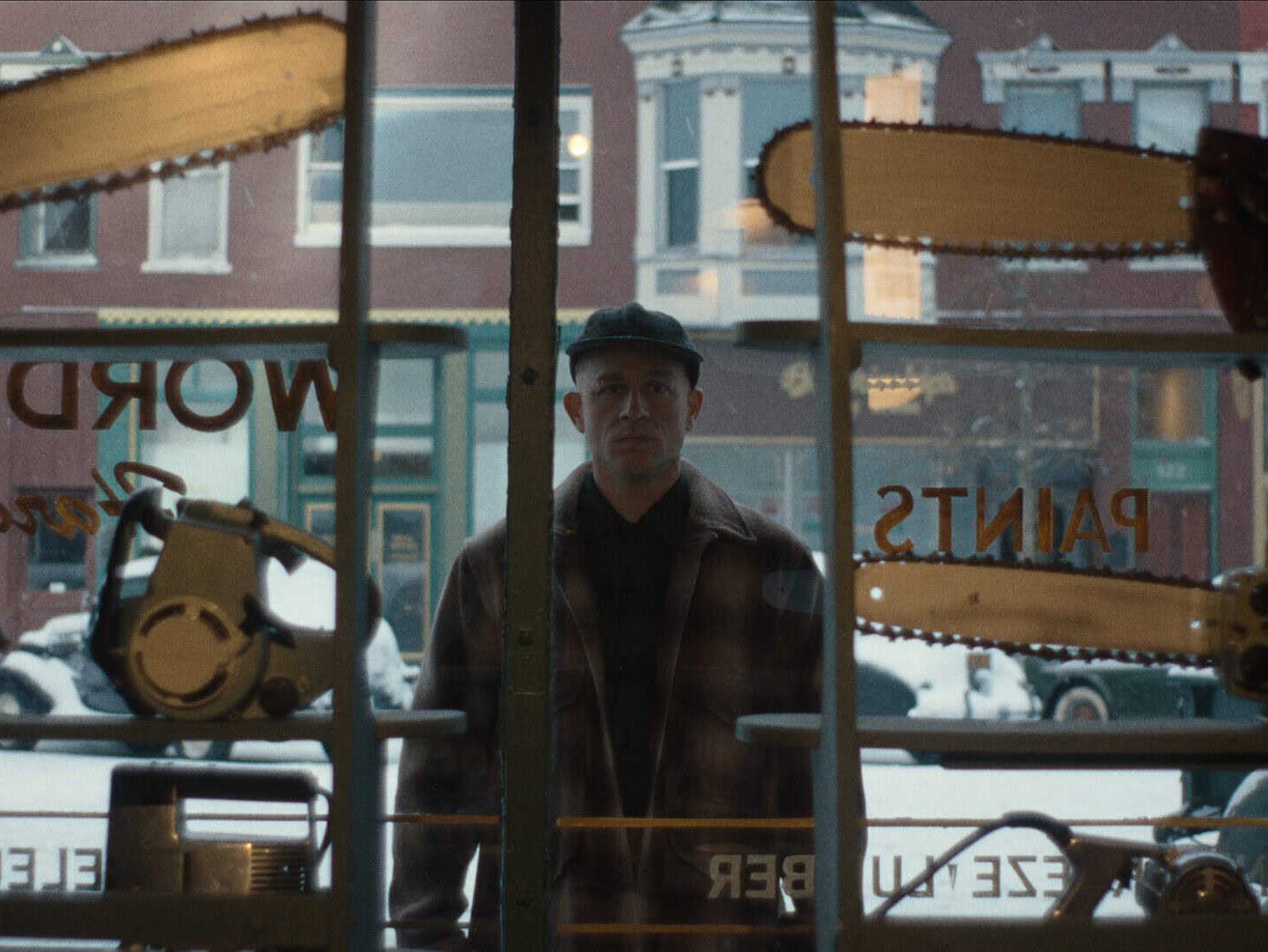
Monster: The Ed Gein Story TV Review: Charlie Hunnam channels pure evil in the latest entry in Ryan Murphy’s true crime anthology
Plot: Serial killer. Grave robber. Psycho. In the frozen fields of 1950s rural Wisconsin, a friendly, mild-mannered recluse named Eddie Gein lived quietly on a decaying farm – hiding a house of horrors so gruesome it would redefine the American nightmare. Driven by isolation, psychosis, and an all-consuming obsession with his mother, Gein’s perverse crimes birthed a new kind of monster that would haunt Hollywood for decades. From Psycho to The Texas Chainsaw Massacre to The Silence of the Lambs, Gein’s macabre legacy gave birth to fictional monsters born in his image and ignited a cultural obsession with the criminally deviant. Ed Gein didn’t just influence a genre — he became the blueprint for modern horror.
Review: The legacy of serial killer Ed Gein may be the most impactful on pop culture over the last fifty years. Serving as the inspiration for Norman Bates, Leatherface, and Hannibal Lecter, Ed Gein’s crimes are some of the most disturbing acts of mental illness and evil ever documented. As the third season of Ryan Murphy’s Monster anthology, The Ed Gein Story is the most uncomfortable, creepy, and shocking entry to date. It is also the best acted, with an astonishing performance by Charlie Hunnam as the Butcher of Plainfield. Monster: The Ed Gein Story incorporates multiple elements into the season narrative, including storylines focused on Alfred Hitchcock, his wife Alma, and actor Anthony Perkins as they worked on Psycho, as well as Tobe Hooper’s film The Texas Chainsaw Massacre. By including different tangents that connect back to the man himself, Monster: The Ed Gein Story becomes a more expansive chronicle than the two previous seasons.
The eight-episode series premiered today on Netflix, timed perfectly to coincide with the start of Spooky Season. Similar to the Jeffrey Dahmer season of Monster, which boasted a reference to Ed Gein, this series is deadly serious and pitch-black in tone. The series opens with the formative moments in Ed’s life surrounding the death of his brother, Henry, and his mother, Augusta (Laurie Metcalf), which show eerie parallels to Robert Bloch’s novel, Psycho, and the acclaimed film adaptation. Charlie Hunnam portrays Ed as a soft-spoken and awkward man who we first meet milking a cow. The way Ed caresses the cow and bathes his hands in the milk is an odd combination of sexually bizarre and caring, leading to the discomfort audiences will feel over the subsequent seven episodes. Ed’s obsession with women, auto-erotic asphyxiation, and wearing women’s clothes, along with his mother’s suffocatingly overbearing control over him, sets the tone for where his mental illness will go. By the end of the first episode, Ed has committed a murder and stolen a body from a graveyard, leading to incrementally more horrific chapters in this series.
I had issues with both prior seasons of Monster, which portrayed Jeffrey Dahmer and the Menendez Brothers in a light that somewhat diminished their acts. The Ed Gein Story does not excuse the man for his abominable acts, but it does try to explore why he did what he did and how his crimes echoed through the decades, both in cinematic ways and as inspiration for other serial killers. The early episodes showcase Ed’s obsession with the Holocaust and Nazi acts of evil, with Vicky Krieps portraying Ilsa Koch, a war criminal who herself inspired exploitation films bearing her name. As the series progresses, we meet Alfred Hitchcock (Tom Hollander) and his wife, Alma Reville (Olivia Williams), as they attempt to grasp Ed Gein’s crimes, alongside Anthony Perkins (Joey Pollari) as Norman Bates. It is a fascinating way to see how the real events of Gein’s life are incorporated into an artistic exploit, as well as how the general public would receive seeing it on screen. The final episode of the season also serves as a potential tease for a future volume focused on Ted Bundy. It will also be a surreal episode for fans of David Fincher’s Mindhunter, as it is an almost carbon copy continuation of the acclaimed Netflix series, which did not get the chance to include Ed Gein’s interviews with the FBI.
There is a lot to take in as you watch Monster: The Ed Gein Story. The crimes themselves are presented in a manner that does not exploit the memory of the victims, but it does not shy away from showing some truly gruesome moments on screen. The violence throughout this season is palpable, but the series is more dedicated to getting under the viewer’s skin, psychologically. Charlie Hunnam is mesmerizing and frightening in his portrayal of Ed Gein, conveying a demeanor that vacillates between childlike innocence and monstrous evil. Hunnam gets to play decades of Gein’s life and is eerily similar in his mannerisms and vocal inflections. If you watch any footage of Gein, you will be impressed by the level of transformation that Hunnam underwent for this series, rivalling Evan Peters’ award-winning performance in the first season. Hunnam is joined by an exceptional Laurie Metcalf, who once again deserves to be ranked amongst the most unheralded actors working today. The entire cast is fantastic, which features veterans of other Murphy projects, including Lesley Manville and Robin Weigert, as well as singer Addison Rae
Directing duties are shared between Ian Brennan (Glee, Scream Queens, The Politician) on the fourth and fifth episodes, with Max Winkler (Grotesquerie, Feud: Capote vs. The Swans) helming the other six. Brennan, a veteran of Ryan Murphy’s extensive array of series, also wrote all eight episodes. This is the first season not to have Murphy serve as a director, but both Brennan and Winkler have experience, having worked on the previous entries in this anthology. The transition from the 1950s to the 1970s is handled well, with solid production values and period-appropriate music. The crisp cinematography captures the bleakness of winter in rural Wisconsin and captures the horrors at the Gein farm in a way that makes it difficult to avert your eyes. Ryan Murphy projects have always had a tendency to veer into camp territory or dark humor, but this season keeps the focus on the horror of Gein’s acts and does not undermine them with jokes. There are some humorous moments peppered throughout the series, but they accentuate the drama rather than detract from it.
Monster: The Ed Gein Story is one of the most chilling true crime series I have ever seen, and easily the best volume to date in this anthology. While the ensemble is fantastic and I appreciate the incorporation of connective tales that add to Gein’s biography, this series is as good as it is because of Charlie Hunnam’s excellent performance. While Hunnam has been a heartthrob thanks to his role on Sons of Anarchy and a solid leading man in big-budget films, he delivers his best performance to date in this series. Ed Gein was a monster and one of the worst killers in human history. Still, Charlie Hunnam manages to make him a human being perpetrating the crimes, which is even scarier than if Gein were a supernatural monster. The Ed Gein Story will be hard to top in subsequent seasons of Monster, but for now, this is a scary ass story perfect to watch for Halloween.
Monster: The Ed Gein Story is now streaming on Netflix.
The post Monster: The Ed Gein Story TV Review: Charlie Hunnam channels pure evil in the latest entry in Ryan Murphy’s true crime anthology appeared first on JoBlo.