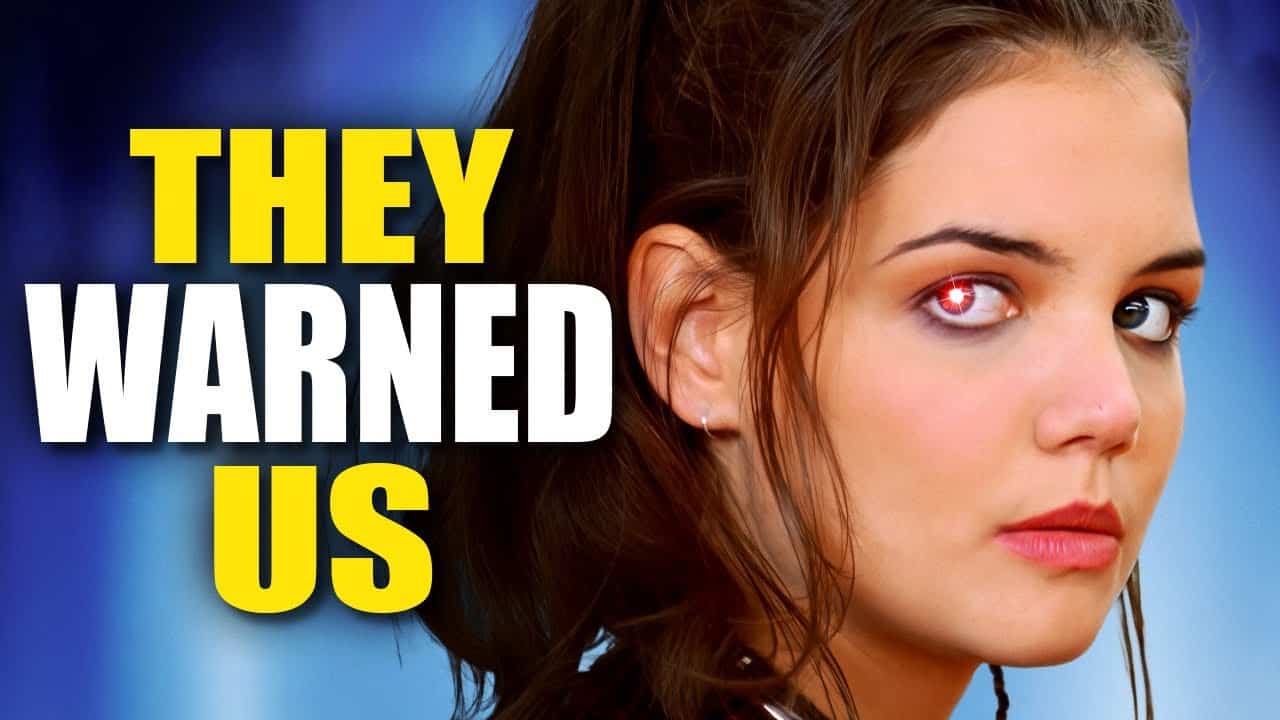
Disturbing Behavior (1998) Revisited – Horror Movie Review
Disturbing Behavior has always been one of those overlooked 90s teen horror films. Critics mostly shrugged or panned it, which is par for the course, but audiences from the late 90s who caught it in theaters or on video have never forgotten it. The 90s were huge for teen horror, thanks in no small part to Scream. Disturbing Behavior offered something quieter, sharper, and more unsettling. Despite its flaws, the film has developed a devoted following of fans who still talk about its tension and surprisingly sharp take on conformity and control. In retrospect, it feels oddly relevant, especially in a culture now obsessed with social media.
Directed by David Nutter, also known as Mr. Pilot, whose TV work includes some of the best episodes of The X-Files, and written by Scott Rosenberg, whose credits include Con Air, Things to Do in Denver When You’re Dead, Beautiful Girls, High Fidelity, Highway, Gone in 60 Seconds, and the Tales from the Crypt episode Forever Ambergris, the film had a crew that knew how to build suspense and craft story. Nutter has been open about the creative tension with the studio. He wanted to keep the movie dark and unsettling, but they pushed for something more in line with Scream. The result is the theatrical cut, which is still razor. Fans often argue that the deleted scenes and alternate ending, where Gavin dies, add additional context. While it is true those scenes clarify motivations, the movie works perfectly well without them. Sorry, Dave.
Critics often said the film felt derivative, borrowing tropes from other horror and science fiction films. But everything is derivative at some level. If you have even one genuinely original idea, you have a unicorn situation on your hands. As creatives, we are all influenced by what came before, intentionally or not. What matters is what you do with those influences, and in that sense, Disturbing Behavior stands out. Several scenes come to mind, like Chug trying to force himself on Rachel or the gut punch when we see Gavin with the Blue Ribbons for the first time. They build a claustrophobic sense of dread that makes the viewer complicit. You can feel the pressure of the mold pressing down on everyone, not just the main characters, and it’s heavy.
And then there’s the soundtrack. Two tracks matter: Got You Where I Want You by The Flys and Flagpole Sitta by Harvey Danger. Got You is the one though. That hook, plus Katie Holmes in the video? Honestly, I’ve never wanted to be someone more in my life. The rest of the soundtrack? Couldn’t care less. And don’t get me started, Rachel dancing in the truck should’ve kicked off with the opening riff to Got You. Who blew it? But Steve and Rachel running down the hall with Flagpole Sitta blasting in the background after finding Caldecott’s daughter? I guess that totally makes up for it.
The cast is actually thoughtful and kinda stellar in my humble opinion: James Marsden, Nick Stahl, Katie Holmes, William Sadler, Chad Donella, Bruce Greenwood, Crystal Cass, even Katharine Isabelle in a smaller role. Now, let’s be honest, and this goes for most teenage roles at the time, it’s the Dawson’s Creek effect. No one is buying that James Marsden is a teenager. Stahl and Donella capture the vibe best, but honestly, it doesn’t pull me out of the movie; it’s just par for the course for the decade, and who cares? Greenwood has this low key greatness that feels underused. I think I watched Exotica before this, which is where I fell in love with Mia Kirshner, but that’s a tangent we don’t need to go down. Sadler? Legendary. This role could have been corny, but he turns it into someone you care about and root for. The man’s a genius.
Beyond production and reviews, what makes the film resonate now is its commentary on conformity. Gavin and the Blue Ribbons represent the terrifying extremes of forcing people into a mold, stripping away the parts that make them unpredictable, messy, human. That was unsettling in the 90s. Now, with social media algorithms reinforcing conformity, it feels uncomfortably familiar. Don’t look a certain way, dress a certain way, or think a certain way? That pressure has always existed, but social media has turned it into something relentless. Algorithms are designed to remind you, over and over, exactly how much of an outsider you are. Individualism is not celebrated anymore; it is punished. And that is where the film’s quiet commentary on the cost of compliance and the suffocating demand to be normal still lands. That’s where the film quietly shows the real cost of fitting in. Maybe it even hits harder now than it did decades ago. Being a Rachel, a UV, or even a Steve isn’t just rebellion anymore, it’s resistance. And in an era where sameness is curated, packaged, and sold back to us, Disturbing Behavior lingers as a sharp reminder that sometimes survival depends on refusing to fit the mold.
Yeah, Gavin stands out, but his parents didn’t fight for him. He got neutered, shaped into one of Caldecott’s super minions. And the bigger point? They let it roll, buying into the idea he was troubled just for listening to NIN and smoking weed. Classic Suicidal Tendencies logic. All he wanted was a Pepsi. Back then it was music and games. Now kids are glued to screens all day, fed instructions on how to talk, act, and believe without ever learning to think for themselves. iPad kids. Here, Billy, take this giant screen, and please, don’t expect me to engage.
But Gavin’s an interesting point here. The alternate ending where he dies just… ends. It doesn’t linger, it doesn’t haunt. The ending Nutter actually shot, the one that made it into the film, hits harder because Gavin does not just survive: he adapts. He carries Caldecott’s mission forward and takes it beyond Cradle Bay. It is evolving. Gavin is not just another product of the experiment; he is the next step. Younger, smarter, and far more capable of causing real damage. Caldecott’s legacy unknowingly creates the perfect successor, and that is what makes it chilling. The horror is not static; it spreads. It moves past the original setting, replicating itself, reshaping itself, and suddenly, it could happen anywhere. Gavin becomes less a person and more an engine, a system designed to convert, consume, and control.
And that is what makes the intended ending stick. Gavin is not just in the story anymore. He is the story. He is the algorithm, optimized and weaponized. Gavin is our social media, relentless, adaptive, and built to turn individuality into compliance, one underdeveloped frontal lobe at a time.
Circling back to the cut and the uncut, Nutter wanted to release a director’s cut with all the scenes he shot intact. After seeing the deleted scenes, most do bring more clarity to the overall plot and add depth to the story. Caldecott in the parents’ meeting, talking about his daughter’s life in San Francisco with her boyfriend, both with successful careers, could have made him even more terrifying. In the theatrical version, Allen was made to feel like a depressive teen with little rhyme or reason, but the added context of his girlfriend and backstory makes his character feel more grounded. And Newberry taking off the mask in front of Steve enriches his character and motives. Not sure what version you watched, but mine included it; apparently not all did. The only scene that felt unnecessary was the slow getting it on moment in the car after Rachel tells Steve she cannot go back. I have mentioned this before. I promise I am not a total prude; it is just awkward and adds an unnecessary layer of horniness.
Beyond story context, it is also worth noting how much tension Nutter and Rosenberg built through atmosphere, pacing, and deliberate writing choices. Scenes like the Blue Ribbon snapping that girl’s neck, the unsettling reveal of Caldecott’s daughter, and Steve and Rachel slowly piecing together the experiment’s extent create a slow-burn dread that modern teen horror often skips in favor of quick jump scares. That patience, paired with Rosenberg’s sharp plotting, is part of what gives the film its lasting impact. It does not just shock you, it lingers, makes you think, and even decades later, it still sticks. And when you add in the bigger theme of conformity and the way individuality gets stripped away, it becomes clear this isn’t just another teen horror movie. It’s sharper than it looks, and it knows exactly what it’s saying.
Finally, a little nostalgia note: the movie still has that unmistakable late 90s feel. From the soundtrack to the styling, the tech, even the way the kids interact, it is all steeped in the era. It is like a time capsule, but one that sneaks in timeless commentary. The music, the cast, the pacing, they all work together to make the movie feel alive in a way few 90s teen horror films do. It is subtle, smart, and still surprising in its effectiveness.
What keeps Disturbing Behavior from sinking into the bargain bin of 90s horror isn’t just nostalgia, it’s the way its commentary on conformity still stings. The critics in ’98 may have rolled their eyes, but watching it now, the film feels less like a dated teen thriller and more like a grim little prophecy. It’s messy, sure, but so is the world it was poking at. And maybe that’s why it lingers. As Newberry puts it: “You’d be surprised how interesting people become when they think you’re really stupid.” Turns out the same goes for movies.
Two previous episodes of Revisited can be seen below. To see more of our shows, head over to the JoBlo Horror Originals channel – and subscribe while you’re at it!
The post Disturbing Behavior (1998) Revisited – Horror Movie Review appeared first on JoBlo.