Why Has VHS Made a Comeback?
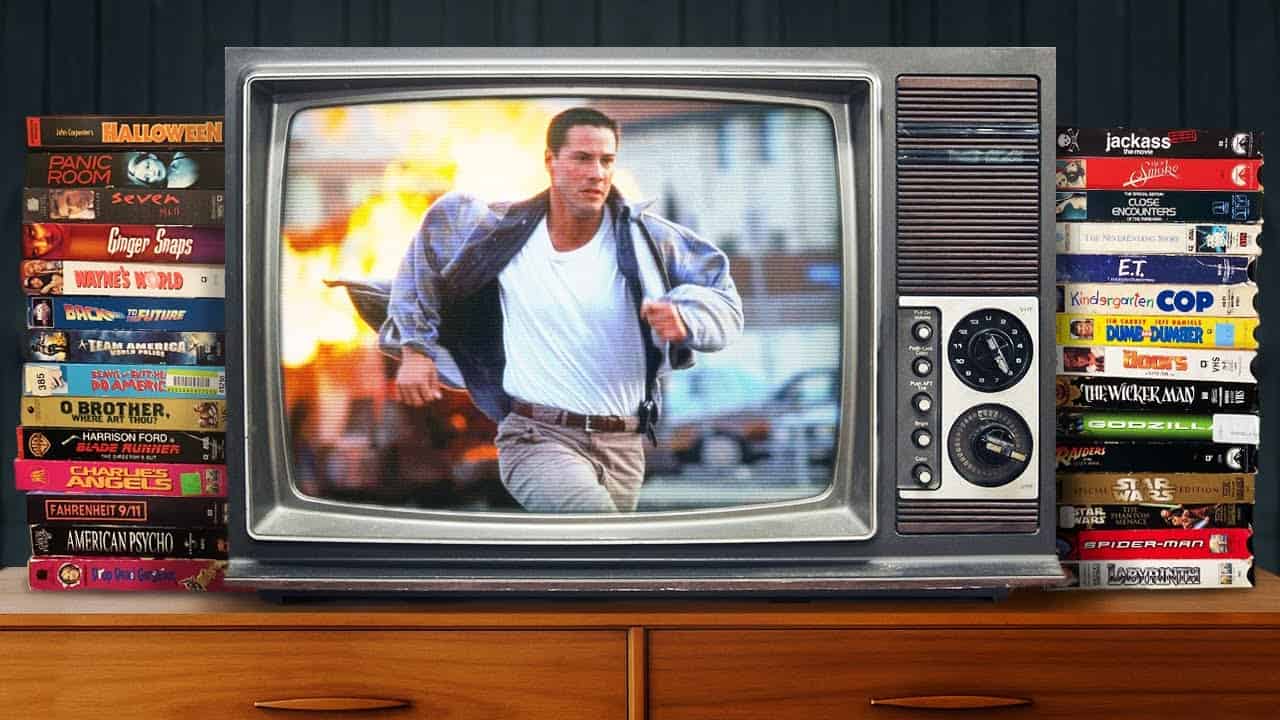
A few years ago in Montreal, the city I happen to live in, something very strange started to happen. All over the city, people began finding VHS copies of the movie Speed. They would be found in mailboxes, on the metro (that’s the subway for you Americans), in restaurants left as tips — basically, dozens of copies of Speed on VHS were floating around out there. And people loved it. Not only was it a reminder of a GREAT movie, but people had begun to feel very nostalgic for VHS tapes. In the years since, this nostalgia has led to a full-on revival, with many advocates of VHS making waves — in particular, directors Quentin Tarantino and Roger Avary, who, on their Video Archives podcast, make it a point to only review films they watch on tape or occasionally on LaserDisc.
So what is behind the revival of what many considered a dead art form? Nostalgia plays a big role in it, but it follows a predictable trend where a new technology comes out, is embraced quickly, but then people start to feel like they never enjoyed something quite as much as they did in the old analog forms. Consider vinyl records. For the longest time, vinyl was the only way to truly experience a new album. Sure, in the seventies there were 8-track tapes, and in the eighties we had cassettes, but neither sounded as good as vinyl. Oh, but then came compact discs, and this new digital format made albums sound crisper than ever, soon becoming dominant. Eventually, CDs would become extinct — thanks to MP3s and then streaming music. But, at the same time, vinyl began a tremendous resurgence, and I’d wager that any true fan of music probably has a record player in their home. Artists regularly issue their titles on vinyl now, and even albums that never came out on vinyl in the nineties have since received pricey reissues.
Yet, the case for a VHS revival is somewhat more controversial. The fact is, VHS tapes will only ever offer compromised versions of films. The most significant limitation is that VHS tapes are analog and cropped to a 4:3 aspect ratio, meaning that most films are presented in pan and scan. For those of you who may not know what that means, it was standard practice in the eighties and nineties for studios to have technicians crop the aspect ratio on movies shot in widescreen, with them panning in an unnatural way if something important was happening in the part of the frame not visible in the crop. Some movies, such as those shot in 1.85:1 or in Super 35, would be shown in a process called “open matte,” where the matte would be opened up and more of the image would be shown. This was a compromise made by directors like Stanley Kubrick, Steven Spielberg, and James Cameron, who didn’t want their images to suffer the indignity of pan and scan.
Of course, at some point VHS movies did start to be issued in the letterboxed format, where the whole frame was shown, but home viewers largely didn’t care for these. If you had a normal-sized (for the 80s) 20-inch TV and half the image was cropped, it looked bad. Some directors, like Woody Allen with Manhattan or Joe Dante with Innerspace, actually managed to make it so that ONLY widescreen versions of their films were released, but it didn’t last. LaserDisc was a different beast, as that format catered to a more niche market. Sure, movies would be letterboxed, but a LaserDisc owner always had a much bigger TV where the movies would look good letterboxed.
So, if VHS is so limited from a technical standpoint, why are people so nostalgic for it? Well, here’s where it gets interesting. Tarantino, who is a surprising advocate of the technology, praises it because tapes were made by technicians scanning the 35mm answer prints of the movie, rather than the negative. As such, when you saw a movie on VHS, it looked a lot more — in terms of color — like what a movie looked like in its theatrical run. What Tarantino hates is that in the DVD–Blu-ray era, and now with 4K, studios are going back to the original negatives of films and making them look so pristine that they don’t actually look faithful to the way the movies were initially released. As a purist, he prefers the look of a print. In fact, he once tried to get Sony to start a label curated by him, which would present movies on DVD scanned from their original 35mm prints, cigarette burns and scratches included. The studio balked, but there’s now a big online community that supports this trend, with it being easy to find 35mm scans of classic films — many of which have a strikingly different look from what’s available on officially licensed home media.
But there’s more to it than that. VHS tapes, for a lot of us, are relics from our respective childhoods. One of my biggest regrets is that I threw away my VHS collection many years ago. For one thing, I could have sold the tapes now, as thrift stores have found them to be a surprisingly potent market. But I also regret throwing away such precious relics, as each told a story of its own. There was my VHS tape of Star Trek IV: The Voyage Home, which was the first one I ever bought. There was my Blade Runner tape that had this musty smell I was never able to get rid of. There were those cool 1992-era James Bond reissues with the covers that opened up and had stills and factoids about the movie inside. There was my copy of Wayne’s World that was bent to hell because my dog took a nap on the empty box that one time. Or there was the VHS copy of Over the Top I borrowed from a friend but never returned because we had a huge fight and I started dodging his phone calls.
So I get people buying tapes, and each really does tell a story of its own. The same thing goes for vinyl albums. That said, I would always say vinyl sounds better than CDs or MP3s — but VHS? Sorry, no. However, I am old-school in the way that I would way rather see a battered 35mm print of something like The Last Starfighter at Tarantino’s New Beverly Cinema in LA than watch a pristine 4K DCP of the same movie. But hey, that’s just me…
The post Why Has VHS Made a Comeback? appeared first on JoBlo.