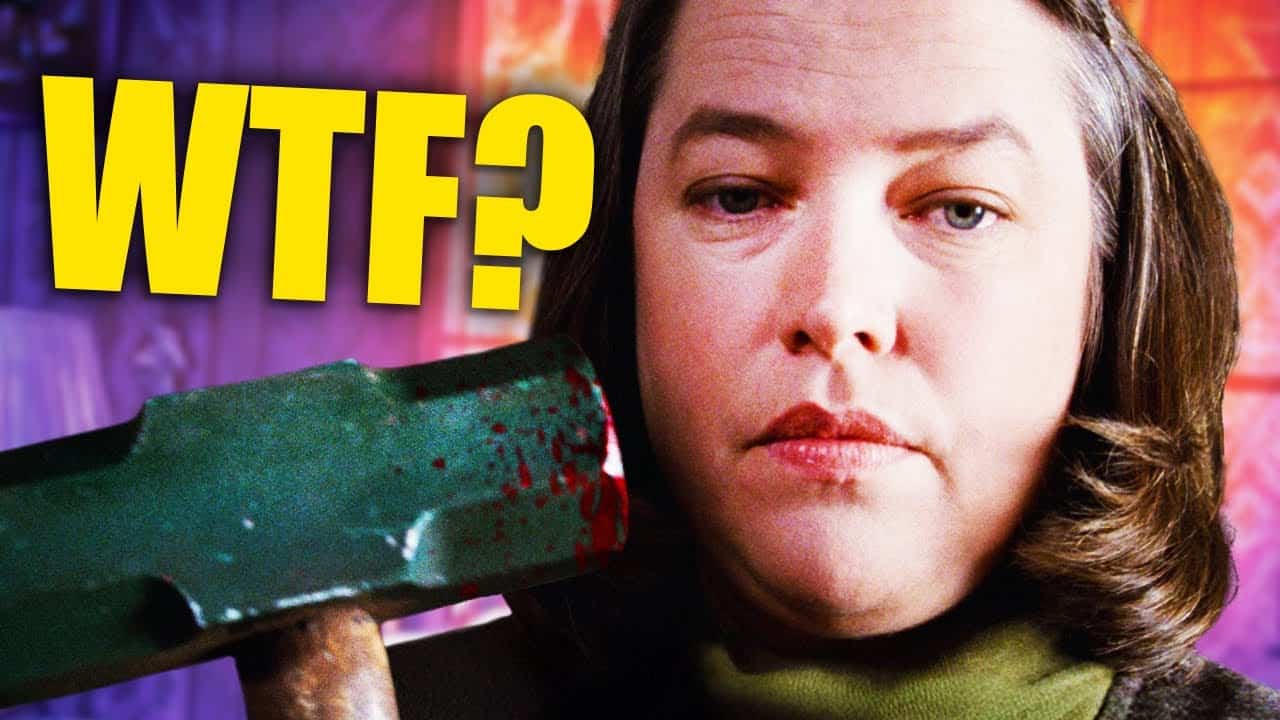
Why Misery Is the Coziest Horror Movie Ever Made
Can horror movies be “cozy”?
There’s been a lot of discourse online about whether horror films can be considered cozy and whether cozy movies can truly be considered horror. While everyone has their own take, here’s mine: if you don’t think horror can be cozy, then you haven’t watched Rob Reiner’s adaptation of Misery.
A Stephen King novel that became a career staple for both James Caan and Kathy Bates, Misery is widely considered one of the best King adaptations ever made — and yes, this movie is cozy.
Why Misery Feels Cozy Despite Being Horror
When the weather’s cold or rainy, this is one of those movies I love to throw on: warm sweater, couch, and a mix of madness, fandom, obsession, and desperation unfolding in the background. It sounds messed up on paper, but the film genuinely has a “comfort watch” quality.
What This Video Covers
In today’s video (embedded above), we revisit the making of 1991’s Misery, explain why it still resonates, and break down the infamous on-set tension between its two leads — tension that actually fuels the film’s dynamic. Let’s get cozy.
What Misery Is About
For anyone unfamiliar:
Premise:
Misery follows Paul Sheldon, a successful novelist with a huge fanbase. His “Number One Fan,” Annie Wilkes, is a lonely woman living in a remote town. After Paul gets into a snowy car accident that leaves him immobile, Annie rescues him… or traps him.
Key theme:
Annie becomes furious about how Paul ends his book series — especially the fate of his main character, whom she personally identifies with. She refuses to let Paul leave her care until he writes a new, “corrected” novel that matches her expectations.
The film’s commentary:
It’s a timeless exploration of radical fandom, parasocial relationships, and the weight people place on fictional characters.
Stephen King’s Intent and the Novel’s Background
Published in 1987, the novel focuses on the psychological clash between two people with opposing beliefs. King titled it Misery to reflect his headspace while writing and the constant dread that permeates the narrative.
Readers often describe the book’s tension as feeling like walking on eggshells or a Hitchcock “bomb under the table” scenario. You’re waiting for Annie’s full mania to erupt, but you have no idea when.
The book was a bestseller and was quickly optioned for a film, with:
William Goldman (Butch Cassidy and the Sundance Kid, The Princess Bride) writing the script
Rob Reiner directing after producer Andrew Scheinman convinced him to take the gig
How the Casting Came Together
The casting process was long and complicated.
Kathy Bates as Annie Wilkes
Bates, a stage actress with minimal film experience, wasn’t an early consideration. Names like Anjelica Huston and Bette Midler were offered the role outright.
Huston had scheduling conflicts (The Addams Family, Addams Family Values).
Midler turned it down and later regretted it.
Goldman recommended Bates, Reiner auditioned her extensively, and both agreed she was perfect. History agrees.
James Caan as Paul Sheldon
Reiner offered the role to a long list of actors:
William Hurt (who declined twice), Kevin Kline, Michael Douglas, Harrison Ford, Dustin Hoffman, De Niro, Pacino, Redford, Gene Hackman, even Warren Beatty — who almost accepted before backing out. (“Thanks, Dick Tracy.”)
When the late James Caan was suggested, he accepted immediately. He was intrigued by playing a character with limited physical agency, saying:
“Being a totally reactionary character is much tougher.”
The Billy Bob Thornton Curiosity
Billy Bob Thornton originally had the sheriff role and shot scenes — but they were later cut.
Filming Locations and Production
Filming began winter 1990, only three years after the novel’s publication.
Exteriors: Genoa, Nevada
Interiors: Hollywood soundstages, including the full recreation of Annie’s house
The “Hobbling Scene” Controversy
One of the biggest debates during production:
Should the movie keep the book’s brutal ankle-amputation scene?
Book Version:
Annie uses an axe.
Film Version:
A hammer breaks Paul’s ankles — still horrific, but less grotesque.
Producer Andrew Scheinman wanted the original version, but Reiner argued the axe would destroy any lingering empathy for Annie. Reiner insisted the audience needed some emotional balance between the characters.
This change allowed viewers to:
dislike Annie
dislike Paul
yet still feel conflicted and invested in both
Gelatin prosthetics created the bone-squish effect during Paul’s attempted escape.
For extra Annie backstory, Season 2 of Hulu’s Castle Rock is a Misery prequel, featuring Lizzy Caplan’s great interpretation of the character.
On-Set Tension Between Bates and Caan
The conflict between the characters wasn’t just acting — it reflected real creative friction.
Why they clashed:
Caan: loose, improvisational, minimal rehearsal
Bates: theater-trained, heavily rehearse-focused
Their differences caused genuine tension, which Reiner encouraged Bates to channel into her performance.
Caan was also bedridden for 15 weeks of shooting, which took a psychological toll.
At one point, Caan showed up so hungover that a full day of footage was useless. Reiner told him the film lab messed up the development so Caan wouldn’t feel singled out; Caan later learned the truth and personally paid for the reshoots.
Release, Box Office, and Awards
After nearly four months of shooting, Misery wrapped and released to major success.
Box office: $60M (≈$165M today)
Awards: Kathy Bates won Best Actress at the Academy Awards
Legacy: A home-video hit, critical darling, and still considered top-tier King adaptation
It ranks alongside Stand By Me, The Shining, and It as one of the best translations of King’s work.
Why Misery Still Works Today
The combination of:
the psychological intimacy
the cozy-but-claustrophobic setting
the layered performances
and its commentary on fandom
…makes it endlessly rewatchable—especially during fall and winter.
So during the coziest season of the year, I absolutely recommend curling up and revisiting this disturbing, brilliant film.
What do you think of Misery? Do you like it? Love it? Drop your thoughts in the comments — everything goes down below.
The post Why Misery Is the Coziest Horror Movie Ever Made appeared first on JoBlo.