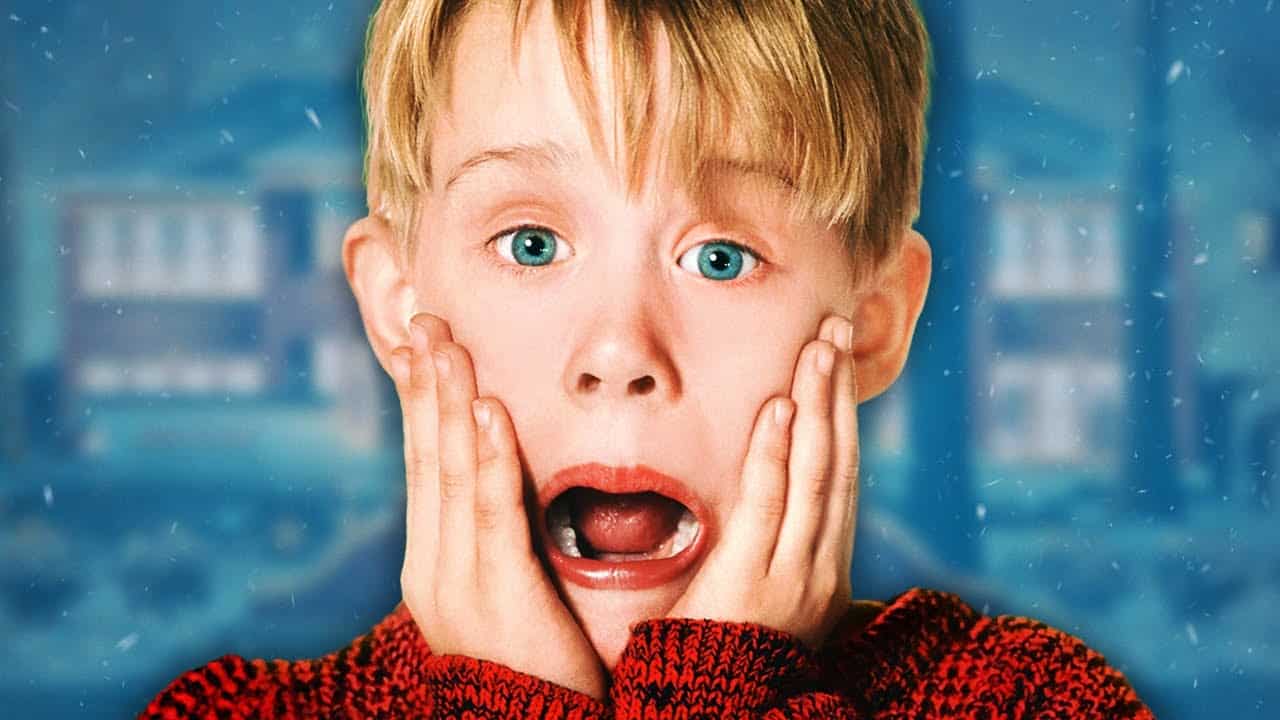
Why Home Alone Should Have Failed (But Didn’t)
If Macaulay Culkin ever woke up one morning and casually tweeted, “Thinking about doing another Home Alone,” the world would stop rotating for a minute. Twitter would melt. Headlines would explode. Millennials would collectively scream with nostalgia-induced heart palpitations. And Disney executives would appear out of thin air like wizards, each holding checkbooks glowing with holy light.
Because Home Alone isn’t just a movie anymore. It’s a global emotional support blanket. A holiday ritual. The cinematic equivalent of hot chocolate in December.
And yet the funniest, strangest truth is that this timeless, beloved, endlessly rewatched Christmas classic should have failed.
It shouldn’t have made money.
It shouldn’t have had sequels.
It DEFINITELY shouldn’t have reshaped pop culture.
Honestly, the fact that it works at all is borderline miraculous.
An Absurd Premise That Somehow Works
There’s something deliriously insane about its premise. Imagine trying to pitch this movie with a straight face: a chaotic suburban family oversleeps, races to the airport like lunatics, and accidentally leaves their son behind. He wakes up alone, panics, freaks out appropriately, and then somehow transforms into a small-scale suburban John Wick, defending his home with blowtorches, paint cans, BB guns, and the sincere belief that two grown criminals can be defeated by slipping on toy cars all in the vein of Looney Tunes.
How this story becomes heartwarming, rather than triggering congressional hearings, is one of cinema’s great mysteries.
On paper, it’s either the setup for a child endangerment documentary or a tragic indie drama starring Timothée Chalamet.
But instead, it becomes the coziest Christmas movie ever made.
The Suspension of Disbelief Problem (And Why We Accept It)
The obstacles were stacked higher than the McCallister family luggage. For one, the entire movie hinges on the audience accepting that two seemingly functional adults somehow miscounted their children. Twice. And that airline staff, airport workers, security officials, and every adult in Illinois simultaneously failed to notice a missing nine-year-old.
In today’s world, this would be a 12-episode Netflix true-crime documentary… but I digress.
But suspension of disbelief is a magical thing, especially during the holidays. The movie understands its own ridiculousness, yet treats its story with absolute sincerity. And that sincerity is what makes the whole thing work.
Betting the Movie on a Child Actor
Still, the film’s success didn’t come from luck alone. It came from a staggering list of production choices that could have sunk the ship — starting with the biggest gamble of all: putting the entire emotional weight of the movie on a child actor.
Macaulay Culkin wasn’t just good in Home Alone. He was lightning in a bottle.
He had charm, timing, innocence, wit, and that strange old-soul maturity that made him believable as a kid capable of booby-trapping an entire house. Joe Pesci famously said, “Mac is not like a nine-year-old. He’s an old man already.”Coming from Pesci, that’s practically a knighthood.
Without Culkin, Home Alone probably disappears into cable obscurity. With him, it became a generational event.
Harry and Marv: A Tonal Tightrope Act
The villains were another potential disaster. If Harry and Marv were too scary, the movie would be disturbing. Too goofy, and it becomes a full-blown cartoon.
Instead, Joe Pesci and Daniel Stern landed in the perfect middle ground: dangerous enough to create stakes, idiotic enough to justify the slapstick. Their physical punishment was so intense that the crew coined a term for it — “a Home Alone” — meaning a fall so painful it probably qualifies as a workers’ comp claim.
Ironically, both actors reportedly assumed the movie wouldn’t matter, which is exactly why their performances became iconic.
A Cheap Movie That Looks Expensive
Despite becoming a massive hit, Home Alone was made with scrappy ingenuity. Many of its effects were literal DIY hacks. The BB pellet hitting Marv was hand-painted frame by frame. The falls were real. The pain was real. Daniel Stern let a real tarantula crawl on his face because they couldn’t afford a convincing fake one.
Even the house itself — that now-iconic Winnetka home — had to strike a precise balance between warm, aspirational, and believable. When Chris Columbus found it, he said it felt like walking into John Hughes’ imagination.
Why Home Alone Still Hits Emotionally
What makes Home Alone endure isn’t just slapstick. It’s emotional honesty.
Kevin feels ignored. Overlooked. Dismissed. He wishes his family would disappear — not because he hates them, but because he wants to matter. When he gets what he thinks he wants, freedom quickly turns into loneliness.
That realization gives the movie its soul.
And that’s why the ending still lands. When Kate McCallister walks through the door and Kevin runs into her arms, it transcends genre. It’s warm. Earnest. Healing.
Why Home Alone Became a Tradition, Not Just a Movie
Critics were mixed. Audiences were not.
The movie dominated theaters, then VHS shelves, then living rooms. It became the movie families owned even if they owned nothing else. It played endlessly during decorating, baking, wrapping gifts, and general holiday chaos.
Home Alone didn’t just succeed — it rewired what a Christmas movie could be.
The post Why Home Alone Should Have Failed (But Didn’t) appeared first on JoBlo.