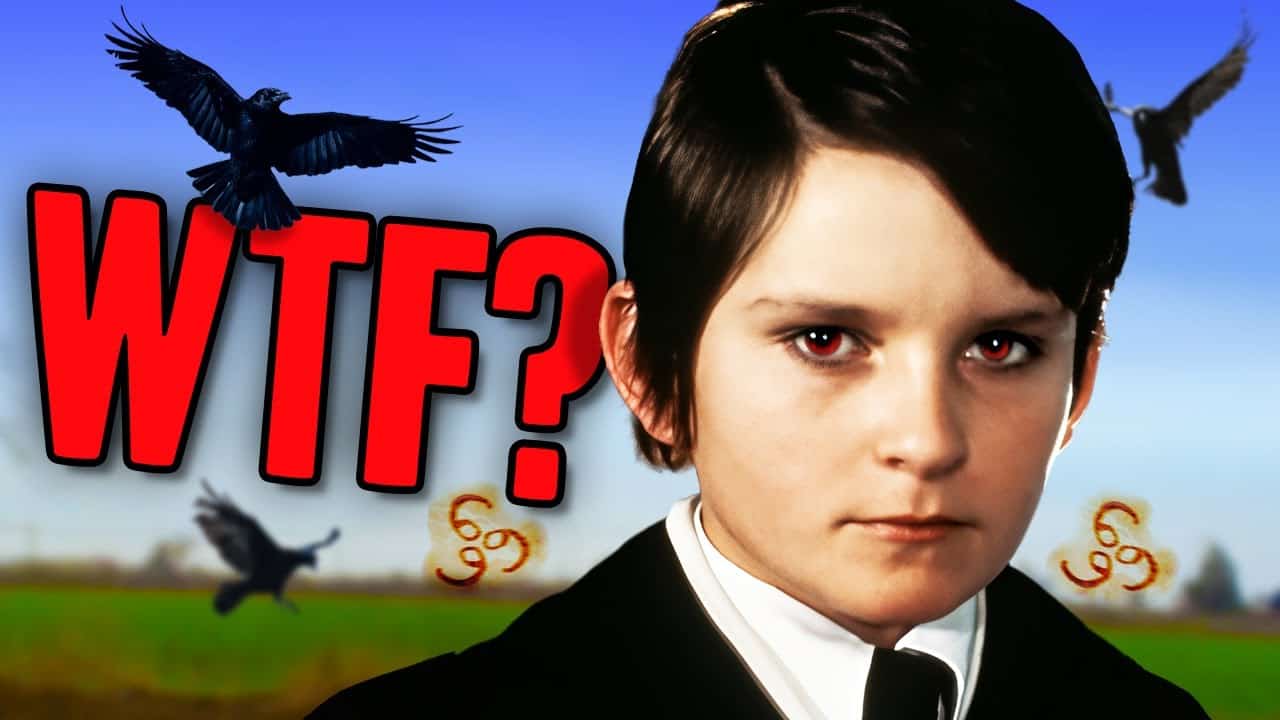
Damien: The Omen II – Inside the Troubled Sequel That Turned Death Into Spectacle
The What Happened to This Horror Movie episode on Damien: The Omen II was written by Jaime Vasquez:
Following The Exorcist, creepy kids and demonic entities were box-office gold, and The Omen stood out as one of the best of its kind. The spooky flick about a wealthy couple unknowingly adopting the Antichrist became one of the biggest hits of 1976, both critically and commercially, even winning an Oscar for Best Score. But sequels weren’t as easily greenlit back then as they are today. In fact, they were often seen as lowbrow cash-ins. Despite that stigma, and despite losing its original writer and director, Damien: The Omen II still got the go-ahead. So how did the movie fare without its original creators? Why did it have two directors, and what caused the first to walk off set? Why does Lance Henriksen look back on the experience as miserable? And which actor insisted on performing their own stunt in one of the film’s most gruesome death scenes? We’re taking the stairs instead of the elevator, keeping an eye out for evil-eyed ravens, as we find out what happened to Damien: The Omen II.
Building the Sequel Without the Original Team
Screenwriter Stanley Mann already had an impressive résumé, including The Collector… no, not that Collector. This 1965 psychological horror-thriller, directed by William Wyler, followed a man whose obsession with a woman spirals dangerously out of control. The film earned several Academy Award nominations, including Best Screenplay for Mann and co-writer John Kohn.
Mann continued working steadily in film and television before teaming up with writer-director Mike Hodges for the follow-up to The Omen. Hodges was still relatively new to Hollywood, but he’d already made waves with the gritty revenge classic Get Carter, starring Michael Caine (basically young Alfred Pennyworth doing things Batman never would.)
Hodges was originally hired to direct Damien: Omen II as well, though his time behind the camera would be short-lived.
A Revolving Door of Directors
Stepping in to replace Hodges was Don Taylor, best known for Escape from the Planet of the Apes and the 1977 remake of The Island of Dr. Moreau. Taylor was actually the third person considered to direct the sequel.
First up was Richard Donner, director of the 1976 original, but Donner was already busy making Superman… the 1978 one with Christopher Reeve, not the ten or so that came later.
Keeping the Music, Losing the Writer
Producer Harvey Bernhard was determined to bring back composer Jerry Goldsmith. Fortunately, that worked out. Goldsmith, fresh off his Oscar win for The Omen, returned with an even more intense score. His blend of choral and classical elements was cranked up to eleven, giving the sequel a sense of scale and gravitas that helped it feel like a true continuation of the franchise.
Once you heard that music, you knew Damien was nearby, and that it might be time to move to another country.
Bernhard also reached out to Omen co-writer David Seltzer, but Seltzer declined, saying he had no interest in sequels. He later admitted that if he had written it, the story would’ve picked up the very next day after the original, with Damien living in the White House. While evil enough to be a politician, Damien might’ve been a bit young to run for office.
Early Story Ideas That Never Made It
One early concept involved aging Damien up to 15 and giving him a girlfriend, creating a tragic “Rosemary’s Baby meets Romeo and Juliet” dynamic. The emotional core would’ve centered on Damien struggling against his destiny.
That psychological angle survived only briefly in the final cut, before the movie pivoted into what amounts to an unofficial prequel to Final Destination.
Casting the Antichrist (Again)
William Holden was originally offered the role of Robert Thorn in the first film but turned it down because he didn’t want to star in a movie about the devil. The role went to Gregory Peck instead, and the rest is horror history. Holden later admitted he regretted passing on The Omen, so when the sequel came around, he jumped at the chance to play Richard Thorn, Robert’s brother and Damien’s new guardian. Apparently, starring in a movie about the devil was fine once the box office numbers were proven.
Harvey Spencer Stephens was too young to return as Damien, so the role went to Jonathan Scott-Taylor. Scott-Taylor cited Carrie as an influence on his performance, which makes sense, as both characters kill people without lifting a finger.
Lee Grant signed on as Aunt Ann Thorn, while Lance Henriksen appeared as Sergeant Neff, a man who encourages Damien to read the Bible… which does not go well.
Sylvia Sidney plays the doomed Aunt Marion, and Lew Ayres and Meshach Taylor round out the supporting cast. Taylor, in his debut role, also gets the movie’s most gut-wrenching death. Literally.
Creative Clashes Behind the Scenes
Mike Hodges clashed almost immediately with producer Harvey Bernhard over major creative decisions, including Damien’s age. Bernhard allegedly rewrote scenes without informing Hodges, while Hodges’ perfectionism reportedly slowed production to a crawl, right down to spending hours on details like a flag blowing in the wind.
After just three weeks, Hodges walked off the project.
Some of his footage made it into the final cut, including the factory scenes, military school sequences, and the dinner scene where Aunt Marion voices her suspicions about Damien. You know, standard family dinner conversation.
Don Taylor Takes Over
Don Taylor’s approach was reportedly far more relaxed, and most of the cast and crew warmed to him quickly. Lance Henriksen, however, did not.
Henriksen was originally meant to have a much larger role, mentoring Damien and guiding him toward the dark side. His character was basically Darth Vader without the helmet, or a male version of Mrs. Baylock from the first film. Instead, his role was cut down to the point that many fans consider it a cameo. Henriksen later said he disliked the final cut and felt the film didn’t help his career. Unsurprisingly, he didn’t return for Part III.
The Most Disturbing Death Scene
While most of the film’s deaths border on dark comedy, one stands out as genuinely upsetting. Bill Atherton’s character falls through the ice of a frozen lake while skating, pounding helplessly beneath the surface as onlookers watch in horror.
The scene was filmed in Eagle River, Wisconsin, using local kids as background skaters. Paramedics were on standby, which turned out to be wise because nobody on set really knew how to skate. Even William Holden fell during filming, and that accidental tumble made it into the movie.
Lew Ayres insisted on doing his own stunt work for the drowning sequence, despite Lee Grant warning him not to. He performed everything up until the moment it became too dangerous, at which point a stunt double took over. Still, credit where it’s due: Ayres fully committed to one of the film’s most unsettling moments.
Box Office, Reception, and Legacy
Damien: Omen II hit theaters in June 1978, nearly two years after the original. Despite releasing only in the U.S. and Canada, it earned a respectable $26 million on a $6.8 million budget, easily turning a profit.
Critical reception was mixed. The film currently sits at around 50% on Rotten Tomatoes, with similar audience scores, and a 6.2/10 on IMDb. Critics praised the cinematography and noted that it was more fun than the original… which, honestly, works as a compliment to both films.
The first Omen took itself deadly seriously. The sequel leaned into gory theatrics years before gore became mainstream, making horror more fun in its own twisted way.
Influence and Final Thoughts
While the original Omen became infamous for its alleged curse, the real curse of Omen II was the behind-the-scenes tension. Hodges wanted a psychological story about identity and destiny. Bernhard wanted shock and spectacle. In the end, spectacle won.
Iron Maiden bassist Steve Harris has credited the film with inspiring “The Number of the Beast” after a nightmare following a late-night viewing. It was a song and album that would define the band.
Some fans also see Omen II as a precursor to the Final Destination franchise, thanks to its elaborate, Rube Goldberg-style death scenes. Whether direct inspiration or subconscious influence, its impact is hard to ignore.
The movie’s best moments come when it lets Damien be clever instead of violent, like the infamous classroom scene where he humiliates his teacher with a flawless pop quiz performance. Unfortunately, moments like that are rare.
Ultimately, the plot boils down to this: anyone who threatens to expose Damien as the Antichrist gets taken out by ravens, trucks, frozen lakes, or elevators slicing people in half. It’s over-the-top, ridiculous, and oddly entertaining. And that, my friends, is what happened to Damien: The Omen II.
A couple of previous episodes of this show can be seen below. For more, check out the JoBlo Horror Originals YouTube channel—and don’t forget to subscribe!
The post Damien: The Omen II – Inside the Troubled Sequel That Turned Death Into Spectacle appeared first on JoBlo.