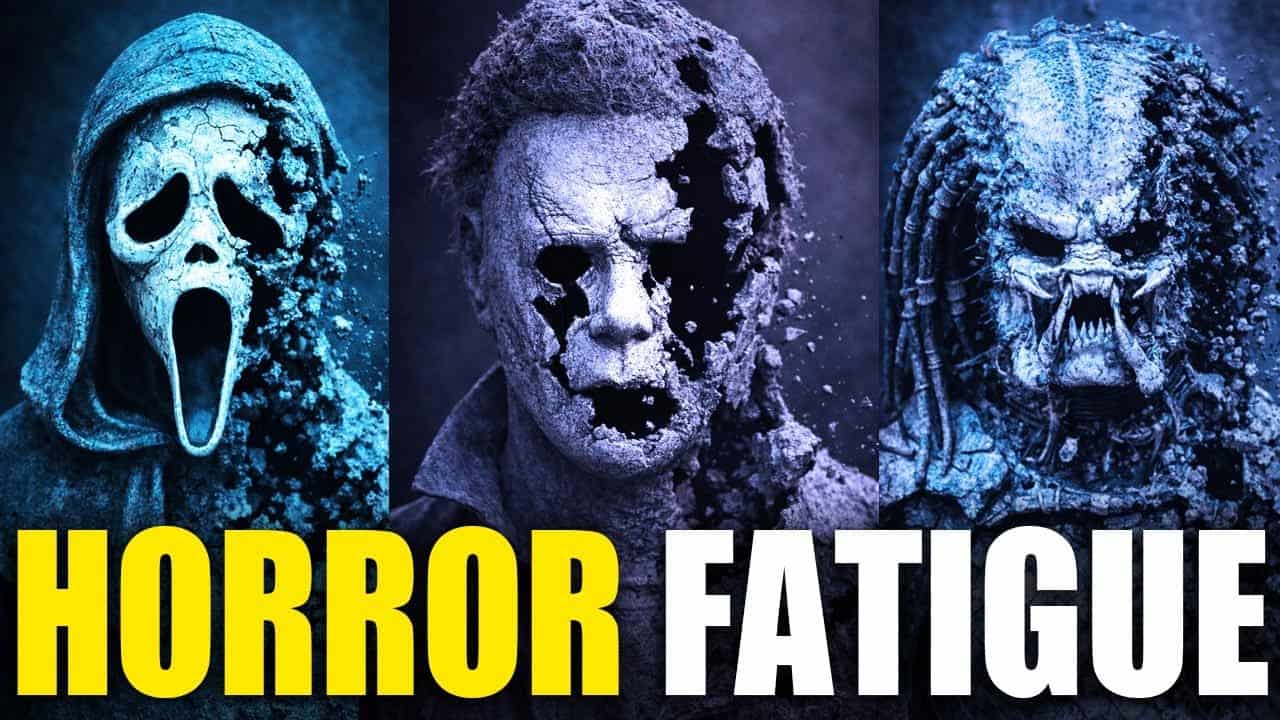
From Predator to Scream: Franchises That Have Overstayed Their Welcome
Horror franchises aren’t inherently bad. They can give you something almost yearly to look forward to, like when Saw was popping them out every October, or they can give you something to hold onto nostalgia-wise from your childhood, like the Friday the 13th movies. For studios, they’re cash cows that executives don’t want to let go of, always hoping one of them will pop off and hit that golden $100 million mark at the box office.
They’re also cheap to produce and come with a built-in fanbase that guarantees press, both negative and positive, and viewership fueled by genuine love, curiosity, or even hate-watching.
Some franchises ran their course and still left an indelible mark on the horror lexicon, even if they fell off toward the end. Romero’s Dead films or A Nightmare on Elm Street, whose regrettable remake seemingly put the nail in the coffin, are good examples.
Others, though…. some of these franchises just refuse to die, much like their stalker killers on screen. Unfortunately, the time has come to let them go. Like it or not, these franchises need to die. In many cases, they needed to die several movies ago. That doesn’t mean the movies that already exist should be forgotten. Far from it. Every film in these series either has enjoyable moments or stands as a solid argument for why some things are better left alone.
Let’s start with the most recent offender.
Predator: Let the Hunt End
Predator: Badlands was released in early November 2025, and while it slowly crept toward profitability, grossing $184 million on a $105 million budget, it also kind of lost the plot. Literally, yes, it still follows Predators, but it’s about as far from the original film as you can get.
The first Predator remains one of the greatest sci-fi action movies of all time. A macho group of military operators becomes the ultimate hunt for the galaxy’s ultimate predator. The story unfolds almost entirely in real time, with the characters piecing together what’s happening. Crucially, very little is explained, and that’s what made it work. The creature’s technology, language, motives, and culture were mostly left in the dark, and that was okay. There was no sequel baiting. It stood on its own and still does.
Sequels, of course, aren’t inherently bad. Predator 2 is divisive, but it’s a fun and logical progression. One action star is swapped for another. Danny Glover may not be Arnold Schwarzenegger, but he’s great. The jungle becomes the urban jungle, the action is still strong, and we get just enough expansion of the lore. The government knows about the Predator and wants to trap it. We see the ship, the trophies, and that iconic xenomorph skull tease. Another perfect stopping point.
And for a while, it actually stopped.
Aside from the Alien vs. Predator films, which honestly do a better job showing the Yautja culture than some later entries, there was no Predator until 2010’s Predators. This movie starts with a solid idea and slowly turns into a remake of the original. Adrian Brody bulks up and follows Arnold’s footsteps almost beat for beat. We get a hunting planet, Earth’s deadliest warriors, and expanded lore like Predator classes and hunting animals. It’s fun, but unnecessary.
Then came 2018’s The Predator. This is where the franchise falls into the trap nearly all of these series do: trying to recreate what made them successful. Shane Black returned to write and direct with Fred Dekker, turning the movie into a comedy with a deeply questionable take on autism and some unfortunate casting decisions. It still made money, which meant we weren’t done.
The Dan Trachtenberg era has been both a blessing and a curse. Prey stripped things back and became one of the best movies of the early 2020s. Killer of Killers delivered almost everything fans had been asking for in a standalone animated anthology. But the most recent entry is the clearest sign the franchise has overstayed its welcome. No humans to hunt, a Disneyfied tone, sidekicks, and an identity crisis that makes it feel more like a generic sci-fi universe movie than a Predator film. Of course, it’s setting up a sequel.
Great sci-fi. Bad Predator. Let the hunt end.
Scream: Meta Doesn’t Mean Infinite
Scream is another franchise I just don’t get anymore. Call it an old man shaking his fist at the sky, but hear me out.
The original Scream was revolutionary. It arrived during a weird time for horror, brought Wes Craven back into the spotlight, and perfected meta-horror. The opening kill with Drew Barrymore was shocking, gory, and instantly told audiences that no one was safe. It saved slashers. It was a massive success ($173 million on a $15 million budget) and critically respected, even by critics like Roger Ebert. It gave us Ghostface, a new horror icon powered by the costume and Roger L. Jackson’s voice.
Naturally, sequels followed. The original trilogy came out over four years, and honestly, that should’ve been it. Even with Scream 3 being a dud and featuring one of the worst haircuts this side of Halloween H20, it ended beautifully. Sidney Prescott, traumatized beyond belief, leaves her door open. Closure. Unfortunately, that open door also left a financial one open. Eleven years later, Scream 4 arrived.
Scream 4 is fun, and it works as a swan song for Craven, but it highlights the franchise’s biggest problem: it cannot let go of its main characters. Everyone comes back. Same town. Same trauma. Even Sidney’s cousin is a killer, purely out of jealousy. It’s a very small universe for a globally famous murder spree.
Then came Scream (2022), right in the middle of the legacy sequel boom. New characters played by Jack Quaid, Jenna Ortega, and Melissa Barrera were genuinely compelling. But they couldn’t exist independently. The heroine is revealed to be the daughter of one of the original killers. Again, everything loops back. Even killing off Dewey wasn’t enough. The sequel that followed repeats Scream 2’s revenge plot, and now, with behind-the-scenes chaos, we’re going all the way back. Neve Campbell returns. Courteney Cox returns. Kevin Williamson returns. The cycle continues.
We need slashers. We don’t need a 30-year-old franchise stuck in narrative quicksand.
Halloween: A Franchise With No Identity
The Halloween franchise has more entries than Predator or Scream, and that’s exactly the problem. It has no identity. It’s been called the “Choose Your Own Adventure” horror franchise, and that’s accurate. Look at the timelines:
1, 2, 4, 5, 6
1, 2, H20, Resurrection
1, 2018, Kills, Ends
The Rob Zombie duology
So what is Michael Myers? Human? Superhuman? A cult symbol? The embodiment of evil? Depends on the movie.
John Carpenter never wanted a sequel. When one happened, it introduced the sibling twist, which is something even Carpenter later regretted. The boldest idea the franchise ever had was Halloween III: turning the series into an anthology centered on the holiday itself. Fans rejected it. Everything went downhill from there.
Nearly 50 years later, the franchise has become a buffet. Pick what you like. Ignore the rest. That’s not cohesion, that’s exhaustion.
Michael Myers can never truly die due to rights issues, meaning the cycle will always restart. But there’s nothing left to say. Evil should’ve died in 2022. Not just “tonight.”
The Exorcist: Prestige Can’t Save a Dead Franchise
Which brings us to The Exorcist. It’s older than Halloween, carries more prestige, and has fewer entries, but somehow refuses to stay buried. The original remains one of the scariest films ever made, and it also pulled in 10 Oscar nominations and nearly $450 million in box office gross.
Exorcist II is famously terrible. Exorcist III, however, is quietly one of the greatest horror sequels ever made. Written and directed by William Peter Blatty, it delivers a powerful exploration of faith and one of the greatest jump scares of all time. That’s where it should have ended.
Then came the early-2000s remake/prequel nonsense. Two versions of the same movie. Neither good. Neither necessary.
Then David Gordon Green happened. The success of Halloween (2018) somehow spawned an attempt at making an Exorcist trilogy, and it failed for all the same reasons: legacy characters, identity loss, and confusion over what kind of movie it wanted to be.
Now Mike Flanagan is attached to the franchise. I love Mike Flanagan. That’s the problem. If you need to bring in someone of his caliber, just let him do something original. Midnight Mass, Oculus, The Life of Chuck, that’s where he shines. When your franchise requires a creative nuclear weapon to stay relevant, it’s time to let it go.
Do you agree that these franchises need to die? Or do you think there’s still life left in them? What other horror series should finally go away? Let us know in the comments.
The post From Predator to Scream: Franchises That Have Overstayed Their Welcome appeared first on JoBlo.