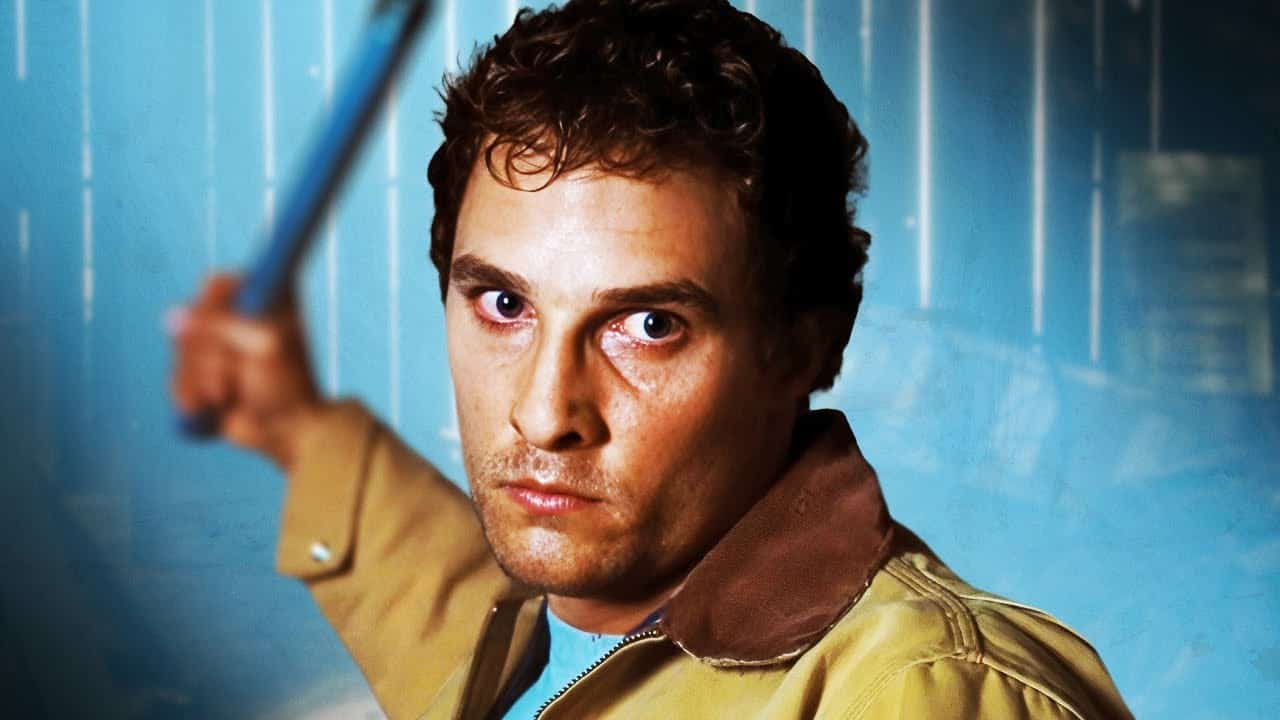
Frailty (2001) – Ending Explained | A Story That Twists Your Faith In Truth
Certain movies do not simply exist to entertain you. They exist to test you. They guide you through a familiar setup, lull you into believing you understand the code it is written in, and then slowly shift your certainty until the entire experience becomes something you never saw coming. Frailty is one of those movies. It is quiet, grounded, and methodical, built on the kind of slow burn that does not scream at you or flaunt its secrets. It waits. It lets you think you understand the people on screen. Then it forces you to confront the flaws in your own assumptions.
Directed by the late, and GREAT, Bill Paxton, Frailty is the kind of story that pulls you in with the gentle confidence of a confession. It begins with a man walking into an FBI office with a horrific claim, speaking in the measured tone of someone who has carried this truth for too long. The mood feels like a true crime documentary wrapped in southern heat. A killer is on the loose. A childhood was broken. A father descended into madness. A son escaped with the burden of knowing too much. The setup feels almost comfortingly predictable.
Frailty relies on that comfort. It relies on the preconceived ideas we carry without realizing. We are conditioned to trust law enforcement. We are conditioned to distrust religious visions. We are conditioned to believe that a grieving boy is the voice of reason in a household where faith has curdled into violence. The film counts on that deeply rooted instinct. It lets you settle inside a story you think you understand, then quietly begins twisting the edges until the image becomes something entirely different.
The brilliance of Frailty is not simply that it misleads the audience. It reveals how easily wemislead ourselves. It exposes how often we judge the sanity of others based on the rules of our own worldview. It makes you the unreliable narrator without ever pointing a finger. By the timethe final reveal lands, the film has already dismantled your certainty. The story you believed you were watching was not the story being told at all. And the truth you dismissed as impossible may have been the only real thing in the entire film.
This is what makes Frailty endure. It is not a story about supernatural justice. It is not a movie about the psychology of delusion. It is a story about perception, about how belief shapes reality,and about how frighteningly easy it is to get the entire story wrong. Now that the ground has shifted, we can walk through the film and uncover how it builds its puzzle, how it plays with belief and bias, and why the ending still lingers long after the credits roll.
Plot Summary – A Confession That Hides More Than It Reveals
Frailty begins with a man who introduces himself as Fenton Meiks. He walks into the office of FBI Agent Wesley Doyle, claiming he has information about the God’s Hand killer, the serial murderer who has been baffling authorities. Fenton is calm, steady, almost eerily composed as he tells Doyle that he knows who the killer is. The revelation is simple and devastating. The killer is his younger brother Adam.
From here, the movie sinks into memory. Fenton recounts his childhood in a small Texas town,living with his younger brother and their widowed father. Their father is an ordinary man. Hardworking. Decent. Loving. Until one night he wakes the boys and tells them he has received a message from God. He has been chosen to destroy demons that walk the earth disguised as humans. God will send him names.God will send him tools. Their family has been chosen for aholy mission.
At first, it feels like the kind of story children tell themselves to explain their parent’s sudden change. But the father is unwavering. He builds an altar. He retrieves an old axe. He takes the boys along as he kidnaps a man he believes is a demon. He touches the man and claims he can see his sins. Then he kills him in front of his sons. To Adam, the youngest, this is a divine responsibility. To Fenton, it is a nightmare.
As the killings continue, the family falls deeper into a pattern of ritual and fear. Fenton becomes desperate. He begs his father to seek help. He tries to escape. He tries to protect his brother.His father responds with harsher devotion, convinced that Fenton’s resistance is a sign that heis being tested. When Fenton finally refuses to participate, his father locks him in a cellar for days without food or light, waiting for God to speak to him. When Fenton emerges, broken and hollow, he plays along long enough toget close to his father. Then he kills him.
This moment becomes the supposed turning point of Fenton’s life. He grows up horrified by what he endured. His brother Adam becomes the true believer, convinced their father’s mission was real. Their paths split. Their bond dissolves. One grows up trying to forget. The other grows up trying to continue the mission.
The story Fenton tells Agent Doyle feels tragic but logical. A childhood warped by a father’s mental collapse. A brother consumed by a violent faith. A family destroyed by delusion. But the truth is waiting just outside the edges of the story. And the film has no intention of letting the audience stay comfortable for long.
Thematic Exploration – Belief, Perception, and the Dangers of Certainty
Frailty is built on themes that quietly dig into the foundation of what we accept as truth. At its core, the film is about belief. Not religious belief specifically, but the belief we place in our own worldview. We tend to assume that reality must align with our expectations. People who do not follow those rules must be misguided, misinformed, or mentally unstable. The film uses this instinct to guide the audience down a path that seems rational.
We assume the father is delusional because visions of angels feel impossible. We assume Adam is indoctrinated because children imitate their parents’ beliefs. We assume Fenton is the one seeing the world clearly because his interpretation aligns with our own. These assumptions shape our understanding of the story long before the twist. The film never has to lie to us. It simply lets us lie to ourselves.
Once the ending reveals the truth, those assumptions become the very thing the movie is criticizing. Frailty shows that reality is not always filtered through reason. It can be shaped by forces we do not fully understand. The film invites an uncomfortable possibility. What if the father was not delusional? What if Adam truly sees what others cannot? What if the line between faith and madness only exists because we cannot imagine the world operating differently?
The movie is also about perception. Memory is a dangerous storyteller, one shaped not just by experience but by perspective. The entire film is narrated by a man claiming to be Fenton, but he is not telling the story from a position of objectivity. He is shaping the narrative to lead the listener, and the viewer, toward a specific emotional conclusion. We trust him because he seems calm. We trust him because he seems rational. But rationality can be its own disguise.
Faith also plays a major role in how the story unfolds. In most films, faith is framed as poetic or inspiring. Frailty treats it as something more complicated. It can be a gift. It can be a curse. Itcan be a lens that reveals truths or blinds its followers. The film refuses to take a stance. It asks the audience to sit in the discomfort of uncertainty. It asks us to consider how often we dismiss what we do not understand simply because it does not fit our version of the world.
Character Analysis – Father, Fenton, and Adam
Frailty’s emotional impact comes from the dynamic between the three central characters. The father, played by Bill Paxton, is the heart of the film. He is not portrayed as a raving madman,but as a good man convinced he has been chosen for a divine task. That balance is what makes him terrifying. He truly believes he is saving his children. He believes he is protecting theworld. The sincerity of his faith is what gives the film its power. Delusion rarely feels sincere.This does.
Fenton is the anchor for the audience. He is the child who resists. He is the one who sees the killings as murder rather than mission. His fear mirrors the viewer’s fear. His confusion mirrors our confusion. He embodies reason in a world that seems to be collapsing into supernatural chaos. But the story uses that alignment to hide the truth from us. Fenton is the character we trust because he reflects our understanding of reality. That trust becomes the film’s most dangerous weapon.
Adam is the character the audience underestimates. As a child, he seems impressionable. Asan adult, he seems calm. He is the one person in the story who never wavers in his belief. That consistency makes him seem naive. But by the end of the film, Adam becomes the most unsettling presence in the story, not because he is monstrous, but because he may be the only one who understands what is really happening. His faith does not break. It guides him. And the film suggests that faith may have been justified all along.
Together, these characters form a triangle of belief, doubt, and truth. The dynamic between them is what drives the narrative toward its conclusion. Each of them sees the world differently, and the ending forces the viewer to reconsider which perspective was closest to the truth.
Ending Explained – The Truth Beneath the Story
The ending of Frailty is where the film reveals its real intentions. The man claiming to be Fentonis not Fenton at all. He is Adam. The calm, controlled voice guiding us through the story has been leading ustoward a conclusion designed to hide his identity. He has been shaping the narrative, not to confess, but to conceal.
When Adam leads Agent Doyle to a remote location supposedly connected to his brother, the truth uncovers itself piece by piece. Adam kills Doyle. He reveals that Doyle himself was ademon, one of the people his father saw as corrupt. The twist is not just that Adam is the killer. The twist is that the supernatural elements of the story may be real. Adam’s ability to see the sins of others is confirmed when he touches Doyle. The father’s visions may have been genuine. The divine mission may not have been a delusion.
The movie drives this revelation home with smaller details that only make sense in hindsight. Townspeople failing to remember Adam. Security footage being mysteriously erased. People forgetting the face of the man they interacted with moments ago. These details point to a force at work that lies outside the boundaries of rational explanation. The film does not explain it. It does not justify it. It simply presents it as reality within the world of the story.
The ending reframes the entire narrative. What we interpreted as the collapse of a father’s sanity becomes the fulfillment of a divine mission. What we believed was Adam’s indoctrination becomes his true calling. What we believed was Fenton’s sanity becomes an obstacle he never overcame. The truth is not what the audience believed. The truth belongs to the characters who were dismissed, underestimated, or misunderstood.
Why the Ending Divides People
Frailty remains divisive because it refuses to conform to the boundaries of traditional storytelling. The film does not choose between psychological realism and supernatural certainty.It allows both interpretations to coexist until the ending tips the scale. Some viewers want the father to remain a tragic figure. They want the story to remain grounded in delusion. They want the killer to be shaped by trauma rather than destiny.
But the film makes a bold choice. It declares that the supernatural elements are real. It confirms that the father was chosen. It confirms that Adam inherited a gift. It confirms that the audience, just like Fenton, failed to see what was right in front of them.
This choice challenges the viewer’s relationship with the story. It forces a re-evaluation of what we consider rational. It forces us to confront the biases that shaped our understanding. It forces us to ask whether the film tricked us or whether we tricked ourselves.
The Real Point of the Ending
The ending of Frailty is not just a twist. It is a commentary on perception. It shows how easily truth can be hidden beneath the weight of our assumptions. The film uses the audience’s instinct toward skepticism as a tool. It invites us to dismiss the supernatural. It invites us to assume that reason must be correct. Then it gently, quietly reveals how wrong we were.
The real point of the ending is not that demons exist. It is not that divine missions are real. It is that truth can exist outside the boundaries of what we consider possible. It is that belief shapes perception. It is that certainty can blind us as effectively as fear. Frailty uses its story to reflect the limitations of the human perspective. It uses its characters to show how truth can be twisted, hidden, or misunderstood based on where we stand and what we choose to see..
Final Thoughts – Why Frailty Still Matters
Frailty stands as one of the most quietly effective thrillers of its era. It is a film that does not rely on spectacle or shock value. It builds its power through restraint. It invites the viewer into a story that feels familiar, then slowly transforms that familiarity into something unsettling. It challenges our assumptions. It forces us to confront the possibility that reality is not as stable as we want it to be. The ending does not exist to trick the audience. It exists to reveal a truth woven into the story from the very beginning.
The brilliance of the film lies in its simplicity. A father, his sons, a mission, a belief. Within that simplicity lies a labyrinth of interpretation. Was the father mad or chosen. Was Fenton the voice of reason or the obstacle to truth. Was Adam a killer or a servant of something beyond comprehension.
The film offers answers, but it also leaves space for doubt. That balance is what makes Frailty linger. It is a movie that asks the audience to reconsider how quickly we judge others. How quickly we dismiss what we do not understand. How quickly we cling to the safety of our own worldview.
And that is why Frailty still resonates. It is not a film about evil. It is a film about perspective. It holds up a mirror and asks if you are truly seeing what is in front of you, or if you are only seeing what you expect to find. It leaves you with a quiet, unsettling question. When the truth does not fit your understanding, do you change the truth, or do you change yourself.
The post Frailty (2001) – Ending Explained | A Story That Twists Your Faith In Truth appeared first on JoBlo.