Wuthering Heights Review: Emerald Fennell’s Film Will Be Divisive But You Can’t Fault the Craft
PLOT: Catherine Earnshaw (Margot Robbie) is the heir to a decaying Yorkshire estate called Wuthering Heights. When her drunken father brings home a foundling, Heathcliff (Jacob Elordi), the two are raised together, and as adults, their passions ignite. But when Catherine rejects Heathcliff’s love to marry into money, she sparks a dark turn in her former confidant, as he returns years later determined to make her his.
REVIEW: Wuthering Heights is another big gamble from WB, and part of a rather bold slate of films they’ve greenlit that harkens back to a different, riskier era of filmmaking. Many of these films have proven successful at capturing the zeitgeist, and based on the packed early screening I attended last night, Emerald Fennell’s adaptation of Emily Brontë’s classic novel is bound to become another hit—even if it will widely divide critics.
One thing is for sure—it’s strikingly different as far as adaptations go, with the classic tale reimagined into a corset-loosening erotic drama that at times feels like it owes more to E.L. James than Brontë. It’s a defiantly maximalist take on the costume flick, with director Fennell throwing everything but the kitchen sink into her adaptation, which boldly ditches the entire second half of the novel and takes huge liberties with the rest. That said, there have already been plenty of faithful adaptations of the novel, so it’s hard to fault Fennell for her approach, which is impeccably made from a technical standpoint.
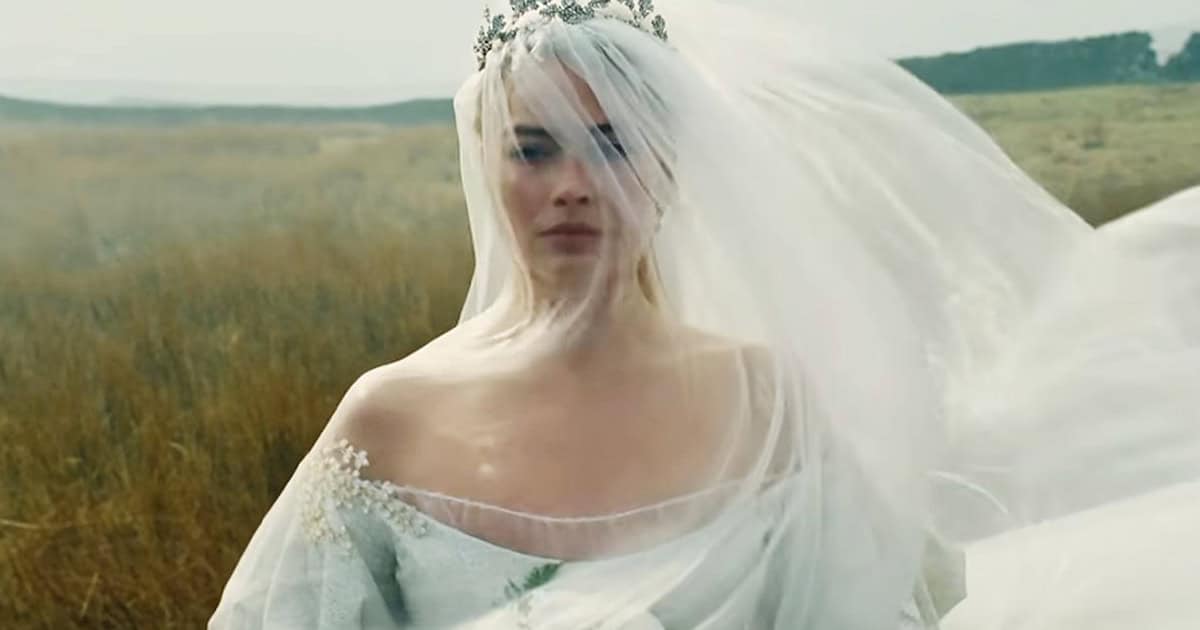
Indeed, Linus Sandgren’s 35mm VistaVision photography, the lush production design by Susie Davies, the art direction and costuming, as well as the score by Anthony Willis (with songs by Charli XCX), should all be remembered at Oscar time next year. Fennell does an incredible job with the staging of certain scenes, in particular the film’s unforgettable opening, where a young Cathy (played as a child by Charlotte Mellington—young Heathcliff is played by Adolescence breakout Owen Cooper) witnesses a hanging and, along with the crowd, becomes almost feverish in their bloodlust. Particularly unforgettable is a nun who, upon seeing the dead man’s erection, becomes almost feral with lust. It’s a wild way to start a literary adaptation, and indeed the rest of the movie never quite lives up to it—it had me expecting something closer to Ken Russell’s The Devils for a hot minute (that movie is clearly a huge influence on this one – ironic as the distributor WB has buried it for years).
Here’s the thing—from a craft standpoint, Wuthering Heights is a triumph. But when you watch the movie, particularly the performances of the two leads, played by Margot Robbie and Jacob Elordi, you get the sense that they are little more than props in Fennell’s deliberately anachronistic 19th-century England. Both are striking to behold, but the emphasis is so strong on the visual appeal of the actors that the pathos of the story never quite comes through. Robbie navigates this a bit better than Elordi, with the latter never really selling the darkness that made Heathcliff the Byronic ideal of an antihero. He looks the part, but he’s presented as a fetishistic object, with you never getting the sense of Heathcliff’s darker nature. Instead, he’s an object of erotic fantasy. The movie will get a lot of attention for its sexy scenes, but despite the R-rating, they are relatively tame, with none of them quite living up to the film’s most erotic moment, where Catherine and Heathcliff spot a stable boy and a maid engaging in some steamy erotic roleplay.
Now, this isn’t to say Robbie and Elordi are bad—they aren’t. Both do exactly what Fennell clearly wanted them to do, with each cast for star appeal and extreme good looks, but I never felt invested, or even really bought how deep Catherine and Heathcliff’s shared passions go. Of the cast, the one who really makes a strong impression is Saltburn’s Alison Oliver as the ward of Catherine’s eventual husband, Mr. Linton (Shazad Latif—who’s stuck playing the dullest character in the film). Her Isabelle starts off as hilariously awkward but takes a wild pivot about halfway through that should be remembered come Oscar time next year.
Now, while my own feelings on Wuthering Heights were mixed, there is something that needs to be acknowledged. The film had an undeniable effect on the audience I saw it with, with the mostly female crowd openly weeping when it was over and vocally having a blast from start to finish. It will likely resonate strongly for some people and will deservedly make a boatload of money. While I didn’t invest in the characters in quite the way I’d hoped, I also felt like I was in the hands of a director who was making exactly the movie she wanted to make—and no one can say her vision isn’t singular in that respect. Wuthering Heights is a big swing, and even if it didn’t entirely work for me, I still had a great time watching it.
The post Wuthering Heights Review: Emerald Fennell’s Film Will Be Divisive But You Can’t Fault the Craft appeared first on JoBlo.