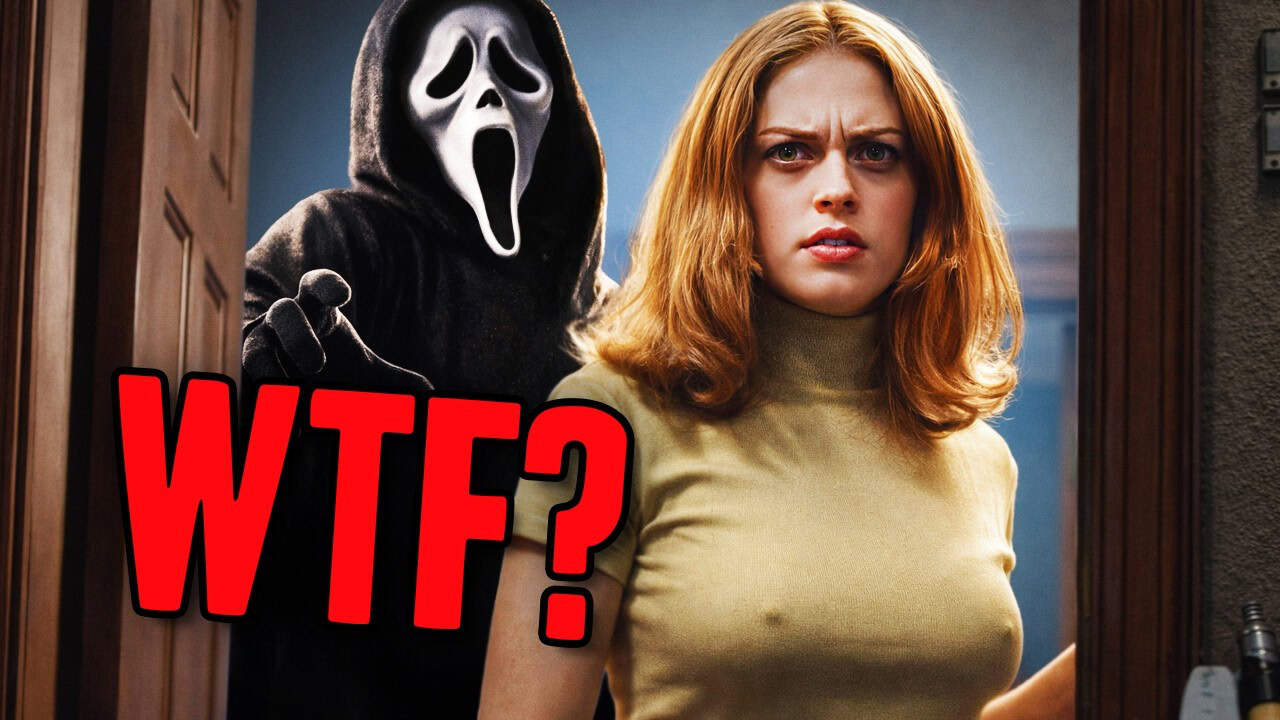
Why Scream Almost Didn’t Happen (And How It Became Iconic)
“Don’t you blame the movies. Movies don’t create psychos. Movies make psychos more creative.”
That’s the core idea behind Scream, a film that started as a spec script and ended up reshaping the entire horror genre. But how did it happen?
Why did Wes Craven initially turn down directing?
Which real-life serial killer inspired the story?
And how did the filmmakers finally get the Weinsteins off their back?
Let’s take a look at what happened to Scream.
The Script That Shook Hollywood
In 1994, Kevin Williamson was a young screenwriter who had just sold his first script, Teaching Mrs. Tingle. Instead of slowing down, he immediately set out to write something new. His inspiration came from an ABC News Turning Point episode about serial killer Danny Rolling. The story unsettled him so much that it sparked nightmares… and ultimately, a screenplay.
Williamson wrote the first draft in just three days. Originally titled Scary Movie, the script drew inspiration from classic slashers like:
Halloween
Prom Night
Friday the 13th
These franchises had fallen out of favor with audiences, and Williamson wanted to both celebrate and critique them. At the same time, he explored media fears around violence and its influence on young viewers.
At his agent’s request, he toned down the most extreme gore (removing severed limbs and intestines), but the script still packed a punch.
The story followed Sidney Prescott as a mysterious killer targets her friends—taunting victims with horror trivia before striking. It all built to one of the most shocking twists in horror history.
The Bidding War
Scary Movie triggered a massive bidding war. Studios involved included:
Morgan Creek
Universal
Paramount
Even Oliver Stone
Miramax ultimately secured the script for around $400,000–$500,000, despite offering less than competitors, on one key condition: immediate production. Williamson agreed, fearing the script might otherwise sit on a shelf.
Early Changes (and Studio Pressure)
Once Miramax came onboard, notes followed. Bob Weinstein wanted more frequent kills, leading to the addition of the principal’s death, a scene that also helped isolate the main characters during the finale.
Another memorable moment, Tatum’s garage death, was enhanced by a suggestion from Williamson’s assistant: the now-iconic dog door.
Wes Craven Almost Didn’t Direct
Wes Craven initially turned down Scream. It wasn’t studio pressure that changed his mind, it was a fan at a convention. Their interaction convinced him to take the job.
So yes, fan conversations can literally change film history.
The Birth of Ghostface
The script described the killer’s costume as a cheap Halloween outfit. During a location scout, the team discovered what would become the Ghostface mask. Originally called the “Peanut-Eyed Ghost,” the mask was owned by Fun World. The production briefly tried to recreate it without paying, but nothing looked as good as the original.
Craven shot with the real mask anyway and thankfully got approval later. Fun World licensed it for just $100 and a credit. That decision would later make them a fortune.
Casting Surprises
Drew Barrymore was originally cast as Sidney Prescott, but she had a different idea: What if she played the opening victim instead? That decision changed everything. Like Janet Leigh in Psycho, Barrymore’s early death shocked audiences and became one of the film’s defining moments.
The role of Sidney ultimately went to Neve Campbell, who impressed producers with her strength and physical presence.
Other cast members included:
Skeet Ulrich
Matthew Lillard
Jamie Kennedy
Rose McGowan
David Arquette
For Gale Weathers, producers wanted a recognizable name. Courteney Cox, then starring in Friends, had to convince Craven she could handle the role. She did. And she nailed it.
The Voice of Ghostface
Roger L. Jackson performed Ghostface’s voice on set. Originally, he was meant to be replaced in post-production, but Craven loved his performance so much that they kept it. Jackson stayed off-camera, watching actors on a monitor while delivering lines live, without ever interacting with them directly. That separation helped heighten tension in performances.
Filming Challenges
Santa Rosa, California was chosen as the filming location, using real houses instead of sets. The high school scenes had to be relocated after a local school board rejected the production due to violence concerns, adding $300,000 to the budget.
The opening scene alone took an entire week to shoot.
Meanwhile, the Weinsteins weren’t impressed with early footage. They criticized the mask and pushed for changes. Craven responded by secretly editing the opening sequence with editor Patrick Lussier and sending it to Bob Weinstein. It worked. Weinstein loved it and backed off, giving the filmmakers more creative freedom (and more money).
A Brutal Finale
The final sequence at Stu’s house lasted 42 minutes onscreen and took 21 nights to shoot. It was intense. Notable incidents included:
Skeet Ulrich being accidentally stabbed for real
A stunt performer nearly falling during a van sequence
Cast members being told to tone it down after scaring Courteney Cox
The crew even made shirts that read: “I survived Scene 118.”
Behind-the-Scenes Shakeups
Cinematographer Mark Irwin was replaced late in production due to technical issues with anamorphic lenses, including focus problems. Peter Deming stepped in and would continue working with Craven on future entries.
From Scary Movie to Scream
The title change came after filming wrapped. Bob Weinstein worried audiences would interpret Scary Movie as a straight comedy. The new title: Scream. There was a lawsuit from Sony (due to Screamers), but it was settled out of court.
Fighting for an R Rating
The MPAA initially resisted giving the film an R rating, calling it too intense. Craven’s solution? He argued the film was a satire, a spoof. That reframing worked.
Release and Legacy
Scream opened on December 20, 1996, earning $6 million in its first weekend. At first, it looked like a flop. But word of mouth turned it all around. The film:
Increased its box office week after week
Reached $173 million worldwide
Became a cultural phenomenon
Critics were mixed at the time, praising its meta commentary but criticizing its violence. Over time, however, Scream has been re-evaluated as a masterpiece.
The Impact
Few films have reshaped a genre the way Scream did. It revived the slasher film, influenced a generation of horror, and became a cornerstone of pop culture. Without it, horror in the late ’90s and beyond would look very different.
And that… is what happened to Scream.
A couple of previous episodes of this show can be seen below. For more, check out the JoBlo Horror Originals YouTube channel—and don’t forget to subscribe!
The post Why Scream Almost Didn’t Happen (And How It Became Iconic) appeared first on JoBlo.