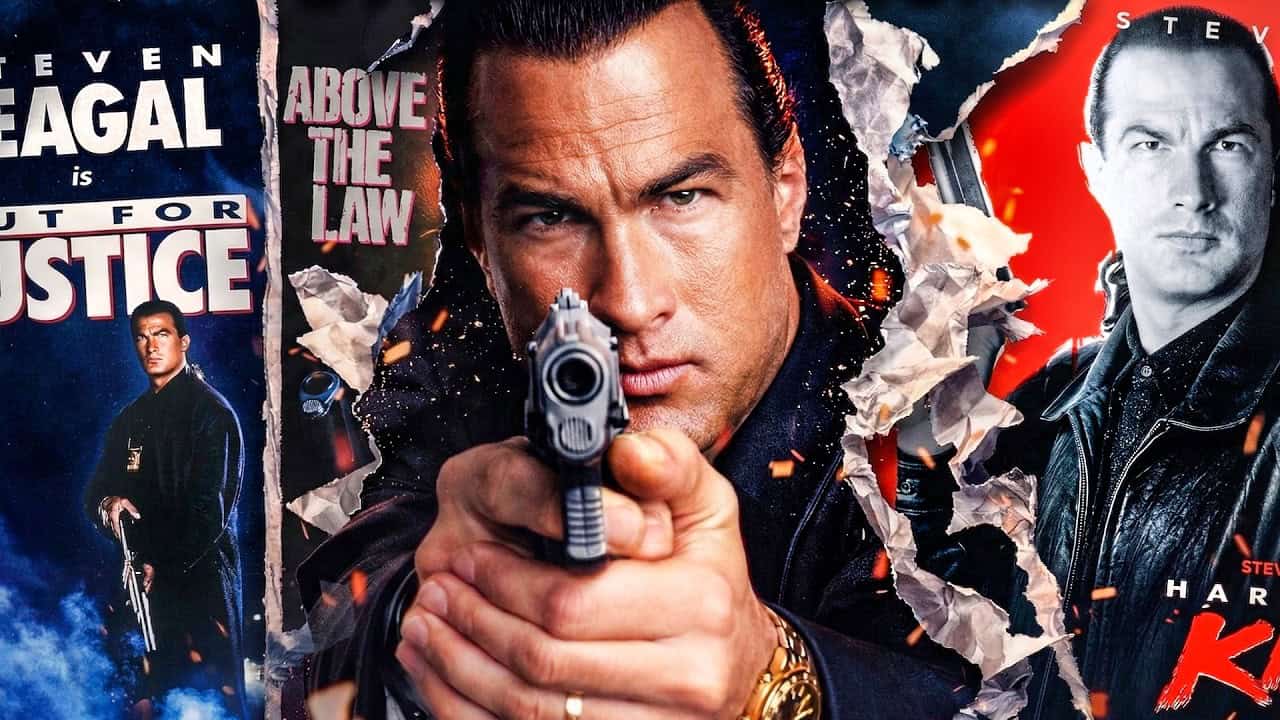
Steven Seagal Movies Revisited: The Rise, Fall, and Hidden Greatness of an Action Icon
Over the past few years, maybe even decades, I’ve noticed something troubling: a serious lack of respect for the work of Steven Seagal. Mention his name and you’re likely to get an eye roll, maybe even a laugh. Somewhere along the way, a man once known for breaking bones on screen became a punchline. But what if that reputation is completely wrong?
What if Steven Seagal actually made a handful of genuine martial arts classics? What if he wasn’t just a product of his era, but a legitimate force in action cinema? What if, at one point, he was not only a gift to the genre but to cinema itself?
Because here’s the truth: Steven Seagal is a hero who lived long enough to become the villain. Yes, his later years, filled with increasingly lazy direct-to-video output, have damaged his legacy. But they do not erase what came before. And what came before was something special. In the late 1980s and early 1990s, Seagal went on a run of hit after hit, an action streak that, at its peak, rivaled the very best the industry had to offer.
The Aikido Advantage: What Made Steven Seagal Different
Steven Seagal was built on Aikido, a martial art rooted in control, not aggression. It’s designed to redirect an opponent’s energy and end a fight before it truly begins. That philosophy shaped everything about his on-screen presence. His movements weren’t flashy. They were surgical. Clean. Effortless. Dangerous. And sometimes, a little too real.
Seagal became infamous for not holding back, reportedly striking stunt performers during takes to give the action an added layer of authenticity. While that approach is certainly controversial, there’s no denying the result: the violence felt real in a way audiences weren’t used to.
Long before Hollywood knew what to do with him, Seagal had already built a reputation. He ran a dojo, trained actors, and even reportedly broke Sean Connery’s wrist during rehearsals on Never Say Never Again.
So when a powerful Hollywood agent who also happened to be one of his students recognized his potential, doors opened. Warner Bros. positioned him as the next big thing. And in 1988, with Above the Law, he arrived.
Above the Law (1988): The Myth Begins
Originally written for Clint Eastwood and offered to Chuck Norris, Above the Law feels like a low-budget crime film that accidentally discovered a completely new kind of action star. Seagal co-wrote the screenplay, drawing from alleged real-life CIA experiences. Whether true or not, the claim added to the mystique.
What made him stand out immediately was his approach to violence. Fights ended quickly. No drawn-out choreography. No flashy moves. Just furious precision; fast, efficient, and brutal. It was almost unsettling to watch. Bodies twisted. Bones snapped.
The film blended crime thriller elements with martial arts, but Seagal’s raw intensity pushed it into something closer to horror. And unlike his later work, he allowed himself to appear vulnerable, most notably in a disturbing torture sequence that grounded the character in real stakes.
Above the Law didn’t reinvent the genre, but it fused styles in a way audiences hadn’t seen before. It felt primal. Mythic. Violent. And strangely beautiful. It also blurred the line between actor and legend, opening with archival-style footage that reinforced the idea that Seagal wasn’t just playing a role, he was the role.
The film was a modest theatrical success but exploded on VHS, turning Seagal into a household name.
Hard to Kill (1990): A Star Is Born
With Hard to Kill, Steven Seagal became a bona fide box office draw. The film solidified the formula that would define his career: a lone hero, betrayed by a corrupt system, fueled by loss, and driven by quiet rage toward explosive revenge. It also introduced a new dimension to his screen presence: an almost supernatural resilience. In this film, Seagal is less a man and more a force. Nearly unstoppable.
And yet, what makes it work is the contrast. The film leans into classic late-’80s action tropes, but Seagal remains completely serious. That tension between absurdity and sincerity creates a unique tone that somehow lands.
His famous line, “I’m gonna take you to the bank… the blood bank,” shouldn’t work. It barely makes sense. But it works because Seagal believes it, and that conviction sells everything.
Marked for Death (1990): Maximum Violence
Released the same year, Marked for Death doubles down on everything that worked and pushes it further. More violence. More brutality. More confidence. The film follows an ex-DEA agent returning home to find his neighborhood overrun by drugs and gang violence. What follows is exactly what you’d expect: revenge, bone-breaking, and chaos.
But what sets this film apart is its tonal shift. The introduction of voodoo elements and occult imagery gives the story a strange, almost supernatural edge. Combined with the terrifying villain Screwface, the film edges into horror territory.
At the time, it was considered one of the most violent films ever released, requiring cuts to secure an R rating. And yet, Seagal remains calm, almost effortless in his execution. That contrast became his signature.
Out for Justice (1991): The Peak
For many fans, Out for Justice represents the peak of Seagal’s powers. This time, he plays a street-level cop in a gritty crime story supported by a strong ensemble cast. The film features standout sequences (a deli fight, a pool hall brawl, and a brutal kitchen finale) that showcase Seagal at his best.
What makes this film work is balance. It’s not just a Seagal movie, it’s a solid crime thriller that uses him effectively. Just enough Seagal. Not too much. Because that’s the secret: a little Seagal goes a long way.
Under Siege and the Turning Point
Then comes Under Siege, a film that almost transcends being a “Steven Seagal movie.” It’s a genuinely great action film that just happens to have Steven Seagal in it. A top-tier Die Hard-style thriller in the best possible way. The same could be said about Executive Decision.
Yes, Under Siege is the biggest hit of Seagal’s career. But here’s the twist: the movie works in spite of him. It’s elevated by strong direction, memorable villains, and a slick, high-concept premise. Seagal is a key piece of the puzzle, but he’s not the entire show. And that balance is exactly why it works.
In fact, that approach might have been the best path forward. If Seagal had leaned into ensemble-driven storytelling, he could have carved out a long, respectable career as a reliable supporting presence in bigger action films. But instead… we’re left with a small handful of early hits.
And you know what? After revisiting those films… that’s enough.
The Decline: What Happened to Steven Seagal?
No amount of direct-to-video output can erase what Steven Seagal accomplished in the late ’80s and early ’90s. He helped change how martial arts were presented on screen… and for a brief moment, he changed how action movies felt. But the downfall came fast.
His appearances on Saturday Night Live and Roseanne damaged his public image. Then came On Deadly Ground, his directorial effort, which only amplified the problems. The Glimmer Man continued the steady decline.
Behind the scenes, things weren’t much better. Reports of on-set conflicts, a reputation for being difficult to work with, and serious allegations further eroded his standing in Hollywood. Then things got even stranger. Claims surfaced involving connections to organized crime, including alleged ties to the Gambino crime family, supposedly influencing his later career choices.
Whether exaggerated or not, it only added to the myth and the chaos surrounding his later years.
The Legacy: Why Steven Seagal Still Matters
And yet… those early films still exist. The past may get distorted, but it can’t be erased. And those movies, the ones that mattered, are still out there, waiting to be enjoyed. In fact, they might even get better with time. Aging like a fine wine… whether it’s from Italy, Japan, Russia, or wherever Steven Seagal claims to be from this week.
The post Steven Seagal Movies Revisited: The Rise, Fall, and Hidden Greatness of an Action Icon appeared first on JoBlo.