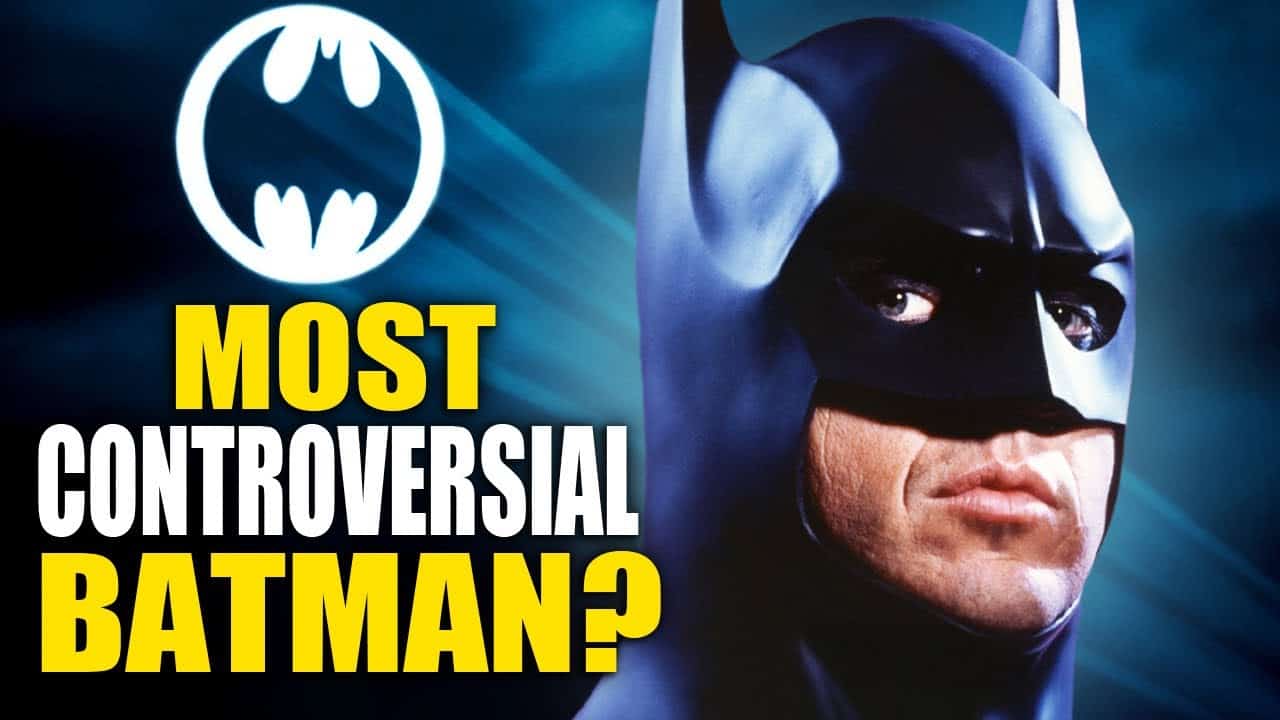
Batman’ 89: Why was Michael Keaton’s casting so controversial?
Whether it’s Ben Affleck, Jared Leto, Robert Pattinson or even Heath Ledger, fans of the immensely popular DC comics character, Batman, can get extremely protective of their caped crusader when it comes to casting. Their passion will also have them get vocal about it. While disapproving fandom isn’t limited to Batman alone, one of the most infamous “fans vs studio” stories comes from the making of the original 1989 Tim Burton film Batman. Today we take a look at the controversy of Michael Keaton’s casting and how Warner Bros rushed out a trailer for damage control against the critics.
If you’re like me and you grew up in the 80s and 90s, the 1989 Batman film likely had a profound impact on your childhood. Many people like myself only really knew of Michael Keaton as Bruce Wayne and Batman and we never questioned it. He was this character. However, at the time, us little kids weren’t privied to what was going on in the news leading up to the film, which happened to be the big controversy involving Keaton’s casting.
History
So, let’s go back to where it all started — in the comics. Ever since Batman’s first issue in Detective Comics back in 1939, he was made to be an alternate-type of character to DC’s famous golden boy, Superman. He was the antithesis to Superman; in that he was a dark, brooding character who dealt with trauma of having his parents gunned down in front of him and he had no powers to help him in his obsessive crusade against crime. In the years that followed, including when Robin, the Boy Wonder, joined him, the Batman comics kept the tone pretty consistent. Then, in the 1960s, the comics started experimenting with more light-hearted stories that could sometimes jump the shark.
The 1960s also had the massive popularity of the Adam West television series explore Batman’s world with its famous campy tone. Batman purists of the time would miss the roots of the urban enforcer who was supposed to be the worlds greatest detective. Then, the 1980s would see a league of new writers start to bring Batman back to his gritty roots with popular publications of graphic novels such as Batman: Year One, Arkham Asylum, The Killing Joke and, of course, The Dark Knight Returns.
Comic fans rejoiced as a new renaissance is now doing the character justice in such a fresh way. The momentum would keep rolling as it was announced that Warner Bros began developing a new Batman film.
Michael Keaton
Back when Adam West’s Batman TV show was a cultural phenomenon, Fox capitalized on its popularity with a film version in 1966. It was more of the same, and in the time in between movies, there hadn’t been a Batman film made that would visit the material with serious interpretation. So, when the news of a new movie was made public, fans would breathe a sigh of relief that they can finally get a faithful adaptation of the true nature of the character. When Tim Burton was announced as the director, the respsonse was relatively quiet, but it was the announcement that Michael Keaton was cast as Batman that sent things into a frenzy.
Michael Keaton was already a pretty known actor. However, he was primarily known for comedy. He would actually start his career off as a stand-up comic, which took him down the usual route of a successful comedian, as he starred in a very short-lived sitcom, Working Stiffs. Although it didn’t take off, it gave Keaton exposure and soon, he found himself in a slew of movies like Night Shift, Mr. Mom, Gung Ho and Johnny Dangerously. Interestingly enough, despite the nature of this controversy, Keaton was a pretty well-liked actor. He and Tim Burton would first partner up for Beetlejuice. And while you’d assume their working relationship on that film led to Keaton’s hiring on Batman, it was actually when Burton saw Keaton in the drama Clean and Sober that pursuaded Burton to cast him.
According to Burton, it was Keaton’s quiet intensity that convinced him he was right for the role as his Bruce Wayne would feature more subtext about his obsessive fight against Gotham’s crime. Burton says you can see his Bruce Wayne’s anger, pain and insanity through Keaton’s eyes. Burton continued to say that his interpretation of Batman was to take the idea of a superhero without powers a step further, in that his Bruce Wayne was more of a normal guy who would have to put on a grandiose costume to project something more extraordinary.
The Fans Revolt
Burton’s intentions or reasonings were not revealed to fans at the time and the news of Michael Keaton’s casting caused an uproar, because it gave them the impression that Warner Bros was making another farce, like the 60s Batman. When it came to casting, fans expected someone that embodied the role of an action star. Names like Mel Gibson, Harrison Ford, Pierce Brosnan, Kevin Costner and Tom Selleck were some top choices. Many also thought Keaton’s Beetlejuice co-star, Alec Baldwin, had the perfect qualities for Batman, which can kind of be seen later on with his turn in 1994’s The Shadow.
Most of the fans seemed to have cited the comedy Mr. Mom as a prime example that Keaton wasn’t capable of pulling off the role. However, it may not have helped that he was recently seen in Burton’s Beetlejuice, which showed him being towered over by both Baldwin and Geena Davis and sporting a fat suit. He looked a far cry from the physique of the current comic state of Batman.
So, what do outraged fans do at a time with no internet? The old fashioned way of voicing your opinion: write an angry letter. After Michael Keaton was announced, Warner Bros Studios had received around 50,000 angry letters in a backlash never seen before. Many of them, assuming the worst from the upcoming film.
The response became so big that several news outlets reported on the story, but it was an article from the Wall Street Journal that made the whole incident a mainstream story. According to the article, not only would Warner Bros tell fans that the movie was being taken seriously, but they would even enlist the help of Bob Kane to step in. Kane created Batman with Bill Finger and he would be credited as a consultant on the film with plenty of pictures showing him on set. Kane would make a statement saying, “The movie isn’t a comedy at all. It’s going to be a heavy melodrama.” He even hyped up The Joker, saying he’s “a psychotic murderer. A maniacal killer. It’s all very evil.” Fans apparently didn’t even take Kane’s comments seriously and thought he was just being paid off to endorse the film. It’s not like it hasn’t been done before.
Warners was playing their game so close to the chest that they didn’t allow the cast to talk about the movie, much like the secrecy surrounding the MCU. However, they did hold a contest that would allow fans to win a small part in the movie. This is also likely so some of them could see first hand that they were taking the material seriously.
Fans continued to get hostile. But Michael Keaton didn’t seem to be phased by them.
Time for Damage Control
Warners wanted to keep the production secret, but they still decided to throw a bone to fans in order to put the passionate vocal concerns to rest. Two things turned the tide. First, Warners released a promo shot that teased the Batsuit and while it was only the backview, the nature of the suit would give a very dark, gothic impression. Something more terrifying than what’s been seen from Adam West’s interpretation.
But the final blow to the skepticism was when a teaser trailer was quickly edited and rushed out in late 1988, several months before the movie’s release.
Nowadays, it’s a lot easier for trailers to be thrown together with everything being digitized. However, cutting everything on film back then meant the process was much more tedious, thus when you watch the original trailer today, it looks incredibly rough.
The Teaser Trailer
So, let’s take a look at the trailer. Right off the bat (no pun intended), you’ll notice that the teaser has no music and the sound is roughly cut together using what mostly sounds like audio they had on set, except for maybe some of the action effects. After the Warner Bros logo, it cuts directly to the Batmobile’s afterburner as it ignites, which can trigger memories to the iconic shot of the 60s show for the initiated. Then, you get Vicki Vale introducing herself, which, again, might set off a few bells in some hardcore Batman fans, then, Bruce Wayne introduces himself and now, fans’ heads are boiling to critical mass. Before viewers are able to gather themselves, BOOM! We’re shown Batman in action! While there is some humor shown, the trailer shows off the straight-faced tone coupled with the dramatic visuals and Burton’s perfect dream-like melding of the 40s aesthetic despite seemingly taking place in modern day.
The trailer is very noirish and even saved the big reveal for the Joker later on. Eventually, Danny Elfman’s iconic music helped to give Batman its identity, but without music, there’s something eerie about the way the trailer shows the movie. Batman is perfectly draped in darkness, teasing his appearance and making the fans want more. The Joker make up looks faithful to the warped smile of the comics and Nicholson proves no one can do insane like him.
The Batmobile is shown to be firing machine guns, which helps the film to keep up with Sylvester Stallone and Arnold Schwarzenegger-type gunplay and instantly iconic scenes like “I’m Batman” and the crashing through the skylight are included to show concerned fans that they are not playing around with this movie.
We conclude with a haunting echoing laugh from the Joker over an ominous shot of Batman that wasn’t included in the final cut. Then, not even a title. Just text that says, “Coming This Summer.” There was actually no need for an introduction. Everybody knows who this is.
Warner Bros tested the trailer to an unsuspecting audience in Westwood, California. At just a minute and a half, the teaser actually received a standing ovation. Word got around and the trailer was majorly sought after. There were cases where people would call theaters to ask where the trailer was shown, buy a ticket to the movie, then leave once the 90 second trailer was over. A bootleg tape of the teaser would also become a hot commodity at comic book conventions of the time.
The rest became history as Batman flew to the top of the box office as the highest-grossing movie of 1989 in the U.S. Then, in the years following its success, studios grabbed any kind of pulp or comic book characters that could ride the wave.
Finally, the people had spoken as Batman won the People’s Choice Award for Favorite Film of the Year. Michael Keaton and Jack Nicholson would accept the award and Keaton would finally put the controversy of his casting to rest.
The post Batman’ 89: Why was Michael Keaton’s casting so controversial? appeared first on JoBlo.