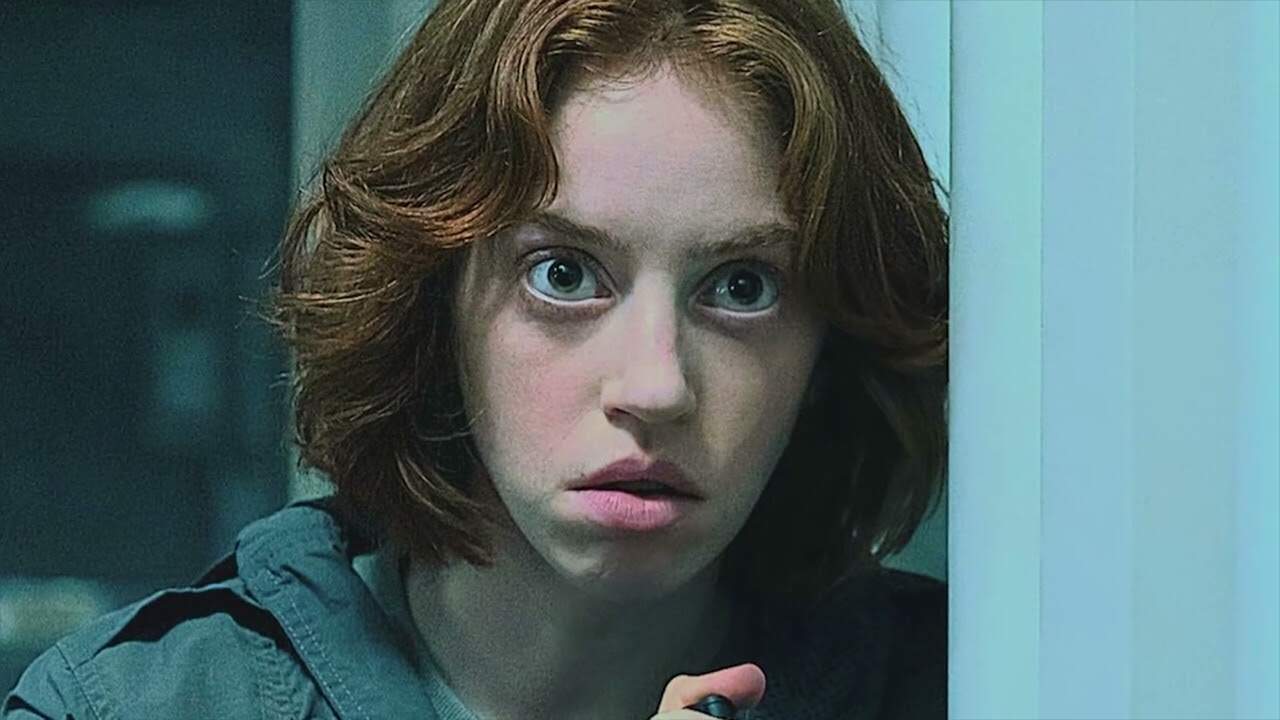
Alien: Earth Explained – we take a deep dive into the first season (SPOILERS)
Alien: Earth isn’t just another prequel; it’s an identity crisis wrapped in Xenomorph terror. From its first scene it dares you to ask what happens when the line between human and experiment disappears. A corporate lab offers immortality by uploading children’s minds into synthetic adult bodies just as a Weyland-Yutani research ship crashes back to Earth carrying alien specimens. The Prodigy Corporation calls their hybrid project salvation, but every frame drips with menace. By the time Episode 7 “Emergence” ends, we’re not just watching monsters break free but the idea of humanity itself unravel. Let us explain.
The season begins in 2120 when the Weyland-Yutani vessel Maginot limps home with a lethal cargo of facehuggers, alien eggs, and parasitic oddities. A malfunction sends the ship into the Pacific, scattering horrors across a remote archipelago. Nearby, Prodigy’s Neverland becomes the stage for an experiment that feels more like a fairy-tale curse. Terminally ill children are “saved” by transferring their consciousness into adult synthetic bodies, the so-called Lost Boys. Wendy, born Marcy Hermit, is Prodigy’s crown jewel. She’s a child’s mind in an adult frame who slowly realizes she’s property. Her brother Joe, nicknamed Hermit, believed she was dead until he discovered the disturbing truth. Around them circle the enigmatic Kirsch, the calculating Boy Kavalier, and Morrow, a soldier with ties to Weyland-Yutani. From the start the hybrids live under constant surveillance, their memories subject to erasure and their very existence treated like a patent.
Early episodes sprinkle in clues that something stranger is coming. Wendy experiences headaches and phantom sounds that aren’t just spooky atmosphere, but the first hints of a psychic link with the Xenomorphs unleashed by the Maginot crash. Careful viewers catch visual winks: the Peter Pan motif in names like Wendy and the Lost Boys, the Neverland setting itself, all pointing to eternal childhood turned prison. Nibs clings to her stuffed toy “Mr. Strawberry,” a sly nod to the unseen “Mr. Strawberry” of Twin Peaks: The Return, signaling that innocence is never safe. Even the tech design tips its hat to the wider franchise: pulse rifles and ventilation shafts echo Aliens, while the ominous blue strobe lighting recalls the original Alien industrial nightmares.
As the hybrids push back against Prodigy’s control, the show revels in grotesque science. We witness sheep implanted with octopus-like eyes and organisms forced to perform math. These experiments don’t really feel like research. Arthur disables the trackers that keep the Lost Boys tethered, a quiet but pivotal moment symbolizing the first true act of freedom. Through it all Wendy’s connection to the aliens deepens. She hears frequencies no one else can and calms a newly hatched creature with a simple glance, foreshadowing the power she’ll unleash later. It’s an eerie twist on Alien Resurrection’s maternal bond between Ripley and the creatures, and the showrunner has teased that Wendy’s relationship is far darker than a “pet” dynamic.
By Episode 7 the slow burn detonates. Arthur succumbs to a facehugger and dies in the franchise’s signature chestburster spectacle, while Slightly and Smee drag his body through the jungle in a grim echo of the first film’s doomed rescue attempts. Soldiers taunt Nibs by tossing Mr. Strawberry into the water, a seemingly small cruelty that shatters her composure and sets off a brutal fight. Wendy, Joe, and the surviving Lost Boys race for the coast as Prodigy security and Weyland-Yutani troops converge. In the chaos Wendy finally embraces her connection to the adult Xenomorph, commanding it like a living weapon and turning the hunters into prey. Kirsch, ever the enigma, helps the children escape yet quietly spirits away the newborn alien for motives we can only guess. And Boy Kavalier, who dreamed of controlling evolution itself, watches his grand design collapse in blood and fire.
These moments are more than shock and gore; they’re layered with meaning for franchise die-hards. The facehugger tail coiling around Arthur’s throat as Slightly tries to give him water is a direct visual callback to the first film’s surgical horror. Wendy’s gentle “petting” of the Xenomorph as it clicks back at her is both tender and terrifying. Even the island’s nickname, Neverland, a place where the Lost Boys can’t grow up because they were never meant to live free in the first place.
All of this sets the table for a finale loaded with possibilities. Will Wendy lead the hybrids off the island or become something no longer human at all? Can Joe save his sister without losing her to the alien instincts already threading through her mind? What is Kirsch really planning with a newborn Xenomorph hidden away? And when Weyland-Yutani inevitably makes its move, will Prodigy’s nightmare spill beyond the island and into the wider world? The showrunner has promised that Wendy’s control over the alien will not remain simple mastery; power like that always bites back.
The richest spin-off potential sits with the very hybrids who survived. Nibs, armed with trauma and that eerie connection to the aliens, could headline a limited series about a child-soldier-turned-rebel trying to carve out a normal life while Weyland-Yutani hunts her across the solar system. Imagine a series that follows her as she drifts from colony to colony, always on the run but gradually learning to weaponize the psychic link she shares with the Xenomorphs. Slightly and Smee, haunted by the death of Arthur, could appear as uneasy allies; two former Lost Boys whose loyalty to each other might be the only thing keeping them sane in a universe that sees them as test subjects rather than people. And Boy Kavalier’s failed god complex almost demands its own narrative. A spin-off focused on his efforts to rebuild in the shadows could be a slow-burn techno-thriller, diving into the black markets of space where genetics, AI, and alien DNA are traded like currency. Each of these characters embodies a different answer to the question: what does humanity mean when you were never fully human to begin with? Their arcs wouldn’t just extend the franchise, they’d challenge it, forcing audiences to confront whether these hybrids are victims, monsters, or the next step in evolution.
Equally tempting is a corporate-espionage saga pitting Prodigy against Weyland-Yutani. Kirsch’s quiet theft of a newborn alien is practically a pilot episode in itself. Picture a series of covert missions where rival companies wage a shadow war, using mercenaries and double agents to weaponize the ultimate biological prize. We could follow Kirsch as he navigates secret labs hidden on forgotten moons, striking back-room deals with smugglers and corrupt colonial governors while trying to stay one step ahead of both corporations and the Interstellar Commerce Commission. His motives are still opaque; does he want to control the alien for profit, for revenge, or for some twisted belief in progress? Every episode could peel back another layer of his morality, turning a minor supporting player into the linchpin of a galaxy-wide arms race. And then there’s Wendy herself. Whether she rises as a hybrid queen, a reluctant diplomat between species, or something far stranger, her journey offers a brand-new kind of Ripley story—one where the hero isn’t fighting the alien but becoming something other. A spin-off centered on Wendy could explore the ethics of power, motherhood, and identity on a scale the franchise has never dared to tackle. Would humanity accept her as a bridge to the Xenomorphs or hunt her as the ultimate threat? The tension practically writes itself.
If the main series continues, the next chapter almost writes itself: a hybrid uprising on the mainland, a sprawling corporate war between Prodigy and Weyland-Yutani, and the possibility of Wendy emerging as a reluctant queen who can either unite or doom two species. We could see the infection of Earth’s cities as fragments of the Maginot’s cargo resurface, while politicians scramble to contain a threat that refuses to stay hidden. Joe’s quest to save his sister might evolve into a desperate bid to save the human race, forcing him to decide whether Wendy is still the girl he remembers or a being whose loyalty lies elsewhere. Entire new worlds open up, colonies panicking as rumors of psychic hybrids spread, underground resistance groups debating whether to kill Wendy or crown her. And looming over it all is the question that has haunted Alien since the beginning: when humanity tries to master life itself, who’s really in control? With its intricate Easter eggs, moral rot, and fearless reinvention of franchise lore, Alien: Earth proves that the scariest monsters aren’t the ones with acid for blood but the humans who think they can play god and somehow walk away unscathed.
The post Alien: Earth Explained – we take a deep dive into the first season (SPOILERS) appeared first on JoBlo.