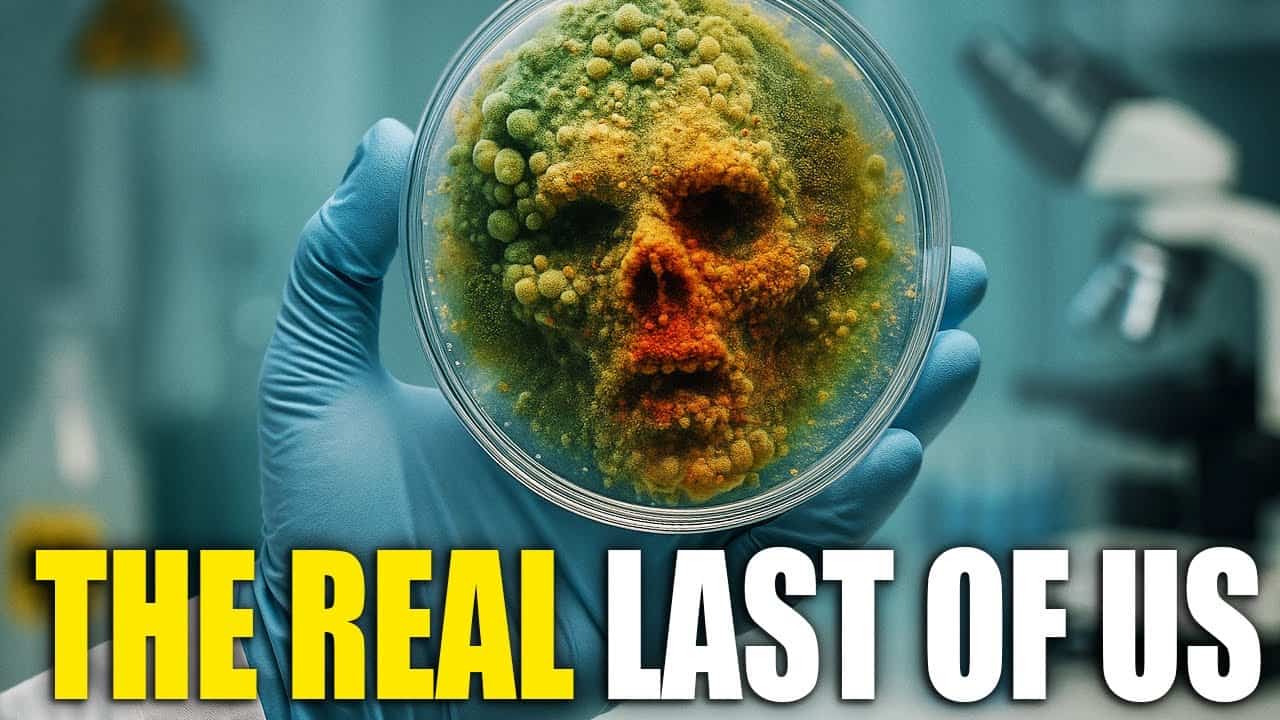
The Real Science Behind The Last of Us
Now that the smoke has cleared from the polarizing finale of The Last of Us Season 2, it’s time to put the fungal infection the series revolves around under the microscope. Remember, the hit HBO horror series is adapted from the 2013 video game, with Season 2 drawing inspiration from the 2020 gaming sequel, The Last of Us Part II. Of course, 2020 also marked the beginning of the COVID-19 pandemic, resulting in an eerie, coincidental real-life parallel that made the TV series as timely and topical as can be. In the last five years, more light has been shed on the properties of COVID-19 and its transmission, a viral infection that differs from the fungal disease that turns humans into slavering, bloodthirsty zombie ghouls on the hit HBO series.
With more emphasis placed on the Cordyceps Brain Infection in The Last of Us Season 2, it’s worth exploring how accurate the science is on the show and how realistic it would be if the fungal pathogen could transmute humans into mind-controlled automatons. After all, it’s already been proven that the Cordyceps, also known as the zombie ant fungus, can infect arthropods, make them behave against their nature, and promote fungal reproduction. But can it do the same to you and me? Well, get out the lab coats and goggles, it’s time to explore The Real Science Behind The Last of Us!
Alright, for a little context, The Last of Us is set in a post-apocalyptic future in which humanity has been ravaged by a fungal infection that controls human minds and turns the hosts into brainless, hyperaggressive drones. The purpose is to spread the disease and expand the fungal species across the land. Although there are many real-life fungal diseases, also known as Mycosis, The Last of Us revolves around the specific strain known as Cordyceps, or Ophiocordyceps unilateralis, a parasitic fungal mutation that human beings transmit from person to person, populating a horde of violent zombie-like monsters who scour the land looking for more people to infect.
Beyond the scientific backdrop, The Last of Us follows Joel and Ellie, two survivors and unlikely companions who forge a strong emotional bond while escaping a quarantine zone. While traversing the zombie-strewn countryside together, Joel and Ellie encounter one fungally infected flesh-eater after another, many of which are categorized by the severity of their illness. There are Runners, Stalkers, Clickers, and Bloaters, each of which behaves differently based on their exposure to the mutated Cordyceps.
Without spoiling the most significant plot points, the Cordyceps brain infection remains a prominent storyline in both seasons, leading to a harrowing Season 2 finale that has divided fans. In Season 1, the fungal disease spread environmentally through crops and, later, through saliva and other bodily fluids caused by physical bites. In Season 2, the Cordyceps evolved into an airborne disease that humans contracted by breathing the infectious spores. However, the central question remains: can mutated cordyceps infect human brains as seen in The Last of Us?
While somewhat complicated, the simple answer is no. At least not yet. Although mutated Cordyceps have been proven to infect ants, spiders, and other insects, there is no proof that the fungus can infect the minds and affect the behavior of human beings. Here’s how the zombie-ant fungus infects arthropods.
The spores of the Cordyceps act as a parasite that attacks insects, eats through their exoskeleton, and controls their brain to act in the fungus’s favor. Specifically, the spores overtake control of the insect’s mind and motor functions, causing irregular behavior. The spores manipulate the hosts to climb to a higher altitude, often in bushes and trees, to expose the fungus to as much sunlight as possible. More sunlight equals better breeding conditions for the fungus to reproduce, sustain its species, and expand its vast underground network known as Mycelium.
The fungus controls the insects’ minds and deliberately kills them to promote reproduction. Once the host insect dies, the fungus grows out of the insect’s head, sprouts a mushroom, and releases more predatory spores on and around the insect to find their next host and repeat the process over and over. This is all well-proven science that serves as the basis for The Last of Us. Fortunately for human beings, given our current climate and body temperatures, there is no imminent threat of fungal infections turning humans into grotesque, mushroom-headed zombies.
Far from conjecture, Yale School of Medicine Assistant Professor Scott Roberts, who specializes in infectious diseases, had this to say about the Cordyceps Brain Infection in The Last of Us: “Very few fungi or mold spread person-to-person, so a fungal pandemic is not too likely,” adding, “There are millions of different fungal and mold species out in nature that don’t cause any sort of infection in humans, and this is one of them. A Cordyceps that infects one species of ant cannot even infect other species of ants.”
The primary physiological factor preventing humans from such a fungal infection is body temperature. Most fungal species are unable to grow and reproduce at temperatures higher than 98.6 Degrees Fahrenheit, the human body’s average temperature. Most fungal strains struggle to thrive above 94 degrees, a fact noted by a mortified mycologist in The Last of Us. Some real-life scientists even believe that humans evolved their body temperature specifically to combat fungal infections.
Moreover, the vast majority of fungal infections are not transmissible from human to human, as are other infectious diseases like COVID-19. Some diseases can be spread from small animals to humans, but Roberts claims Cordyceps is not one of them, and humanity should not be concerned. As Roberts states: “Viruses are set up to spread person-to-person—we sneeze, and it can infect 20 people in the right setting. Fungal infections come from the environment through inhaling spores or an exposed wound. And once you’re infected, the risk of spreading it to another person is exceedingly low.”
The Last of Us depicts the spread of the disease through tainted food supplies. While it’s true that many bacterial infections can be transmitted through what we eat, such as E. coli or Salmonella, fungal infections are not a significant part of the equation. At least, not in the current temperatures we all inhabit in 2025.
Now, if climate change continues to escalate at a torrid pace, the drastic increase in temperatures could lead to the kind of fungal infection seen in The Last of Us. If the planet becomes hotter, certain fungal pathogens could evolve enough to subsist in higher temperatures, making humans more susceptible to infection.
In The Last of Us, the Cordyceps adapt to warmer weather and human body temperatures. While this isn’t currently plausible with Cordyceps, a fungal strain known as Candida auris already thrives in warmer climates. Scarier yet, Candida auris is untreatable and can be transmitted from human to human, unlike Cordyceps. As Roberts notes: “What does concern me as an infectious disease physician is a relatively new fungus called Candida auris. This fungus spreads person-to-person, which hasn’t really been reported before.”
Yet, even if rapid climate change caused a massive spread of Candida auris, chances are high that it would not turn humans into mindless zombie-like aggressors. Even harmful fungi like Aspergillus and Cryptococcus neoformans, which also adapt to warmer climates, would not penetrate humans’ biological defenses and morph them into mindless monsters. They could lead to fatal lung and respiratory problems, but not brain-altering transformations and ultra-violent urges.
Sure, certain fungal properties, such as those in psilocybin, can alter our human brain chemistry and make people hallucinate. But the effect wears off after the mushrooms are digested and do not cause chronic, transmissible illnesses as seen in the show.
Now, if The Last of Us retained the game’s original timeline, perhaps the Cordyceps Brain Infection could be more plausible. In the game, the fungal pandemic occurred in 2013, with Joel and Ellie’s apocalyptic sojourn taking place in 2033. The TV show shifted the timelines back a decade, with the outbreak beginning in 2003 and the aftermath set in 2023. It’s easy to understand why the change was made; to contemporize the story and allow viewers to watch Joel and Ellie deal with the pandemic as the world simultaneously dealt with COVID-19. Yet, by making the show more timely, it stretches the scientific credulity even thinner. However, the likelihood is that, between 2025 and 2033, there probably isn’t enough time to increase temperatures significantly enough for Cordyceps to evolve and thrive in hotter weather. If the show were set a millennium later in 3033, then the Cordyceps Brain Infection would be far more feasible, as it would allow enough time for the fungi to mutate, subsist in hotter weather, and threaten human immune systems.
Aside from rising temperatures, the overreliance on antibiotics could potentially lead to fungal infections among humans. Overusing antibiotics, many of which are produced by fungi, can weaken a person’s immune system, eliminating all the beneficial and harmful bacteria at once. Says Roberts: “Antibiotic use is a huge risk factor for fungal and yeast infections because they essentially wipe out all of the good bacteria, so fungi can start to take over.”
But again, even if fungal infections became as threatening as the Cordyceps in The Last of Us, they would not necessarily control our minds and turn us into enslaved, ambulatory meat puppets with hyperviolent tendencies. Nor would they kill us so we could propagate their species.
Another key difference between humans and arthropods is that our nervous systems are far more complex than those of insects. The nervous system of insects is mainly comprised of easily manipulable ganglia, a simple network of nerves that can be controlled. Humans have far more complicated brains and cerebral mechanisms that would prevent us from being hacked and hijacked by Cordyceps or any other mutated fungal strain.
Here’s the bottom line. The Last of Us utilizes a fictional pandemic to raise awareness about the potential dangers of fungal infections, emphasizing the drastic need for more scientific research. Creative liberties have been taken to imagine a future scenario, however distant its plausibility may be, to understand the eternal struggle between humanity and nature and their complex symbiosis.
In 2025, the Cordyceps Brain Infection seen in The Last of Us is next to impossible. In a thousand years or more, with rapid climate change and antibiotic usage, spore, mold, and fungus turning us all into mind-controlled zombies is theoretically more probable. The HBO series, like the video game it’s inspired by, is more science fiction than scientific reality.
The post The Real Science Behind The Last of Us appeared first on JoBlo.