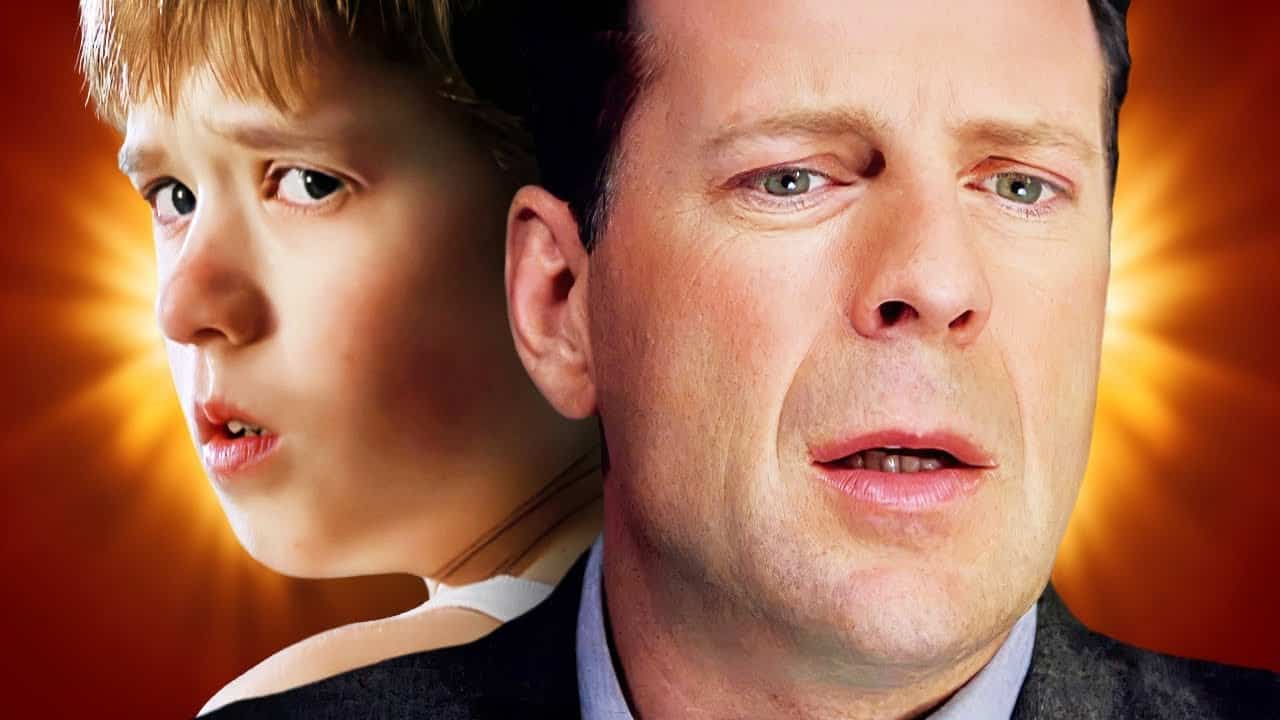
WTF Happened to The Sixth Sense? How did Shyamalan’s clever, memorable, and memeable masterpiece come together?
You know that moment when a movie doesn’t just scare you but quietly rearranges the way you see everything afterward? Well, that’s The Sixth Sense. When it was released in the late summer of 1999, M. Night Shyamalan’s supernatural thriller was a cultural event, a collective gasp, and one of the last times an audience could walk into a theater unspoiled, unaware that they were about to witness one of the greatest twist endings in modern cinema.
Even now, over two decades later, its legacy lingers like a ghost in the corner of the room waiting for someone to whisper, “I see dead people.” But how did it all happen? How did a virtually unknown filmmaker and an aging action star in need of a career reset come together to create a genre-defining masterpiece that changed the face of Hollywood horror? Today, let’s revisit the making, the mystery, and the magic of The Sixth Sense.
Every great horror story starts with a question. For M. Night Shyamalan, that question came from something eerily ordinary, a funeral. In interviews over the years, Shyamalan has recalled attending a wake as a child and seeing a boy sitting alone, talking softly to someone who wasn’t there. The idea of a child seeing what adults couldn’t haunted him for years. Eventually, it became the foundation of The Sixth Sense. But the movie didn’t arrive fully formed as the quiet, emotional ghost story we know today. Early drafts of the script leaned more toward a traditional thriller, even a detective story. In one version, the Bruce Willis character wasn’t a child psychologist but a crime scene photographer investigating a series of murders. Only gradually did Shyamalan strip the concept down to its essence: a story about communication, grief, and unfinished business between the living and the dead.
When you think about it, The Sixth Sense isn’t really about ghosts at all. It’s about loneliness and the things we don’t say. Shyamalan, who grew up loving E.T. and The Exorcist in equal measure, wanted to make a supernatural film that carried Spielberg’s heart and Friedkin’s dread in the same breath. When he finally completed the script, Shyamalan attached some bold conditions: the studio would have to buy it for at least $1 million, and he would have to direct it himself.
Still, he believed in the story. And one executive at Disney, David Vogel, believed in him. Vogel read the script, was blown away, and, without consulting his superiors, paid $2.25 million for the rights, granting Shyamalan complete control. It was the kind of gutsy move that either makes a career or ends one. In Vogel’s case, it did both: Disney fired him for overstepping authority. But history vindicated him. Yet even as the project moved forward, Shyamalan worried. Casper had recently been released, and he feared audiences might be ghosted out. But the story he’d written was no friendly ghost tale.
In 1999, M. Night Shyamalan wasn’t a brand name. He was just another young director trying to get noticed in a crowded studio system. But The Sixth Sense would change that overnight. Before the movie, he was a filmmaker with potential; after it, he was being called “the next Spielberg.” He would go on to direct Unbreakable, Signs, and The Village, carving a niche for emotional, twist-driven storytelling. But before The Sixth Sense, there was uncertainty. And that uncertainty mirrored the other key player in the story: Bruce Willis.
By the late ’90s, Bruce Willis was still a star, but not the kind of star he once was. After Die Hard, Pulp Fiction, The Fifth Element, and Armageddon, his name guaranteed a certain kind of movie: explosions, sarcasm, swagger. What it didn’t guarantee anymore was range. Critics had typecast him as an action guy. The sensitive, vulnerable side he’d shown early in his career on Moonlighting had all but vanished behind smirks and smokescreens.
Then, fate, perhaps even karma, stepped in. Willis had been entangled in a legal dispute over a failed Disney project called Broadway Brawler, which shut down mid-production. To make amends, he signed a three-picture deal with Disney to complete other projects instead. One of those just happened to be The Sixth Sense. Willis approached the role of Malcolm Crowe with quiet restraint, shedding his usual bravado. His performance is understated, mournful, and deeply human, just what the film needed. He became the emotional anchor in Shyamalan’s ghost story, grounding the film’s supernatural tension in something real and sorrowful. For both Shyamalan and Willis, The Sixth Sense wasn’t just another gig. It was a rebirth. For one, it was the beginning of a career; for the other, a reinvention.
Filming began in Philadelphia in September 1998 and lasted until November of that year. Shyamalan’s home city, a location that would become a recurring character in nearly all his future works. The production was quiet, intimate, and deliberately paced, much like the film itself. This wasn’t a massive studio tentpole with CGI monsters; it was a low-key, moody drama about invisible pain and whispered fears.
The casting process, however, was crucial. For the role of Cole Sear, several young actors were auditioned, including a then-unknown Michael Cera. But the moment Haley Joel Osment walked in, Shyamalan knew. His audition wasn’t about fear or tears, but about empathy. Osment reportedly walked into the room, shook Shyamalan’s hand, and said, “I read your script three times last night.” That one line of honesty sealed it. Osment’s performance became the emotional backbone of the movie, and it earned him an Academy Award nomination at just 11 years old. That famous line, “I see dead people”, would not only define his career but also enter the pop-culture lexicon forever.
Behind the camera, Shyamalan’s direction emphasized atmosphere over exposition. He used long takes, still framing, and muted colors to create unease without relying on typical horror tricks. Red objects were used symbolically throughout as subtle warnings of supernatural interference. The palette, otherwise drained and pale, made those colors feel like alarms for the viewer’s subconscious. Even the costume design grounded the world in sorrow and restraint. Every detail mattered.
Then there’s the “cold breath” effect, which is the subtle chill that accompanies a ghost’s presence. Today, a VFX team would simply add digital vapor. But Shyamalan wanted authenticity. So the crew physically chilled the set using industrial freezers, surrounding the actors with real cold air until their breath naturally fogged on camera. The actors were literally shivering through those moments. One of the film’s most emotional scenes, Cole finally confessing his secret to his mother in the car, nearly fell apart during shooting. It was raining, the actors were exhausted, and the emotional stakes were high. Toni Collette has said it was one of the hardest scenes of her career, breaking down multiple times before they nailed the take that made it into the film. The result is raw, real, and devastating, a moment that transforms the movie from supernatural thriller into full-blown tragedy. Shyamalan even appears briefly on screen as Dr. Hill, a skeptical physician who treats Cole after an accident. He later admitted he hated the experience and vowed to avoid future cameos. I think it’s safe to say he’s broken that rule multiple times.
The Sixth Sense opened on August 6, 1999. It wasn’t marketed as a blockbuster; it was positioned as a smart, chilling mystery. And yet, audiences responded in droves. The film opened to $26.6 million, breaking August box office records and dominating the charts for six straight weeks, and stayed in the top 10 Box Office for fifteen weeks! It ultimately grossed $293 million in the U.S. and $672 million worldwide, second only to The Phantom Menace that year. For a time, the highest-grossing supernatural film in history.
Critics were just as stunned. Roger Ebert praised its “deliberate, thoughtful pace,” calling it “a film about death, not a film of death.” Audiences, meanwhile, couldn’t stop talking about the twist. In the pre-social-media era, word of mouth was everything, and the collective silence in theaters when the ending was revealed became a shared cultural experience. People went back to see it again, eager to spot the clues they’d missed the first time.
It was nominated for six Academy Awards, including Best Picture, Best Director, Best Original Screenplay, Best Supporting Actor (Osment), Best Supporting Actress (Collette), and Best Editing. It didn’t win any, but its nominations alone were remarkable for a film in the horror/supernatural genre. The movie’s home video release became another milestone. In 2000, The Sixth Sense was the top-selling DVD of the year, moving millions of copies and cementing its place in home libraries worldwide. Long before Netflix algorithms or YouTube rewatches, people obsessed over pausing scenes, re-analyzing clues, and discovering how seamlessly the twist had been hiding in plain sight.
M. Night Shyamalan became an overnight sensation. Studio executives hailed him as the new master of suspense, and the media quickly branded him “the next Spielberg.” His follow-up films Unbreakable and Signs continued his streak of emotionally charged thrillers. By the mid-2000s, Shyamalan’s name had become synonymous with “the twist.” Every new release, such as The Village, Lady in the Water, The Happening, were marketed around that gimmick. And yet, The Sixth Sense remains his definitive statement. Every film since, no matter the genre, lives in its shadow. It’s his curse, but also his anchor.
For Bruce Willis, the film was equally transformative. It redefined his range and reminded audiences that he could be quiet and vulnerable, not just cocky or cool. Some even call Malcolm Crowe his most complete performance: understated, human, and genuinely moving. And for horror as a genre, The Sixth Sense changed everything. Before it, the late ’90s were dominated by slashers and meta-horror: Scream, I Know What You Did Last Summer, and Urban Legend, to name a few. After The Sixth Sense, studios rediscovered the power of quiet terror. Films like The Others, The Ring, and The Orphanage took cues from their mood, their pacing, and their emphasis on emotional depth over bloodshed.
It also reintroduced mainstream audiences to the idea that horror could be prestigious. That you could win Oscars and box office without resorting to gore or gimmicks. The film’s PG-13 rating proved you didn’t need extreme violence to disturb people, just truth, sadness, and atmosphere.
When October rolls around and the world decorates itself in shadows and fog, The Sixth Sense feels right at home. It’s not Halloween in the jack-o’-lantern sense but Halloween in the existential sense. The film is about the thin line between the living and the dead, and the ache that connects them.
What makes it perfect for the season is its restraint. It doesn’t jump out and scream “boo.” It sits next to you quietly, like a ghost on the edge of your bed, waiting for you to notice it. It’s a movie about grief disguised as a horror film, which in many ways is the most haunting kind of story there is. Watching it now, the real terror isn’t death, it’s being unseen. And that’s what makes The Sixth Sense such a masterpiece. It uses the supernatural to explore the most human fear of all: isolation.
More than twenty years later, it remains the crown jewel of turn-of-the-century cinema. It’s a ghost story that makes you cry, a horror film that ends with peace instead of panic. It’s the rare movie that finds beauty in death and dignity in fear. It launched M. Night Shyamalan into the stratosphere, gave Bruce Willis a second act, and reminded audiences that horror could be elegant.
Yes, the twist is unforgettable. But the real secret of The Sixth Sense isn’t the reveal, but the realization that we’re all haunted by something. And maybe, just maybe, if we could listen closely enough, we’d find that the ghosts aren’t here to scare us. They’re just trying to say goodbye.
So this Halloween, if you want to revisit a film that still chills, still moves, and still makes your heart stop right before it breaks, dim the lights, turn off your phone, and press play on The Sixth Sense. But don’t say I didn’t warn you. Some movies never really leave you. They just… stay
The post WTF Happened to The Sixth Sense? How did Shyamalan’s clever, memorable, and memeable masterpiece come together? appeared first on JoBlo.