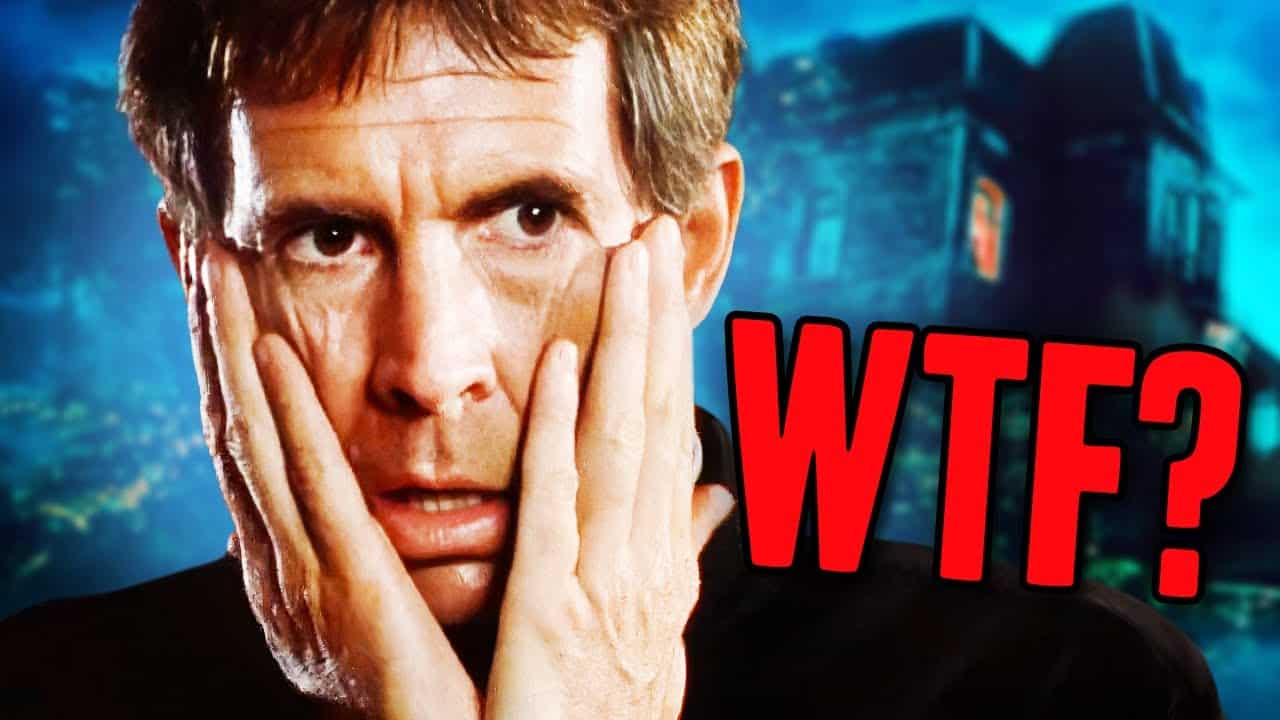
Psycho II (1983) – What Happened to This Horror Movie?
Here’s a head-splitter if there ever was one. When thinking about the best cinematic horror sequel that had the impossible task of living up to its all-time great predecessor, which one tops the list? Dawn of the Dead? Aliens? Evil Dead II? A Nightmare on Elm Street 3: Dream Warriors? How about The Exorcist III? While all are worthy of consideration, given the seismic cultural impact and lasting legacy of Alfred Hitchcock’s progenitive slasher film, Psycho, its seemingly unnecessary sequel, made 22 years later, Psycho II, shredded preconceived expectations and delivered a chilling and vastly overlooked psychological thriller that continues to be misunderstood to this day. In assessing how the movie was made and what went into production, we’ll cover how Australian director Richard Franklin was chosen after meeting Psycho novelist Robert Bloch. Fans will also discover how Universal drastically altered the story from Bloch’s literary sequel, what summoned Anthony Perkins back to reprise his role as Norman Bates, why Hitchcock’s daughter gave the production her blessing, which original sets and props from the original were recycled, why the film was almost released as a made-for-TV movie, and perhaps most importantly, how the slasher sequel stepped out from the shadows of its iconic original to loom just as large over the franchise as any subsequent entry. All that and more when we check back into the Bates Motel and find out what happened to Psycho II!
Development on Psycho II began in 1981, shortly after the release of Australian filmmaker Richard Franklin’s riveting fourth feature, Road Games, starring Jamie Lee Curtis. That year, Franklin shared panels with Psycho novelist Robert Bloch at the Cinecon film convention in Melbourne. Following their meeting, Bloch published his follow-up novel, Psycho II, in 1982. However, the book is much different than the finished film. Bloch’s original idea for the sequel was to satirically skewer Hollywood’s incessant trend to produce slasher movie sequels to diminishing returns, with Norman Bates going to Hollywood following his release from a mental institution to prevent a Hollywood production from adapting his life story. While that basic premise was used to cartoonish lengths in Jay and Silent Bob Strike Back, Universal was concerned about such scathing criticisms and had to go back to the drawing board and create a more compelling story for Psycho II.
To do so, the studio hired Tom Holland to write the screenplay. Holland, who would go on to direct ‘80s horror classics Fright Night and Child’s Play, worked with Franklin to conjure a new narrative. It’s also worth noting that Franklin was handpicked as a director based on his time studying directly under Alfred Hitchcock. In addition to making a set visit to Hitchcock’s 1969 spy thriller Topaz, Franklin organized a Hitchcock retrospective at the University of Southern California during his freshman year, where he met his cinematic hero for the first time. Along with Road Games, Franklin’s third feature, Patrick, also has classic Hitchcockian elements of tension and suspense, deeming him the right man to helm Psycho II. Believe it or not, Hitchcock’s closest American counterpart, Brian De Palma, was offered the chance to direct Psycho II but declined and went off to make Scarface instead, which, coincidentally, also stars Robert Loggia.
Once the project began to materialize, Psycho’s assistant director, Hilton Green, was approached to produce the sequel. Knowing what a thankless and impossible task it would be to live up to the original, and afraid that Hitchcock would disapprove if he were still alive, Green contacted Hitchcock’s daughter, Patricia Hitchcock, and asked for her blessing. Green sent her the completed script by Holland, and much to his surprise, she was enthusiastic and claimed her father would have loved the sequel’s story. It was also Green’s idea to cast ‘80s scream queen Jamie Lee Curtis as Mary Loomis, based on her mother, Janet Leigh, playing Marion Crane in the original Psycho. With Curtis coming off Road Games with Franklin, the casting gimmick made sense and would have reunited her with Halloween cinematographer Dean Cundey. However, after landing a plum role in Trading Places, Curtis was no longer interested in making horror movies and focused on comedies. Even if she were interested in playing Mary Loomis in Psycho II, Curtis’s busy schedule would not accommodate it. In her stead, Meg Tilly was cast as Mary Loomis, proving to be the most difficult and unpleasant moviemaking experience of her career.
Speaking of casting, before the reluctant Anthony Perkins was convinced to reprise his role as Norman Bates, Psycho II was initially conceived as a made-for-TV movie. Perkins, who originally turned down the role due to the damage his reputation took after the original, changed his tune once he read Holland’s script and saw what a meaty part he could sink his teeth into. Once Perkins agreed to star in the film, plans for a TV movie were quickly dashed in favor of a wide theatrical release. Before Perkins decided to return, Universal had eyed Christopher Walken to play Norman Bates in Psycho II. The great Vera Miles eagerly returned to portray Marion’s sister, Lila Crane. Meanwhile, John Gavin was invited back to play Sam Loomis once again, but he was unavailable after being appointed as the U.S. Ambassador to Mexico by Ronald Reagan.
Armed with a modest $5 million budget, Psycho II began principal photography on June 30, 1982, and wrapped on August 13. The 45-day shoot took place almost entirely on Universal’s backlot, including Hitchcock’s favorite soundstage, #24. Although the original Bates house was reused in the sequel, the exterior was moved to another part of the backlot during production. Meanwhile, the baleful Bates Motel had to be partially reconstructed after the original was destroyed to make way for the Universal Studios Tour. According to reports, only roughly 40 feet of the Bates Motel was rebuilt for Psycho II, with most of the motel’s exterior created by a giant matte painting by Albert Whitlock. If you look closely at the screen around the 6:13 mark, Whitlock’s elaborate matte painting is on full display. The shot features a camera pan and a rotoscope matte placed over the top of the vehicle as it enters the frame.
Moments later, when Norman enters his house for the first time in decades and has frightening flashbacks to his childhood, his reflection as a little boy is seen in a brass doorknob. That little boy is actually Anthony Perkins’s son, Osgood Perkins, who has since become a talented horror filmmaker in his own right.
Beyond the iconic Bates Motel and residence, Psycho II utilized Universal Studios’ famous Courthouse Square set to represent the town of Fairvale. The same courthouse and town square were later used to create Kingston Falls in Gremlins and Hill Valley in Back to the Future.
Around the midway point of Psycho II, when the police drag the swamp outside the motel and retrieve Warren Toomey’s car, the same set was used from Universal’s classic monster movie, Creature from the Black Lagoon. Psycho II would also mark Claudia Bryar’s final film role as Mrs. Spool, although she does appear in the flashbacks seen in Psycho III. According to lore, the ending of Holland’s script was not revealed to the cast or crew until the last day of filming. If true, this was certainly done to preserve the shocking nature of the finale and elicit the most genuine responses from the actors when it is revealed that Spool is Norman’s murderous biological mother.
To further connect the sequel to the original on a narrative and visual level, Psycho II is chock full of recycled props and set decorations from Psycho. Stored in Universal’s archives, production designers John Corso and Julie Fletcher were able to locate the taxidermied owl and raven from the original Psycho, as well as two Tiffany lamps, Norma Bates’ bedroom fireplace, the eerie brass hands holding one of the creepy notes in Norma’s bedroom, her ornate bed, and the wardrobe dresser. Corso and Fletcher found the 40-foot carpet laid over the staircase inside the Bates house and reused it in the sequel. They even found the original movie’s iteration of the painting “The Rape of Lucretia,” which Norman uses to cover up the voyeuristic peephole in his office. Speaking of the unnerving “Mother” notes that Norman finds, they were written by actress Lee Garlington, who plays Myrnna, the the gossipy waitress in the diner.
Unfortunately, the iconic showerhead featured in Psycho was meant to be reused in the sequel as well, but it was stolen just before photography began.
For Franklin and Holland, recycling the original Psycho props was about more than maintaining a narrative consistency. From the outset, they intended to make Psycho II as an ode to Hitchcock, which is why the film continues to pay affectionate homage to the Master of Suspense. For instance, at the 25:10 mark, Mary and Norman enter Norma’s room and turn on the lights. Before the room is illuminated, you can see Hitchcock’s silhouette imprinted on the armoire on the right side of the screen. As for other cameos, Tom Holland appears as Deputy Norris, and Richard Franklin appears as a diner patron playing the Battlezone arcade game.
Beyond the original slasher’s famous iconography, Franklin also matched identical shots from Psycho in Psycho II, including the instance of Norman entering the kitchen and placing his coat on a chair. The eerie way Norman utters the word “cutlery” in a drawn-out fashion in the kitchen was the result of Perkins stuttering over the line during a table read and was worked into the script by Franklin. As for Lila’s death scene, her mortified facial reaction is shot and edited identically to Marion Crane’s shower demise in the original.
As for the two instances of Norman playing Beethoven on the piano in the film, Perkins genuinely played the instrument while the cameras rolled. Perkins was a lifelong pianist and accomplished piano instructor, and had no trouble playing the music on cue. Some fans have linked Norman’s affinity for Beethoven with the original Psycho, in which a record for Beethoven’s “Eroica” is seen beside a phonograph. Sticking with the music, the legendary John Williams was considered to compose a score for Psycho II. Instead, the great Jerry Goldsmith was hired based on his long-time friendship with Bernard Herrmann, who famously composed the original movie’s unshakable string arrangements. Goldsmith conducted a theme for Norman Bates that was discarded and later used for Twilight Zone: The Movie.
According to Franklin, Perkins was “very generous” on set and the two had a ball working together. Franklin also spoke glowingly of Vera Miles. Sadly, the same can’t be said for Meg Tilly, who got along poorly with both Franklin and Perkins while making Psycho II. In addition to finding Franklin difficult to work with, Tilly wasn’t privy to Psycho’s massive popularity before entering the project due to being disallowed from watching movies and TV as a child. While on the set, Tilly wondered aloud why Perkins was receiving so much attention from the cast, crew, fans, and press, unaware of the impact he had by playing Norman Bates. Perkins apparently overheard the innocent question, became outraged at Tilly, stopped talking to her during the shoot, and even demanded that she be replaced with another actress after half of her scenes were already filmed. As a result, despite her critically lauded performance, Tilly called her experience making the movie the worst of her career and did not attend the premiere of Psycho II in June 1983. For those wondering, a nude body double was used for Tilly when Mary exits the shower.
As for Mary’s fate, the original script indicated that she survived the gunshot and would physically recover. However, she ends up going insane like Norman. Indeed, despite his best efforts to reform, the final shot of the film sees Norman posing atop the stairs outside the Bates house at dusk, implying that his psychotic insanity has returned. Believe it or not, that iconic final shot was distributed as a Christmas card to the cast and crew. When Franklin voiced displeasure with the marketing posters for the film, editor Andrew London suggested using the image for the one-sheet. London also created the tagline: “It’s 22 years later and Norman Bates is coming home.”
Released on June 3, 1983, Psycho II became an unexpected box office hit. The film grossed $34.7 million against a $5 million budget, earning back nearly seven times its cost. The film also performed better among critics and general audiences than anticipated, and it has gained respect and appreciation over the decades. In 2025, Psycho II holds a solid 67% Rotten Tomatoes rating and a near-equivalent 6.6 IMDb score. Quentin Tarantino has often cited Psycho II as one of his favorite films, and one he prefers to the trailblazing original.
The success of Psycho II led to four additional franchise entries, including Psycho III in 1986, Bates Motel in 1987, Psycho IV: The Beginning in 1990, and finally, Gus Van Sant’s shot-for-shot remake of the original in 1998. While none live up to the first two installments, Psycho III, directed by Anthony Perkins, comes the closest, and we highly recommend it.
All in all, 42 years after it was released, Psycho II still holds up incredibly well and deserves recognition for living up to the Psycho name. It may not eclipse the technical craft and sheer shock value of the original slasher movie forerunner. But given the monumental task of making a sequel that fans could enjoy and Hitchcock could be proud of, Psycho II does the job.
A couple of the previous episodes of this show can be seen below. To see more, head over to our JoBlo Horror Originals YouTube channel – and subscribe while you’re there!
The post Psycho II (1983) – What Happened to This Horror Movie? appeared first on JoBlo.