Magnolia (1999) – Explained, Themes, Cast & Why It Still Hits So Hard
There’s a rare strain of cinematic insanity that emerges when a filmmaker decides restraint is a lie and emotional honesty is non-negotiable. Magnolia operates entirely in that space. This isn’t a movie content to simply tell a story; it wants to corner you, sit you down, and force an emotional reckoning you didn’t agree to. It gathers grief, regret, parental failure, inherited trauma, addiction, misogyny, loneliness, and the aching human hunger for forgiveness, then dares to let all of it coexist without hierarchy or mercy. Nothing is streamlined, nothing is softened, and nothing is politely excused. The film howls where others whisper, collapses inward while expanding outward, and somehow maintains a strange, surgical precision even as it threatens to drown under its own weight. It is indulgent, overwhelming, and unapologetically human. And that tension — that refusal to choose between control and chaos — is not a flaw but the entire thesis. So today, let’s dive into Paul Thomas Anderson’s masterpiece.
Whisper vs. Scream: Magnolia and One Battle After Another
Watching it now, especially after something like One Battle After Another, makes Anderson’s obsessions feel clearer than ever. While One Battle After Another is restrained — two people locked in a quiet emotional stalemate, saying everything and nothing at the same time — Magnolia is that same fight exploded outward, multiplied across a city, generations, genders, and social classes. One is Anderson whispering. The other is Anderson screaming before he learned how to whisper. Both are about the same core idea: people stuck in cycles of pain they didn’t fully choose, desperately trying to figure out whether they’re allowed to stop paying for them.
Chaos by Design: Aimee Mann and Emotional Architecture
What’s astonishing about Magnolia is how deliberately constructed its chaos actually is. Anderson famously wrote the script while listening obsessively to Aimee Mann. Known for emotionally precise, literate songs about loneliness, regret, and quiet self-destruction, Mann operates on the exact emotional frequency of the film. Anderson essentially built the movie around her music, writing scenes while listening to her songs on repeat and allowing their themes to shape character and structure. Her track “Save Me,” written specifically for the film, became its emotional thesis statement and earned an Academy Award nomination for Best Original Song, even though it famously lost. More than a contributor, Mann functions as the film’s unseen narrator, articulating the feelings the characters are too damaged, scared, or emotionally illiterate to say out loud — to the point where her songs don’t just underscore the movie but become its emotional conscience.
A Stacked Ensemble Delivering Career-Defining Work
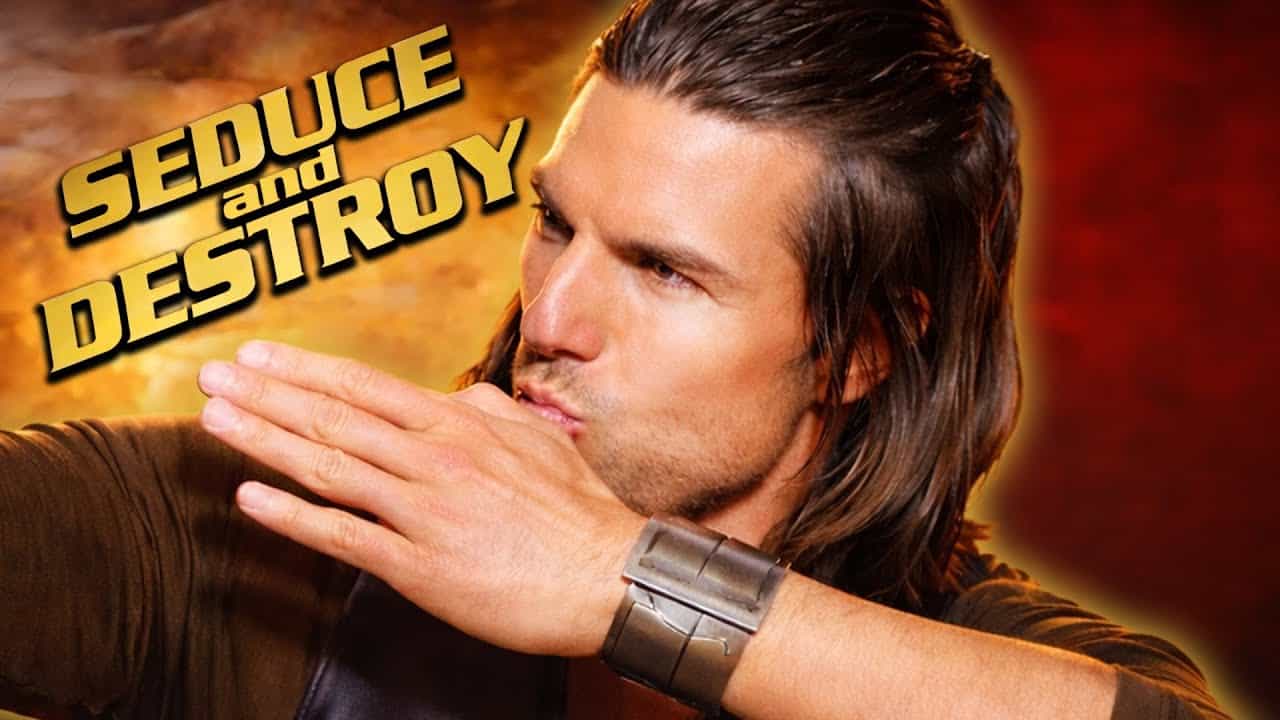
The ensemble cast is stacked. Every performance feels calibrated to hit a different facet of the same emotional wound. Tom Cruise’s Frank T.J. Mackey is masculinity as performance art — a misogynistic self-help grift powered by rage and abandonment. Long gone is the Jerry Maguire persona audiences were used to. Cruise doesn’t just play against type; he dismantles his entire movie-star identity in real time. Mackey is built entirely out of defense mechanisms: slick suits, aggressive slogans, performative cruelty toward women — all designed to ensure no one gets close enough to see the scared, abandoned child underneath. The brilliance of the performance is that Cruise lets you feel how exhausting that armor is. When it cracks, it doesn’t lead to redemption. It leads to collapse.
Cruise winning the Golden Globe felt inevitable. His Oscar loss still stings. He wasn’t just acting; he was exposing something raw. It’s one of the rare moments where a megastar uses his cultural power to interrogate the mythology that made him famous. Calling that Academy loss anything other than questionable feels dishonest.
Fathers, Guilt, and Unresolved Damage
Frank’s emotional counterweight is his dying father, Earl Partridge, played with devastating restraint by Jason Robards in his final film performance. Earl represents the source of inherited trauma — the man who caused irreparable harm and now wants absolution on his deathbed. The film refuses to make this simple. Regret is real, but regret does not equal forgiveness. His desire to be forgiven is framed not as noble but as deeply human and selfish. Death doesn’t magically transform monsters into saints. Sometimes it just makes them scared.
Julianne Moore’s Linda Partridge is guilt personified. She didn’t marry Earl for love — and she knows it. She later grew to love him, and that contradiction is tearing her apart. Her pharmacy breakdown scene captures the unbearable weight of knowing you’re morally compromised in ways that cannot be undone. Moore plays Linda like someone drowning in her own conscience, gasping for air in a world that offers consequences rather than absolution.
Institutional Rot and the Aftermath of Abuse
Then there’s Jimmy Gator, played by Philip Baker Hall — a disgraced game show host whose public smile masks something far darker. Jimmy represents institutional protection, the way power and likability insulate abusers from accountability. His horror isn’t cinematic exaggeration. It’s mundane and chillingly familiar.
His daughter Claudia, portrayed with harrowing vulnerability by Melora Walters, is the emotional aftermath of that damage. Hypervigilant, defensive, self-destructive, and painfully lonely, Claudia’s drug use isn’t rebellion — it’s survival.
In contrast, John C. Reilly’s Officer Jim Kurring feels almost radical in his sincerity. Clumsy and insecure, Jim’s honesty stands out in a film filled with self-deception. His belief in kindness isn’t naïve. It’s courageous.
The Children: Innocence Under Pressure
The children in Magnolia deliver its cruelest indictment of adult ambition. Stanley Spector, played by Jeremy Blackman, is crushed under the weight of his father’s expectations, treated less like a child and more like an investment. His small rebellion — refusing to perform — is quietly heroic.
And then there’s Donnie Smith, portrayed by William H. Macy. He is the long-term consequence of Stanley’s situation. A former child star emotionally frozen in time, Donnie is a cautionary tale about what happens when validation replaces love. His misguided attempt at romance isn’t pathetic — it’s tragic.
The Raining Frogs and Emotional Reckoning
Behind the scenes, the film’s emotional volatility matched its story. Anderson wrote the screenplay in an obsessive fugue state, letting the narrative expand beyond initial control. The infamous raining frogs sequence was never meant to be ironic. It was conceived early as a biblical full stop — the universe forcibly interrupting characters who had spent their lives avoiding self-examination. It’s absurd, yes. But emotionally, it makes perfect sense.
Awards Season and Industry Discomfort
The awards response mirrored the industry’s discomfort with that level of emotional excess. Critics embraced the ambition. Awards bodies hesitated. Cruise’s Golden Globe win felt like acknowledgment; his Oscar loss felt like avoidance. He lost to Michael Caine for The Cider House Rules, and while Caine’s work was strong, Cruise’s performance remains the emotional detonator of Magnolia. The Academy tends to reward control. Magnolia refuses it.
Legacy and the Fear of Breaking the Cycle
That contrast becomes even more fascinating when compared to the reception of One Battle After Another, now being positioned as a Best Picture frontrunner. Where Magnolia was viewed as excessive, the newer film is praised for restraint. The irony is clear: one is the wild scream of a filmmaker discovering his voice; the other is the whisper of someone who has mastered it.
Ultimately, this only strengthens Magnolia’s legacy. It was ahead of its time in allowing emotional messiness to remain unresolved. It dares to ask whether cycles of damage can truly be broken. Fathers wound children. Children grow into wounded adults. Adults pass on that damage unless something — love, honesty, catastrophe — forces them to stop. The frogs don’t fall because the universe is cruel. They fall because the universe is done waiting.
In the end, Magnolia rivals any of Anderson’s best films and, on certain days, surpasses them. It’s messier than There Will Be Blood, louder than Phantom Thread, less controlled than The Master, yet it may be the purest distillation of his empathy. It’s a young filmmaker throwing everything he has onto the screen because he doesn’t yet know what to hold back.
Magnolia doesn’t promise healing. It promises truth. And sometimes, that’s harder to survive.
The post Magnolia (1999) – Explained, Themes, Cast & Why It Still Hits So Hard appeared first on JoBlo.