The Chaotic Making of Heathers: Casting Drama, Studio Panic, and a Cult Classic
What do you get when you cross the charming, nostalgic, and witty tone of a John Hughes movie with themes of bullying, teenage self-harm, and cold-blooded murder? Well, that’s easy. You get Heathers (1989), a movie that feels like Sixteen Candles meets True Romance meets Natural Born Killers, yet somehow blends those influences into something completely original.
But what most people don’t know is that the making of this movie was much darker than anything a studio film set should ever endure. From casting drama to on-set romances and even disturbing crimes involving members of the cast, today, we’re going to break down just what happened to Heathers.
The Story of Heathers
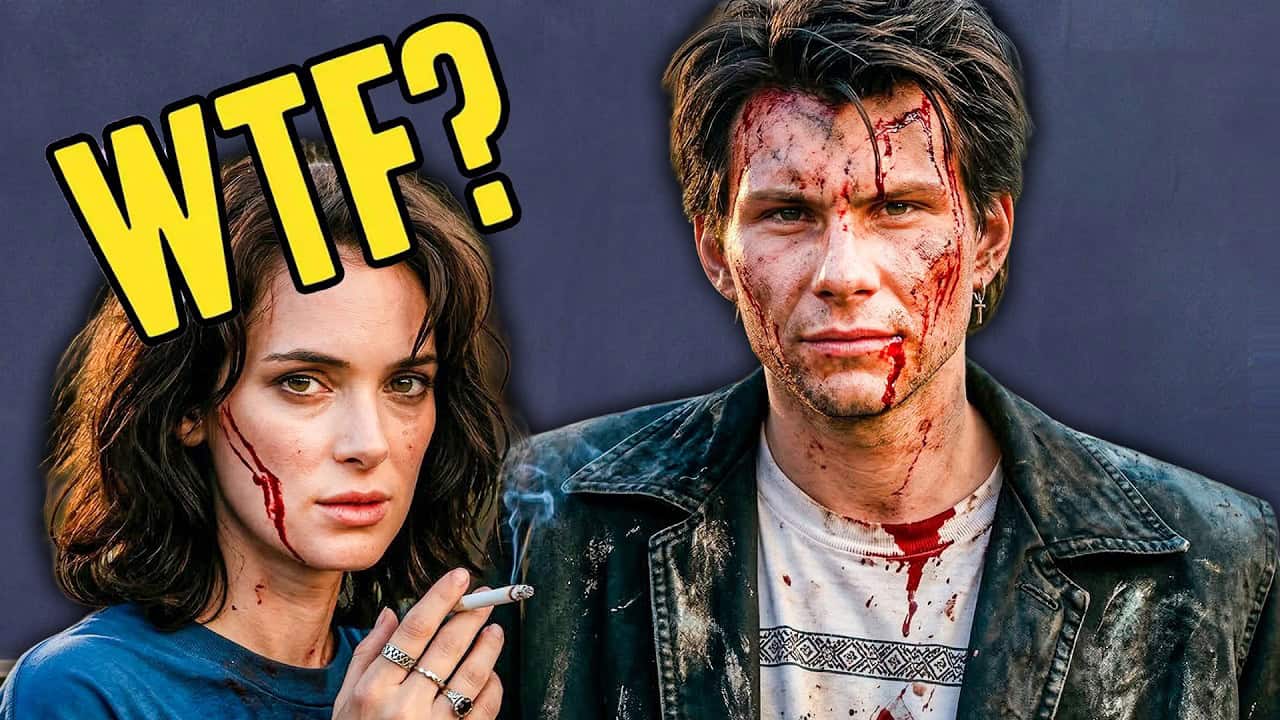
For those of you who haven’t seen this iconic film, Heathers follows Veronica Sawyer (played by Winona Ryder), a sixteen-year-old girl with a knack for forging handwriting who spends her time surrounded by the most popular—and cruel—girls in school: the Heathers.
When a mysterious and edgy new student named J.D. (Christian Slater) arrives in town, the two quickly bond. Before long, J.D. begins leading Veronica down a dark path as the pair embark on a violent spree targeting the worst people in their high school.
The Darker Original Script
The screenplay was written by Daniel Waters, who was essentially making his screenwriting debut. Waters was inspired by the wave of John Hughes-style teen films dominating the 1980s, but he wanted to create something darker, meaner, and more morbid, a sharp contrast to the optimistic teen dramas of the era.
In the finished film, Veronica and J.D. ultimately clash over their beliefs. Veronica realizes she doesn’t want to punish her classmates through murder, while J.D. becomes increasingly violent and unhinged.
However, Waters’ original script was far darker. The writer described his early draft as “much longer” and “apocalyptic.” Considering how dark the final film already is, that’s saying something.
Studios certainly thought so. Many refused to touch the project, especially during a time when the United States was experiencing a teen suicide crisis, making the script’s harsh tone and themes particularly risky.
The Studio That Took a Chance
You might think Waters would soften the script to sell it. He didn’t. Instead, he kept pitching it until someone, anyone, would take a chance on it. Eventually, New World Pictures stepped in. The studio understood what Waters was trying to do and agreed to produce the film. But there was a catch.
New World only offered a $3 million budget, far less than Waters believed the film needed. As a result, he scaled the script down to match the budget, and that’s how we ended up with the slightly more restrained version audiences know today.
One major change involved the ending. In Waters’ original script, J.D. successfully blows up the high school, and the film ends with Veronica attending prom in the afterlife alongside the dead students.
The studio immediately rejected that ending and forced a more restrained conclusion.
Casting the Film
With the script approved, Michael Lehmann was brought in to direct, and casting began in 1988. Initially, Justine Bateman was considered for the role of Veronica. When she turned it down, Jennifer Connelly became the top choice. Despite being the casting team’s dream pick, Connelly ultimately didn’t take the role. Instead, it went to 16-year-old Winona Ryder, whose career was already gaining momentum after playing Lydia in Beetlejuice.
Ironically, Ryder’s agent reportedly begged her not to take the role, fearing it would damage her career. History proved otherwise.
Originally, Ryder was expected to star opposite Brad Pitt, who auditioned for J.D. However, the casting director reportedly found Pitt too charming and warm for the role. Instead, the part went to the edgier Christian Slater.
The three Heathers were played by Kim Walker, Lisanne Falk, and Shannen Doherty – and yes, every one of their characters is actually named Heather.
On-Set Relationships and Controversies
At the time of filming, Christian Slater and Kim Walker were dating. In theory, working on a movie with your partner sounds ideal. In reality, it quickly became messy. Slater, who was 19 during production, reportedly spent increasing amounts of time with his co-star Winona Ryder, eventually developing a relationship with her and leaving Walker mid-production.
Unfortunately, that wasn’t the most troubling situation on set.
During filming, it was discovered that a crew member in his 40s was involved in an inappropriate relationship with an underage extra. The situation reportedly came to light after Shannen Doherty confronted him directly on set. Despite the seriousness of the allegation, the crew member was never arrested, and Doherty instead gained a reputation in the press for being “difficult” and “bitchy.”
It’s a disturbing irony that a prom in Hell was considered too dark for the movie, yet multiple inappropriate relationships during production weren’t treated with the same concern.
Production Troubles
The production itself was chaotic. With a limited budget and constant pressure to stay on schedule, the film wrapped after just 33 days of shooting, leaving several scenes and pieces of coverage incomplete.
Part of the problem was that Winona Ryder was still underage, meaning child labor laws restricted how many hours she could work each day.
The rushed schedule created significant stress for the cast and crew. Cinematographer Francis Kenny later described the production as extremely challenging. On the very first day of filming, strong winds knocked over a lighting rig, damaging a set piece and immediately putting the crew behind schedule.
Studio Interference in Post-Production
After filming wrapped, the chaos continued in the editing room. New World Pictures began reviewing the footage and pushing the filmmakers to tone down the film’s darkness. Themes of suicide, school violence, and bullying made the studio nervous, and executives worried the movie would be impossible to market. Scenes were trimmed and adjustments were made to make the film slightly lighter in tone, while still trying to preserve its unique identity.
Even after these changes, the studio remained uncertain about the film. Ultimately, New World quietly released Heathers in March 1989 with minimal marketing support.
The result? A disappointing $1 million box office return.
Critical Response
Critics had mixed reactions. The Washington Post famously called the movie “the nastiest, cruelest fun you can have without actually having to study law or gird leather products,” adding that “If movies were food, Heathers would be a cynic’s chocolate binge.”
Film critic Roger Ebert gave the movie 2.5 out of 4 stars, describing it as “a morbid comedy about peer pressure in high school.”
While critics were divided, audiences began to appreciate the film’s brutal honesty and dark sense of humor.
From Box Office Bomb to Cult Classic
Over time, Heathers experienced a dramatic transformation.
What started as a box office failure slowly became a home-video favorite in the early 1990s. Eventually, it earned recognition as one of the most iconic cult classics of its era.
Today, the film is celebrated for:
Its razor-sharp writing
Its stylish, grungy aesthetic
Its fearless approach to dark subject matter
Despite the troubled production, the film found its audience.
Sequel Plans That Never Happened
In 2009, Winona Ryder revealed that she had discussed the possibility of a sequel. The proposed film would have followed an adult Veronica struggling with visions of her dead classmates and possibly J.D., again played by Christian Slater.
In one version of the idea, Veronica would work as a page for a presidential candidate named Heather, potentially played by Meryl Streep. The story reportedly would have ended with Veronica assassinating her.
It sounds wild, and honestly kind of fascinating, but director Michael Lehmann later clarified that while ideas existed, there were no concrete plans to make the sequel.
The Legacy of Heathers
The story didn’t end there.
In 2010, Heathers was adapted into a stage musical, which became popular with theater audiences. Then in 2018, the property was rebooted as a television series, updating the story for modern times. However, many fans felt it lacked the sharp edge that made the original film special.
And that’s basically what happened to Heathers. The movie arrived at a time when critics didn’t fully embrace it, the writer believed it wasn’t pushed far enough, and the cast and crew endured a rushed and difficult production. Yet somehow, through all of that chaos, the film survived and eventually became something truly special.
Today, Heathers remains a cult classic with unforgettable performances, bold style, and a wicked sense of humor for fans of the dark and macabre.
The post The Chaotic Making of Heathers: Casting Drama, Studio Panic, and a Cult Classic appeared first on JoBlo.