For All Mankind Season 5 TV Review: The underrated space drama takes us further into a fascinating alternate history
Plot: Season five picks up in the years since the Goldilocks asteroid heist. Happy Valley has grown into a thriving colony with thousands of residents and a base for new missions that will take us even further into the solar system. But with the nations of Earth now demanding law and order on the Red Planet, friction continues to build between the people who live on Mars and their former home.
Review: As one of the handful of series to debut when Apple TV went live in 2019, For All Mankind is the only one still going. With five seasons spread over the last seven years, For All Mankind has told a tale that spans 1969 through the Eighties, Nineties, and early 21st century. The new season picks up in the 2010s and continues to explore the alternative timeline in which the Soviet Union landed on the moon before the United States, and the rippling repercussions of that event for all of humanity. Shifting from a period story to true science fiction, the Joel Kinnaman drama series remains one of the most underrated shows on the air. Loaded with fascinating characters and events, For All Mankind is the ultimate “what if” story that manages to blend history and fantasy into one of the most intriguing shows out there. With forty episodes already released, you will want to catch up before the excellent fifth season debuts this week.
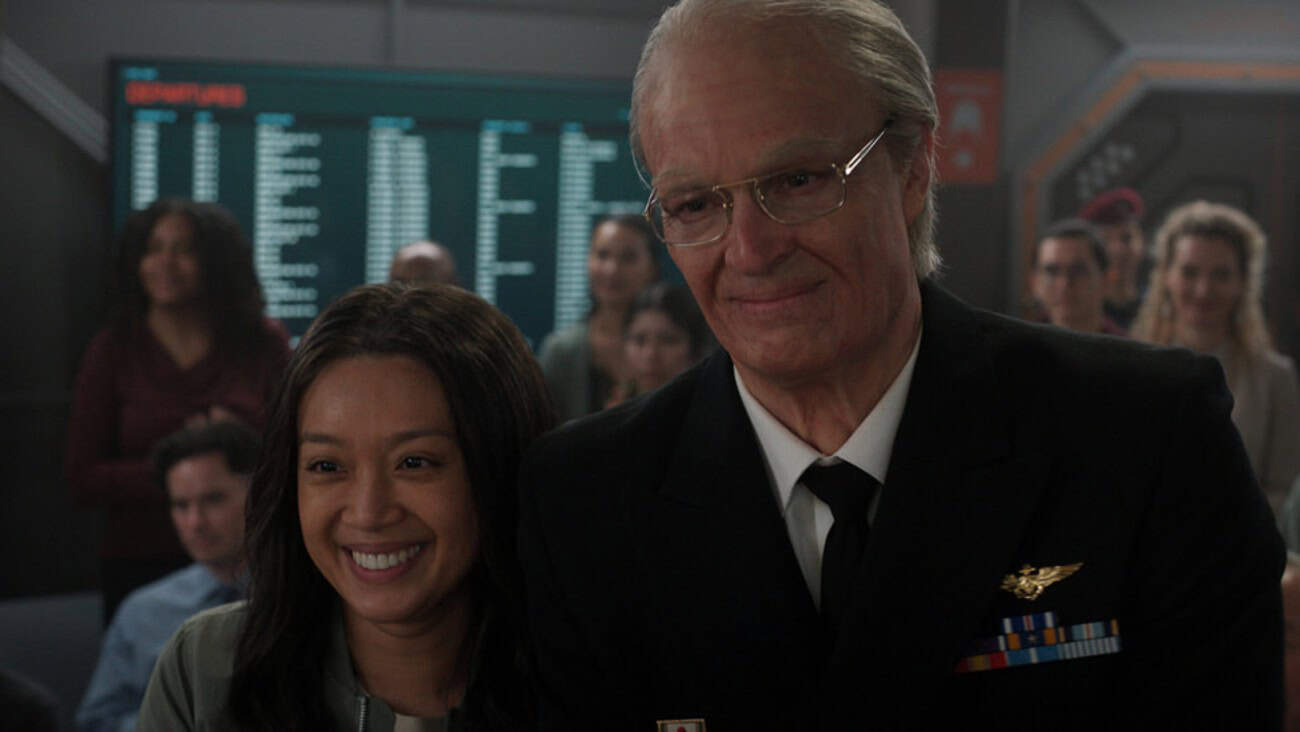
Where the first three seasons of For All Mankind put the onus on the escalating space race between the United States and the Soviet Union through journeys to the Moon and then Mars, the fourth season shifted the narrative slightly. Refocused on a heist of a lucrative asteroid nicknamed Goldilocks, season four still offered a timely critique of the early 2000s and the international relations between allies and enemies through the lens of colonies off-world. While the end of the fourth season teased the 2012 setting of the fifth season in a brief flash-forward, the season premiere’s opening gives us a rundown of what transpired in the decade since we last saw the characters. With slight changes to major and minor events, including Presidents, pop culture fads, and celebrities who survived in this alternate timeline, the focus of this new season is somewhat different from the seasons before it. A lot of this comes from exiled former astronaut Ed Baldwin (Joel Kinnaman), now in his eighties, who has been the series lead since the first episode but is now transitioning the limelight to the new cast of characters, including Toby Kebbell’s Miles.
Between Earth and the red planet, this season of For All Mankind deepens the rift between the colonists on Mars, who are striving for independence, while the nations of Earth decry their responsibility for the distant planet. This rift is personified by billionaire Dev Ayesa (Edi Gathegi), spy Margo Madison (Wrenn Schmidt), and Mars security officer Celia Boyd (Mireille Enos). As a quick aside, it is cool to see Enos and Kinnaman appear in a shared series again after co-starring in AMC’s The Killing and Prime Video’s Hanna. While their screen time is vastly different here, For All Mankind continues to add to its ensemble with perfectly cast performers who play well in the grounded take on a sci-fi concept. While space colonies have been part of the series before, most of this fifth season takes place on Mars, which forces the production to appear within hallways and interiors rather than physical locations, taking a bit away from the realism of prior seasons. That is still a minor quibble, as the writing on this series remains some of the best out there.
Having seen eight of the ten episodes of the fifth season, I can say this is a pivotal year for For All Mankind. With the three remaining actors from season one portraying characters who are now elderly, the focus is definitely on introducing the next generation to keep this story moving into the next era. In addition to Mireille Enos’ Celia Boyd, new characters include Russian politician Leonid Polivanov (Costa Ronin) and A.J. Jarrett (Ines Asserson), with season four characters Lily Dale (Ruby Cruz) and Alex Poletov (Sean Kaufman) upped to main cast members. Cruz is especially important to this season, which does take a couple of episodes to gain momentum. Balancing Earth and Mars in the story is a tricky feat, but it becomes very apparent that Mars is just a stop on the overall journey that For All Mankind is headed on. How far into space this series could go is a question posed this season, and one that I hope will be answered in the final two episodes that I have yet to see.
Keeping the talent behind the scenes consistent, For All Mankind brought back five directors who all helmed episodes in previous seasons. Sarah Boyd, Meera Menon, Sylvain White, Dan Liu, and Sergio Mimica-Gezzan each directed two episodes of the fifth season from scripts by Matt Wolpert, Ben Nedivi, Bradley Thompson, David Weddle, Nina Braddock, Sabrina Almeida, Kira Snyder, Colby Day, Jovan Robinson, and Kate Burns. While this season spans a decade in our real past, the story continues to mine contemporary themes such as artificial intelligence, political strife over refugees, police brutality, and the ongoing dynamics between the United States and foreign powers. Mars’s striving for independence is a timely echo of the early colonies in North America, and it should be easily linked to this new season debuting during the semiquincentennial of the United States gaining independence from England. The writers know how to build the drama and tension, even if it may take a few episodes longer than usual to get there. Still, I watched these eight chapters in one sitting and cannot wait to find out where the season finale will take things for season six.
Every time a new season of For All Mankind debuts, it still shocks me how many people are not watching this brilliant show. Like The Wire, For All Mankind is the show everyone claims they have seen but haven’t. You really should take the time to watch this drama, which may turn out to be Apple TV’s best series of all time. Full of fascinating characters you will love, and some you will love to despise, For All Mankind is not Star Trek or Star Wars. This is a realistic drama that combines politics, science, relationship drama, and the highest stakes imaginable in an aspirational and inspirational reminder of what the best of us can achieve when we put our skills together. Like Project Hail Mary, For All Mankind is a sci-fi epic embedded in a deeply human tale and one that deserves to be seen by as many people as possible. Binge the first four seasons now so you can get on board a series that is one of the best on television.
For All Mankind premieres on March 27th on Apple TV.
The post For All Mankind Season 5 TV Review: The underrated space drama takes us further into a fascinating alternate history appeared first on JoBlo.