Gleaming the Cube: Christian Slater’s skateboarding movie is a blast
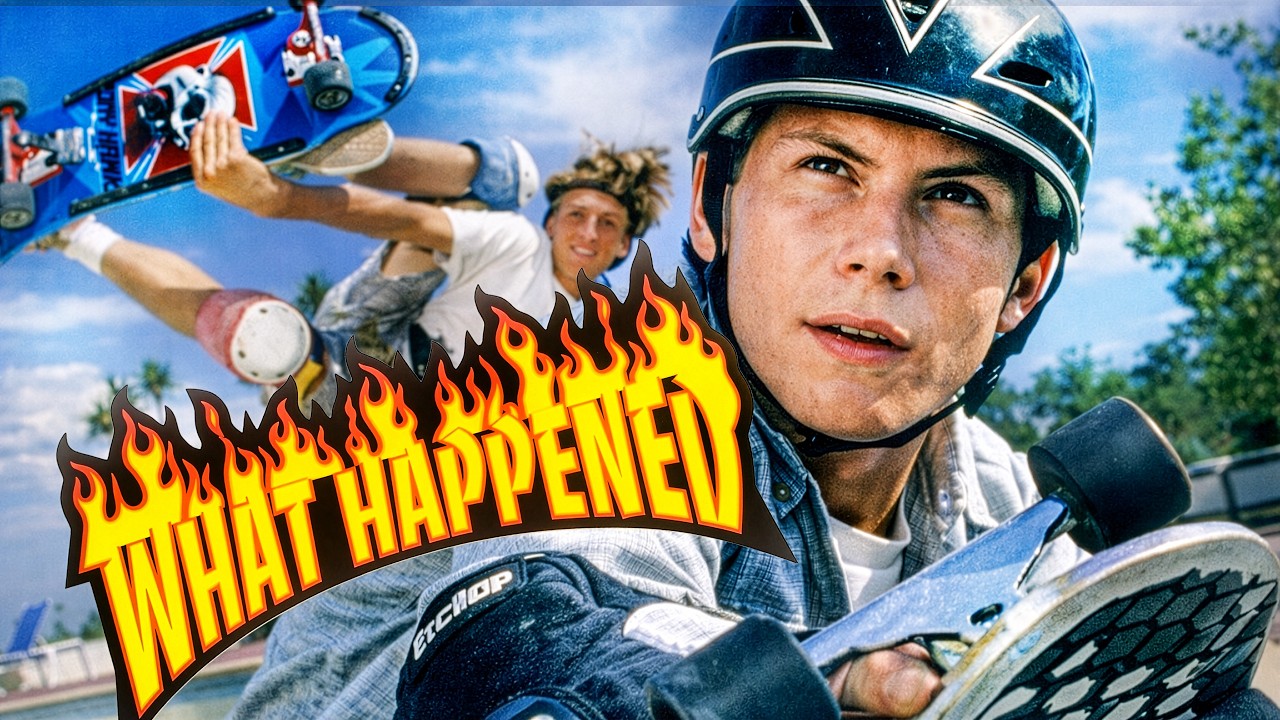
Speaking for many who grew up skateboarding in the ‘80s and ‘90s, there are only two movies worth a lick that most of us idolized as kids. Thrashin’ in 1986 and Gleaming the Cube in 1989, both featuring Hall of Famer and champion ambassador Tony Hawk, among other lasting luminaries of the sport. While Thrashin’ celebrates the spirit of organized competition, Gleaming the Cube is all about entering the ever-elusive, zen-like zone of freestyle skating, brought to vivid life by director Graeme Clifford and Christian Slater as the disaffected Orange County teenager Brian Kelly.
Of course, the film transcends the sports genre by introducing the criminal element involving Brian’s murdered adopted Vietnamese brother and the efforts made to unravel the conspiracy motivating it. While the primary investigative plot may not be as effective, there’s no denying how rad the skating by Hawk, Rodney Mullen, Tommy Guerrero, Mark McGill, Mark “Gator” Rogowski, and other towering pillars of the sport was in 1989 and frankly remains in 2026.
Despite achieving cult movie status, even the most diehard fans may not know that original Z-Boy Stacy Peralta served as the chief technical supervisor and second-unit director, or that Slater spent six months learning to skate before filming began under the daily tutelage of Guerrero. Tony Hawk even pulled double duty in one scene, which proved so gnarly that he still has a scar to prove it all these years later. Ah, hell, get out a skate key and tune up your board, we’re ramping up and learning what the f*ck happened to Gleaming the Cube back in the day!
What exactly is Gleaming the Cube?
For a fairly obscure ‘80s movie, a plot refresher may be necessary for the uninitiated. Gleaming the Cube follows Brian Kelly, a 17-year-old Orange County teenager who spends his time ripping the streets and shredding the vertical ramps on his fishtail cruiser skateboard with his friends. At home and at school, Brian is deemed a total screw-up and future criminal, unfavorably compared to his adopted Vietnamese brother Vinh (played by Art Chudubala in his film debut).
Fusing Cold War tensions with a contemporary skateboarding picture, the plot thickens when Vinh begins snooping into suspicious documents he finds while working as a clerk for the Vietnamese Anti-Communist Relief Fund. Although the company claims to supply medical aid to Vietnam, Vinh becomes gravely endangered when he stumbles upon incriminating evidence. When he takes the evidence to his boss, Colonel Trac (played by Le Tuan), Vinh is immediately fired and reprimanded for snooping around.
Despite the dire warning, Vinh breaks into the WestPac Medical Supplies warehouse and is caught by the owner, Ed Lawndale (played by Richard Herd). Along with his enforcer, Bobby Nguyen (played by Peter Kwong), Lawndale snatches Vinh and takes him to a motel for interrogation. Colonel Trac arrives, and viewers learn that WestPac Medical is really a front to smuggle illegal arms into Vietnam. When Bobby inadvertently strangles Vinh to death, Brian begins investigating on his own until he finds help from LAPD Detective Al Lucero (played by Steven Bauer).
In between the criminal plot, Brian clears his mind and loses himself by skating with his friends in swimming pools, on vert ramps, in abandoned warehouses, and on the streets of Los Angeles. With skating as a tertiary metaphor for Brian’s real-life problems, Gleaming the Cube remains one of the best skateboarding movies on record.
It was a complete bomb
Okay, the first notable factoid about Gleaming the Cube’s production is that it marked the debut feature screenplay of writer Michael Tolkin. Although it was a major box office bomb, Tolkin used the money he earned from Gleaming the Cube to work on his novel The Player, which he adapted into an award-nominated screenplay that Robert Altman directed in 1992. Tolkin also wrote the superb crime flick Deep Cover starring Larry Fishburne and the glorious Deep Impact. The point is, Gleaming the Cube is grounded by a much better screenplay than the movie’s campy reputation suggests.
Once Tolkin completed the script, Australian filmmaker Graeme Clifford was hired to direct the film. Also an Altman acolyte, Clifford was second-unit director on McCabe & Mrs. Miller, edited the 1972 film Images, and also cut such cult classics as Don’t Look Now and The Rocky Horror Picture Show. Clifford made his feature directorial debut with Frances in 1982, a searing biographical portrait that arguably features Jessica Lange’s best performance as Hollywood actress Frances Farmer.
Although drawn to Tolkin’s script, Clifford admitted he didn’t know much about the skateboarding subculture beyond seeing Marty McFly in Back to the Future. Diving into the extreme sport geared toward teenage expression, Clifford became deeply fascinated by skating, seeking to use it as the main mode of transportation and as a grand metaphor for the issues plaguing Brian in the story, rather than an outright skating picture like Thrashin’.
One of Christian Slater’s first roles
Similarly, 17-year-old Christian Slater wasn’t too familiar with skating before he was cast in the lead role. Living in Manhattan when he won the part, Slater flew to Los Angeles and spent six months training and learning to skate. In addition to taking lessons from Bones Brigade member Tommy Guerrero for $500 per day on the production’s dime, Slater learned how to become as comfortable riding a skateboard as possible under Stacy Peralta. Not only was Peralta a prominent member of the Z-Boys, or Zephyr Competition Team, since the mid-1970s, but he was also hired as the second-unit director and chief technical advisor on the film based on his expertise. That means he coordinated and choreographed all of the skating stunts during filming. Peralta was reportedly also in charge of daily refreshments for the cast and crew. Frank Capra III, the son of the legendary filmmaker Frank Capra, was the second assistant director.
For Peralta, it was imperative to take a less-is-more approach to make Slater look as relaxed and natural as possible while riding a board onscreen. Although Slater’s skating is convincing enough in the film, he was doubled by all-world professionals Rodney Mullen and Mike McGill for the more difficult tricks and stunts shown onscreen.
While Slater immersed himself in the culture and learned how to skate, he was taken aback by how popular Hawk and the other pros were on set. According to Slater, the great Willie Nelson showed up on set one day to support the cast and crew, and Slater was stunned to see hordes of young fans flocking to Hawk ten feet away, while leaving the far more famous Nelson unbothered.
As for the cryptic title, Gleaming the Cube was first mentioned in a December 1983 issue of Thrasher magazine, in which Gary Scott Davis asked Neil Bender, “Have you ever gleamed inside a cube?” In the movie, Brian refers to gleaming the cube as “pushing your limits to the edge,” although it’s always felt more accurate to describe it as letting go, finding your groove, and entering the zone in a subconscious flow state while skating.
Produced by Gladden Entertainment on a $10 million budget, Gleaming the Cube started principal photography in August 1987 and wrapped in December. The 60-day shoot utilized 63 locations throughout Southern California. Reed Smoot, who was best known for second-unit filming on Indiana Jones and the Temple of Doom, was hired as a cinematographer. Perhaps due to the opening overhead footage, Smoot was later hired to film the aerial shots in Indiana Jones and the Kingdom of the Crystal Skull.
The Bones Brigade
Now, fans of the film know that the action kicks off with Brian and the gang flying over Los Angeles and Orange County to scout empty swimming pools to skate in. Notice the cool Tony Hawk stickers adorning the plane’s interior. Before filming the sequence at John Wayne Airport in Orange County, Peralta surveyed various locations to use in the movie via helicopter, seeking flat surfaces, steep hills, serpentine streets, prefabricated half-pipes, industrial warehouses, and other cool locations that would feel cinematic.
In a bold punk rock move that reflects the anarchic rebellion of skating, the pool that the crew skates in during the opening sequence belonged to an unmarried fireman in the Hollywood Hills who lived alone and had no clue that the production was using his property to film. According to Peralta, the crew determined the homeowner’s work schedule and deliberately filmed around it, stating:
“So this guy never realized these kids were skating his pool because they were there when he was at work.”
Pretty badass indeed. The opening pool session features Bones Brigade members Tony Hawk as Buddy and Tommy Guerrero as Sam. Other iconic skaters in the scene include former Black Flag frontman Mike Vallely, Eric Dressen, and Mike McGill, who famously created the 540-degree aerial spin, known as the McTwist. It’s also worth noting that Max Perlich, who plays Yabbo and starred in several previous movies, was also an accomplished skater who appeared in the 1988 SKATEHARD video. Additional pro skaters who appear in the film include Rich Dunlop, Lance Mountain, Chris Black, Ted Ehr, Chris Borst, Natas Kaupas, and Steve Saiz. Also, Christian Jacobs was cast as Gremic before becoming the lead singer of The Aquabats and creating the children’s TV show Yo Gabba Gabba!.
As for the other hotspots throughout Southern California, permission was asked before filming on private property. One of the most prominent locations in the movie is the Atomic Age Lodge, the hotel in which Brian’s brother Vinh is inadvertently strangled to death by Bobby Nguyen. The sequence was filmed at Stovall’s Cosmic Age Lodge, located across from the then-Disneyland parking lot on Katella Avenue and Harbour Boulevard in Anaheim. The space-themed hotel was destroyed in the 1990s to make way for Disney California Adventure, and has since been replaced by a portion of Cars Land. Meanwhile, certain vestiges from the happiest place on Earth can be spotted in the film, including the monorail, Matterhorn bobsleds, and the original Disneyland sign.
Once Brian learns that Vinh has died, he takes out his anger, sadness, and frustration on a half-pipe ramp, landing a gnarly McTwist in the process. The stunt performer doubling for Slater was legendary skater Mike McGill, who pioneered the aerial trick in Sweden in 1984. McGill also doubled for Slater when Vietnamese motorcyclists chase Brian in the second act. During the stunt, a motorcycle accidentally clipped McGill, and he was rushed to the hospital for treatment after he sustained serious injuries. Fortunately, McGill made a full recovery and went on to have a killer skating career.
As Brian digs into his brother’s death and suspects foul play, he begins courting Vinh’s girlfriend Tina at school, played by Min Luong in her third and final film after Big Trouble in Little China and Internal Affairs. The school scenes were primarily filmed at Woodbridge High in Irvine, California.
The Bolsa video and pool hall scenes were filmed on Bolsa Avenue in Westminster. When Brian exits the pool hall, he skates around Culver City near the famous Tito’s Tacos stand. And perhaps the most egregious geographical inaccuracy, the opening flyover shot suggests that Buddy’s Pizza Hut is in Anaheim. In reality, the pizzeria was filmed over 30 miles away in Inglewood and is now a Taco Bell. When Brian takes a ferry, he goes from Balboa Island to Balboa Peninsula, where he meets his friends at the Balboa Fun Zone in Newport Beach.
Alright, so it’s impossible to talk about Gleaming the Cube without mentioning the kick-ass chase scene and intense finale that follows. The sequence begins with Yabbo rounding up the troops to help Brian capture the fleeing Lawndale. When Buddy uses his pizza delivery truck to pick up the homeys, the iconic shot of them careening over the steep hill was filmed in San Pedro, on 17th Street between Leland and Patton.
Believe it or not, Tony Hawk pulled double duty in the hill scene. Not only was he tasked with driving the truck for the close-up interior shots, but he was also one of the stunt skaters racing down the hill to help Brian. Flying down the steep hill, Hawk tried to buzz through a small gap between Guerrero and Kaupas, crashed insanely hard, and slid into the pavement like a goddamn ballplayer. As a result, Hawk sustained a permanent scar on his inner right arm and another on his hip. Of course, scars and injuries are an accepted occupational hazard for skaters, and Hawk seems to wear his Gleaming the Cube scars like a badge of honor.
Shortly after the gang arrives to help their compadre out of a jam, one of the gnarliest moments comes when Brian skates beneath a massive semi-truck traveling at high speed on the freeway before reaching his crew on the other side. Although McGill and Rodney Mullen did most of Slater’s doubling, Mark “Gator” Rogowski performed the death-defying semi-truck stunt. As for Rodney Mullen, he performed most of the street skating scenes, including Brian shredding through the abandoned warehouse in a solo session. And the moment when Brian ramps over and destroys the light bar on a cop car—that was McGill.
Although the epic hill scene was filmed in San Pedro, the subsequent chase was filmed on West Seaside Way in Long Beach between the 500 and 700 blocks. Thanks to various areas in Los Angeles looking similar, the director was able to shoot in several different locations and make it appear as if the entire story took place in Anaheim. Unless you live in L.A., you’d never notice.
Speaking of hard to spot, the graffiti in Yabbo’s swimming pool includes shout-outs to Z-Boys, the Dogtown dogs, Independent Trucks, and the Powell-Peralta skating company that later formed the Bones Brigade. Moments later, in Yabbo’s bomb shelter, the song “Stukas Over Disneyland” by famed L.A. punk band The Dickies plays on the radio, the same song the gang sings in the opening flyover of the theme park.
Sticking with the music, the song Brian listens to on the Walkman in his bedroom is “Right Now” by Johnny Rad, the punk rock persona of Rob Roy Fitzgerald, an L.A. musician who appeared in and contributed songs to the 1987 skate video The Search for Animal Chin, produced by Stacy Peralta and featuring the Bones Brigade.
Why has no one seen this movie?
Once Gleaming the Cube wrapped filming, it was distributed by 20th Century Fox and given a moderate release in 469 theaters in the U.S. Although it was originally slated for release in the summer of 1988, it opened on January 13, 1989. The film was a box office flop, grossing just $2.8 million against its $10 million price tag. Most critics were not impressed, but the film steadily grew a cult following through VHS rentals and repeated cable airings. For those who don’t know, certain DVD releases feature a hidden documentary as an Easter egg asking, “What Does Gleaming the Cube Mean?”
Of course, untold are the countless young skaters the movie inspired and influenced to improve their own skills and tricks throughout the late ‘80s and ‘90s. For instance, legendary skater Stevie Williams publicly stated that Brian Kelly was his first skating influence growing up.
Perhaps an even more valuable legacy, Christian Slater and Tony Hawk stayed in contact for decades after the film was made and remain friends today. In 2012, the two caught up, reminisced about their time making the movie on the RIDE YouTube channel, and had a ball recalling some of their on-set anecdotes. Hawk made it clear that, despite not knowing how to skate beforehand, Slater genuinely immersed himself in the culture and really dove into the character with a full commitment to get it right.
Although Slater admitted that he never mastered ollies for the film, he learned enough to get by. He also stated that he hated his ridiculous, phallic-looking helmet that Brian sports in the film. All Slater really wanted was to be cool in the movie, but he couldn’t stand how the helmet made him look like a walking, talking, skateboarding penis. Notice how unenthused Brian looks when the cavalry arrives at the end, and the pathetic, halfhearted hand gesture he gives to his skate bros when they arrive all fired up. It was all because of that damn helmet! The kicker? We already saw Brian skate a vert ramp earlier in the film without a helmet. If he didn’t need it then, he probably didn’t need one for street skating.
In 2024, still photographer Grant Brittain recounted his experience snapping images during the iconic opening pool session, sharing several cool, previously unseen behind-the-scenes shots. In addition to saying that the writer and director were incredibly nice to him because he knew Peralta beforehand, Brittain stated:
“I was working for TWS in ’87 and was allowed on the filming set, which was located at an empty swimming pool at a nice house in the Hollywood Hills. Upon arrival, I was stoked to see a few people I knew, like Stacy; screen actor Tony Hawk, who plays Buddy; stunt double Mike McGill; stunt double Eric Dressen; screen actor Tommy Guerrero, who plays Sam; cinematographer Pat Darren (Animal Chin filmer); and skater-actors Christian Jacobs and Max Perlich.
I was given a few rules: don’t shoot photos while dialogue [is spoken] by the actors is being filmed unless I have a camera blimp (a housing for my camera that makes it silent—yeah, like we use those in skate photography), stay out of the shot, and above all, enjoy the craft services.”
As for its lasting impact, it’s hard to imagine subsequent skating movies like Grind, Catherine Hardwicke’s Lords of Dogtown, Gus Van Sant’s Paranoid Park, Larry Clark’s Ken Park, Crystal Moselle’s Skate Kitchen, and others without Gleaming the Cube landing the trick first. And that doesn’t even account for the all-time great skating documentaries Dogtown and Z-Boys and Minding the Gap.
And there it is. That’s more or less what the f*ck happened to Gleaming the Cube back in the day. Not only did the film put skateboarding on the map and help popularize the extreme sport for generations of youngsters to come, but it was also made possible by the all-time great founding members of the rebellious subculture. Although director Graeme Clifford and star Christian Slater poured themselves into the skateboarding subculture without much knowledge or experience, the results show an affinity for the sport that shines through to this day. While Stacy Peralta, Tony Hawk, and the badass Bones Brigade were skateboarding Hall of Famers before Gleaming the Cube was made, now their legacy is forever enshrined in cinematic history.
The post Gleaming the Cube: Christian Slater’s skateboarding movie is a blast appeared first on JoBlo.