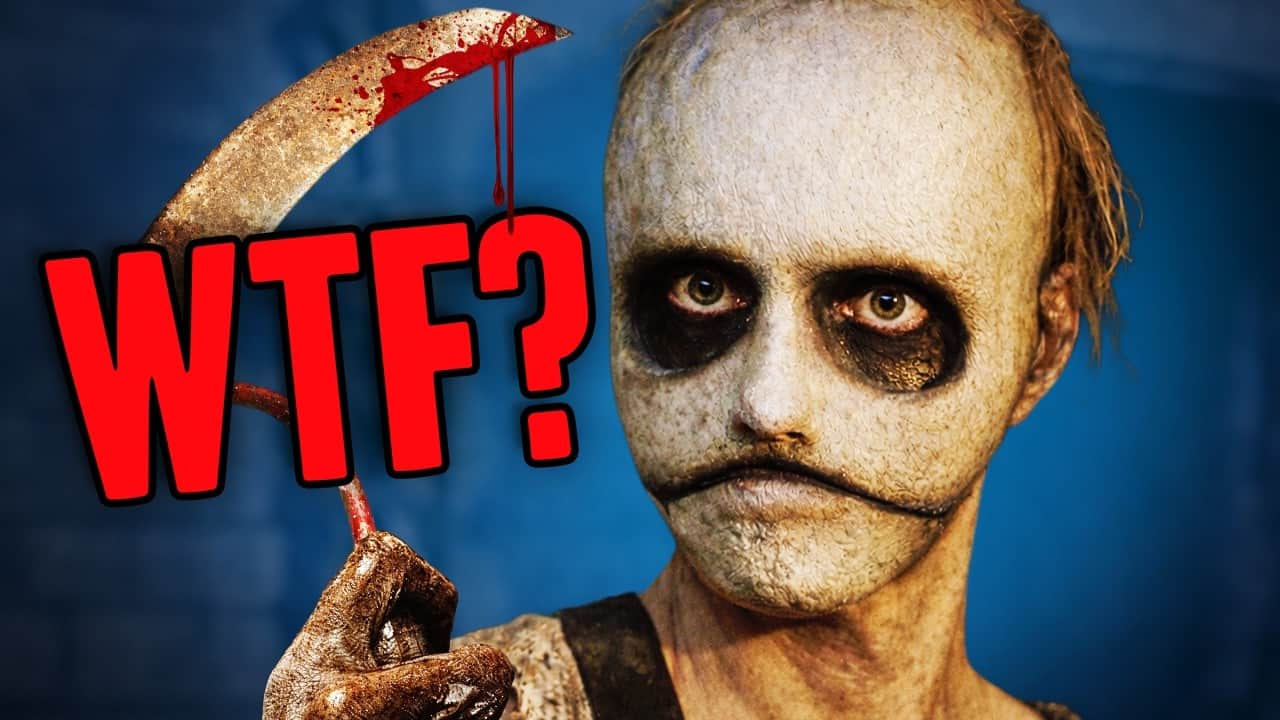
What Happened to Behind the Mask: The Rise of Leslie Vernon?
With the sequel finally getting announced after 20 years, fans are rejoicing. So we thought it was time to take a look back at the film that took the horror world by storm in 2006. And it was anything but an easy production. From a limited budget causing rewrites during filming to more horror references than you can count, this is a horror lover’s dream. So let’s take a look at what happened to Behind the Mask: The Rise of Leslie Vernon.
The Origin of Leslie Vernon
Writer David J. Stieve had been struggling in Hollywood when he happened across Halloween playing on television. It left him with one thought: What if Michael Myers ever doubted his career choices? From that idea, the seeds were planted for Leslie Vernon, a story following a would-be slasher as he prepares for his first killing spree.
Stieve wrote the initial draft in just two to three weeks, though it would go through many iterations. Once director Scott Glosserman came aboard, the two fine-tuned the script, figuring out what worked and how to properly pay homage to the slasher genre.
Interestingly, Jeff Wadlow, who directed Cry_Wolf and later worked with Blumhouse Productions, was originally attached to direct and even receives a thank-you credit.
Funding and Title Changes
The film was largely self-financed, with Glosserman leaning heavily on family support. Originally titled Behind the Mask, the film had to be renamed when a Hannibal Lecter prequel was announced with the same title. The subtitle The Rise of Leslie Vernon was added.
Ironically, that competing film would later become Hannibal Rising.
A Meta Slasher Before Its Time
The film is presented as a mockumentary following Taylor Gentry and her crew as they document an up-and-coming killer. In this world, icons like Freddy, Michael, and Jason all exist, essentially a proto-shared universe long before the Marvel Cinematic Universe.
As Leslie prepares for his spree, the crew tracks a would-be final girl to a farmhouse. That’s when things spiral out of control, and the film transitions from mockumentary into a full-blown slasher.
Casting Leslie Vernon
The role of Leslie Vernon was crucial. They needed someone charming yet capable of menace. They found that in Juilliard-trained actor Nathan Baesel.
Unlike other actors who leaned into creepiness, Baesel played Leslie as a normal, likable guy, making his darker actions more unsettling. He stayed behind the mask throughout and even suggested going barefoot during the finale to emphasize the character’s childlike nature.
The Supporting Cast
Angela Goethals was cast as Taylor Gentry, bringing a grounded presence that balanced the film’s tone. Horror legend Robert Englund plays Doc Halloran (a nod to The Shining), delivering one of the film’s most memorable performances.
Englund also suggested casting Scott Wilson as Eugene, Leslie’s mentor.
The film also features genre legend Zelda Rubinstein in one of her final roles. Due to personal hardships and health issues, her scenes were filmed one line at a time.
Filming Challenges
Production took place in Oregon in November 2004, chosen for tax incentives and experienced crews. With only 14 days to shoot the mockumentary footage, the schedule was intense:
Locations were scouted during filming
The script was adjusted on the fly
Editors worked on set to assemble scenes quickly
The documentary footage was shot digitally, while the final act was filmed on Super 16 for a more cinematic feel.
Horror References and Easter Eggs
The film is packed with references:
Locations inspired by Halloween
Glosserman’s childhood summer camp
A cameo from Kane Hodder
The Elm Street house
Even the “birth canal” orchard concept draws inspiration from The Shining.
Deleted Scenes and Changes
A courthouse sequence, shot over nearly a week, was ultimately cut.
Other moments, like Leslie running when not being watched, didn’t translate well on camera and were removed.
The Perfect Ending
Despite the tight budget, the filmmakers secured “Psycho Killer” by Talking Heads for the end credits. It’s a perfect tonal match, and nearly impossible to imagine the film without it.
Release and Cult Status
Behind the Mask: The Rise of Leslie Vernon premiered at South by Southwest in March 2006, generating strong buzz. A bidding war followed, including interest from The Weinstein Company. However, concerns about the film being shelved led Glosserman to go with Anchor Bay Entertainment instead.
The film was released on DVD in 2007 and later received a Blu-ray from Shout! Factory in 2018. While it wasn’t a major financial success, it developed a strong cult following.
The Sequel Is Finally Happening
At a special screening in Los Angeles, it was officially announced: Behind the Mask 2: The Return of Leslie Vernon is happening.
The sequel will bring back:
Nathan Baesel
Angela Goethals
The original creative team
After years of false starts, the filmmakers describe the moment as surreal, but real. Even Robert Englund has expressed love for the original, calling it one of his favorite projects.
Final Thoughts
Behind the Mask: The Rise of Leslie Vernon remains one of the most unique horror films of the 2000s. Nathan Baesel’s performance is unforgettable, blending charm and menace in a way few slashers ever have. While it may not have been a box office hit, it earned something arguably more valuable: a lasting place in the hearts of horror fans.
And that, my friends, is what happened to Behind the Mask: The Rise of Leslie Vernon.
A couple of previous episodes of this show can be seen below. For more, check out the JoBlo Horror Originals YouTube channel—and don’t forget to subscribe!
The post What Happened to Behind the Mask: The Rise of Leslie Vernon? appeared first on JoBlo.