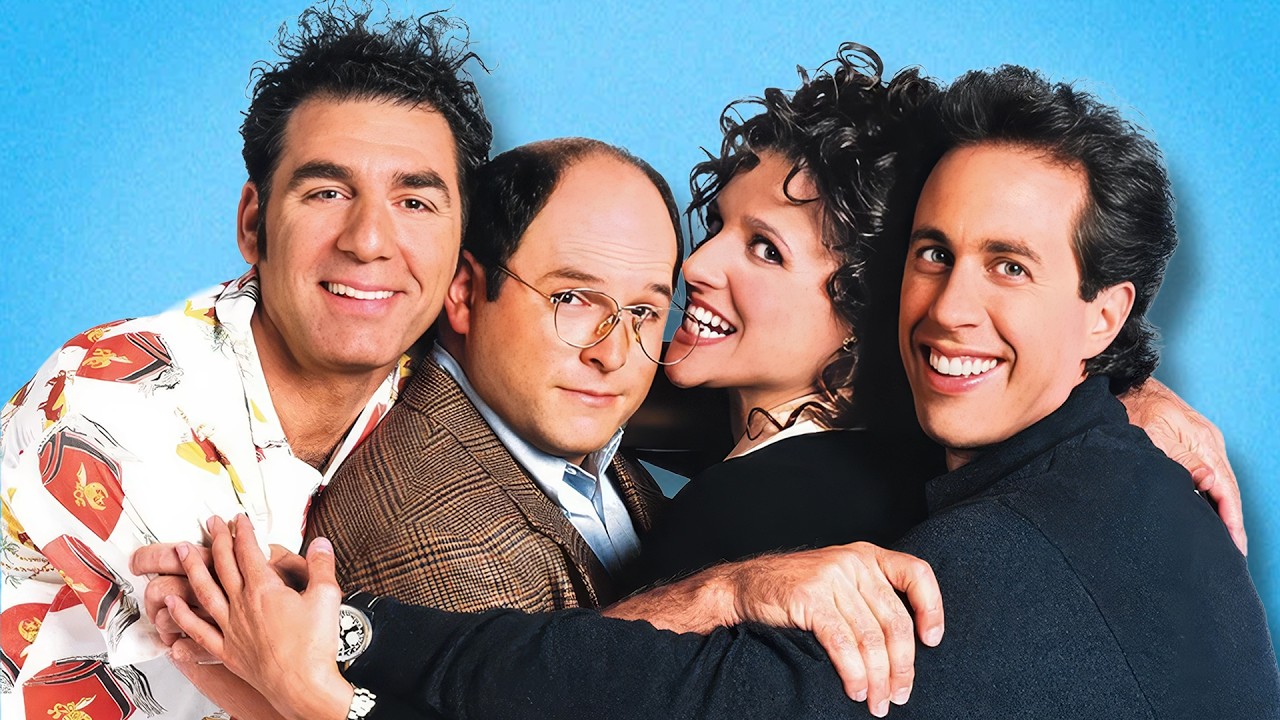
Seinfeld: How Did A Show About Nothing Change Everything?
You can trace the origins of Seinfeld—one of the most influential sitcoms ever made—to a single moment on The Tonight Show.
How did Seinfeld get discovered?
It started when a young Jerry Seinfeld performed stand-up for Johnny Carson. At the time, Carson was the king of late night. A single gesture from him could make a career. After Seinfeld’s set, Carson gave him the famous “OK” sign — something comedians called “the gesture from God.” That meant Seinfeld would be invited back. And more importantly, it meant he had industry approval.
That moment changed everything.
Seinfeld quickly became a regular on The Tonight Show, appearing around 36 times. His manager, George Shapiro, pushed NBC to take notice, even sending a letter to executive Brandon Tartikoff. The network had already been watching. Each appearance brought strong audience reactions and solid ratings. Eventually, NBC gave Seinfeld a development deal.
How was Seinfeld created?
NBC executives Warren Littlefield and Rick Ludwin told Seinfeld he could pitch any show he wanted. The problem? He didn’t have an idea.
So he called his friend Larry David.
The two began brainstorming while walking through a Korean grocery store in New York, joking about everyday things on the shelves. That’s when Larry stopped and said:
“Maybe the show should be about this.”
Jerry asked, “About what?”
Larry replied, “About this. You don’t hear people talk about stuff like this.”
Jerry laughed it off — but that idea became Seinfeld: a show about everyday life, or famously, “a show about nothing.”
Who was Larry David, and why was he important?
Larry David was already known among comedians as a “comic’s comic,” famous for his brutally honest personality. One story sums him up perfectly: after bombing on stage, he told the audience, “I don’t need this!” and walked off.
Jerry admired Larry’s writing. Larry admired Jerry’s delivery. Together, they were the perfect creative match.
Larry had also worked on Fridays and Saturday Night Live. One real-life moment from his time at SNL later became classic Seinfeld material. After quitting in frustration, Larry realized he needed the money and simply returned to work the next day, pretending nothing happened — a move that would inspire George Costanza.
Why is George Costanza based on Larry David?
Because many of George’s most outrageous moments actually happened to Larry.
When Jason Alexander was cast, he initially played George like Woody Allen. But everything changed when he questioned a scene’s realism. Larry told him, “This happened to me.” That’s when Alexander realized George wasn’t exaggerated — he was Larry. From then on, he played the character that way.
How did Seinfeld almost fail?
The original pilot, The Seinfeld Chronicles, tested terribly. NBC executives thought it was “too New York” and “too Jewish.” Worse, the script had been altered with generic sitcom elements that clashed with the tone.
The show nearly died right there.
But Rick Ludwin believed in it. He used his budget for TV specials to fund four additional episodes. There was one condition: add a female lead.
That’s how Elaine Benes was created.
Julia Louis-Dreyfus, who Larry already knew from SNL, auditioned with Jerry — and the chemistry was instant. She got the role on the spot.
When did Seinfeld become successful?
Not right away.
The early episodes aired after Cheers, which helped build an audience. NBC slowly started to see the show’s potential and ordered more episodes. Still, it wasn’t until Season 2’s “The Chinese Restaurant” that the show truly defined itself.
Why is “The Chinese Restaurant” episode so important?
Because it fully embraced the idea of “a show about nothing.”
The entire episode revolves around waiting for a table. No big plot. No traditional sitcom structure. NBC hated it and thought it would fail. They even delayed airing it.
But when it finally aired, it was a hit.
That episode proved the concept worked — and it helped turn Seinfeld into a cultural phenomenon.
What made Seinfeld so influential?
Several things:
Relatable, everyday situations turned into comedy
Memorable characters, including George, Elaine, Kramer, and Newman
Iconic catchphrases like “No soup for you!” and “These pretzels are making me thirsty”
New vocabulary, including “shrinkage,” “double dipping,” and “regifting”
Recurring characters like Jackie Chiles and J. Peterman
Meta-humor, including storylines about making a TV show
The show even created its own holiday: Festivus.
Why was Seinfeld controversial at times?
Some episodes pushed boundaries. “The Soup Nazi” angered its real-life inspiration. The “Puerto Rican Day Parade” episode was pulled from reruns for years.
But the most divisive moment came with “The Invitation,” where George’s fiancée dies from licking toxic wedding envelopes. Some saw it as brilliant dark comedy. Others thought it was too cruel.
Why did Seinfeld end?
After nine seasons, Jerry Seinfeld chose to end the show at its peak. Larry David returned to write the finale, which became one of the most-watched TV episodes in history.
What happens in the Seinfeld finale?
The characters are arrested after mocking a victim during a mugging instead of helping. They’re put on trial under a Good Samaritan law, and past characters return to testify against them. In the end, they go to prison.
Fans were divided. Some thought it was the perfect ending — a consequence for years of selfish behavior. Others felt it betrayed the show’s rule of “no hugging, no learning.”
Did Seinfeld ever come back?
Not officially — but in spirit, it did.
Larry David created Curb Your Enthusiasm, which many see as an extension of the Seinfeld universe. It even featured a fictional reunion storyline.
And honestly, that’s probably the best way to revisit these characters.
Because Seinfeld understood one thing better than most shows:
It’s always better to leave on a high note.
And it did.
The post Seinfeld: How Did A Show About Nothing Change Everything? appeared first on JoBlo.